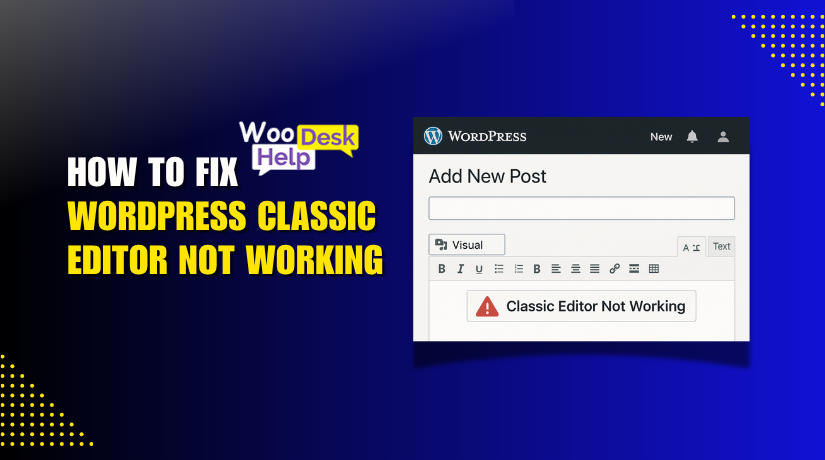
WordPress Classic Editor Not Working: Here’s What’s Causing It and How to Fix It
Table of Contents
- Introduction
- Signs of WordPress Classic Editor Issues
- Why Is the WordPress Classic Editor Not Working?
- Top Causes and Fixes for the WordPress Classic Editor Not Working
- Prevention Tips to Avoid Future Classic Editor Issues
- Conclusion
Introduction
The WordPress Classic Editor is still used by many website owners. It’s simple, fast, and easy to use. Many users prefer it over the block editor (Gutenberg). However, several users have recently complained about it not functioning. The editor can act strangely or not load at all.
This can be annoying, particularly if you handle content on a daily basis. You might see a blank editor or missing toolbar buttons. In some cases, content doesn’t save correctly or disappears completely.
This article will walk you through each potential cause step-by-step. Each problem comes with a tested solution you can try right away. Regardless of your level of experience, this guide will be helpful.
We’ll also go over how to avoid issues in the future. Time savings and process protection are the objectives. If you’re facing any Classic Editor issues, read on. You’ll find clear answers below.
Signs of WordPress Classic Editor Issues
It’s important to first recognize the problem you’re facing. The Classic Editor can break in different ways. Knowing the symptoms helps you troubleshoot faster.
Here are some common signs that the Classic Editor is not working:
- Editor not loading: In place of the editor, you see a blank area.
- Toolbar is missing: Formatting options like Bold or Italics are gone.
- White screen: You click “Edit Post” and nothing loads.
- Text disappears: Content doesn’t save or shows up blank after saving.
- Changes not applied: Edits are made but not reflected on the page.
- HTML tab not working: Clicking it does nothing or breaks the editor.
These problems could show up at random or after updates. These issues often go unnoticed in the beginning. After installing a new plugin or theme, these frequently occur.
Most of the time, something straightforward is the root of the issue. It could be a plugin conflict, browser cache, or even a missing file. But it can also be due to deeper issues like server settings or database errors.
Don’t worry—each problem has a fix. We’ll go over every cause and solution in this guide. To follow along, you don’t have to be a developer.
Before moving forward, make sure you’ve updated WordPress and the Classic Editor plugin. Additionally, before making any changes, make a backup of your website. This way, you can safely test each fix.
Why Is the WordPress Classic Editor Not Working?
The WordPress Classic Editor can stop working for many reasons. Some problems are simple. Others may take more time to fix. You can resolve the problem more quickly if you know what the underlying reason is.
This section breaks down the key causes behind the issue. Later on, we’ll go into greater detail. For now, these are the primary categories of problems:
- Plugin Conflicts
Plugins often cause the Classic Editor to break. When two plugins don’t function properly together, this occurs. It may also happen after a new update.
What to look for:
- The editor doesn’t load at all.
- Formatting buttons are gone.
- The page looks broken or unstyled.
- JavaScript Errors
If your browser has JavaScript errors, the editor won’t load correctly. JavaScript powers many editor functions, so errors break things easily.
Common signs:
- You see a blank screen.
- Buttons or tabs don’t respond.
- Console shows red error messages (for advanced users).
- Theme Conflicts
Your theme controls how content looks and behaves. A bad theme update can break the editor.
Signs of theme issues:
- Issues appear only when one particular theme is activated.
- Switching themes fixes the problem.
- Cache and Browser Issues
Caching is helpful but can also load outdated files. These may interfere with how the editor works.
What to try:
- Clear your browser cache.
- Try another browser or incognito mode.
- If you’re using a caching plugin, clear the cache on your website.
- Server or PHP Problems
Sometimes your server setup is not compatible with WordPress updates. This can affect editor functions.
Examples:
- Using an old PHP version.
- Incorrect file permissions or blocked APIs.
Top Causes and Fixes for the WordPress Classic Editor Not Working
The WordPress Classic Editor can stop working for many technical reasons. This section explains the first five causes and how to fix each one. Every fix is explained in a way that beginners can follow.

Let’s get started with the most common issue: plugin conflicts.
- Plugin Conflict
Plugin conflicts are the most frequent reason the Classic Editor breaks. WordPress plugins often load their own scripts and settings. If one plugin changes how the editor works, it may break it.
What happens when there’s a conflict:
- The editor area does not appear.
- The text box is blank or unresponsive.
- Toolbar buttons are missing or broken.
How to fix it:
- Go to your WordPress dashboard.
- Navigate to Plugins > Installed Plugins.
- Deactivate all plugins.
- Now check if the Classic Editor works.
- Reactivate each plugin individually if it works.
- Find the plugin that causes the issue and replace or remove it.
This process is called conflict testing. It’s easy and often solves the problem quickly.
- JavaScript Error
JavaScript is required for the Classic Editor to function properly. If a script fails to load, the editor may not work at all.
What you might see:
- Blank editor screen.
- Clicking tabs or buttons does nothing.
- Pages take longer to load.
How to detect and fix it:
- Right-click the editor screen and select Inspect.
- Go to the Console tab.
- Look for any red error messages.
- These errors point to the broken script or plugin.
How to fix the issue:
- Disable the plugin or theme causing the JavaScript error.
- Clear your browser cache and try again.
- Update any outdated scripts or plugins.
If you’re not comfortable checking the console, try the plugin deactivation method first. Most JavaScript errors come from a plugin or theme conflict.
- Theme Issues
Sometimes, your WordPress theme can interfere with the Classic Editor. Custom themes or poorly coded ones may load scripts that override editor functions.
Signs of a theme issue:
- The problem only happens with a certain theme.
- The editor works after switching to a different theme.
- Layout or styling inside the editor looks broken.
How to test and fix it:
- Go to Appearance > Themes in your dashboard.
- Change to Twenty Twenty-One as the default theme.
- Verify that the editor is now operational.
If it does, the problem is with your theme. You could:
- Ask for assistance from the theme creator.
- Change the theme to one that works better.
- Remove or fix code in the theme’s functions.php file.
We’ll cover more about functions.php later in this guide.
- Cache Problems
Although caching speeds up site loading, it can also lead to editor issues. If your site or browser loads an old version of a file, the editor may break.
Symptoms of a caching issue:
- You’ve made changes, but they don’t appear.
- The editor shows old content or formatting.
- The editor works on other browsers or devices.
Fixing cache problems:
- Empty the cache in your browser.
- Try using a different browser or Incognito Mode.
- Clear the site’s cache if you use a caching plugin.
- If your host provides caching, use the host dashboard to flush it.
There is a “Clear All Cache” button on caching plugins such as WP Super Cache or W3 Total Cache. Use this after any update.
- Outdated Classic Editor Plugin
The Classic Editor plugin itself needs updates. If it’s outdated, it may not work well with newer WordPress versions.
Signs of an outdated plugin:
- Following a WordPress update, Classic Editor abruptly stops functioning.
- Features like the visual editor or HTML view stop working.
Fix it by updating:
- Go to Plugins > Installed Plugins.
- Find Classic Editor.
- Click Update Now if an update is available.
- Remove the plugin and reinstall it if it doesn’t resolve the issue.
You won’t lose content by deleting and reinstalling the plugin. Everything stays safe.
- Gutenberg Conflict
The Classic Editor can conflict with the new Gutenberg Block Editor. By default, WordPress tries to push users toward blocks. This may lead to the classic editor not working in WordPress.
Common signs:
- The editor loads as Gutenberg even with Classic Editor active.
- The toolbar or editor interface appears broken or unusable.
How to fix it:
- Go to Plugins > Add New in your dashboard.
- Search for and install “Disable Gutenberg.”
- In its settings, disable Gutenberg for all post types.
Also, review your Classic Editor settings:
- Navigate to Settings > Writing.
- Set the default editor to Classic for all users.
- Disable the option to switch editors.
This resolves many WordPress Classic Editor issues caused by editor conflicts.
- TinyMCE Failure
TinyMCE is the engine behind the Classic Editor’s visual interface. If TinyMCE fails, the editor often shows a plain text box.
Symptoms include:
- Toolbar is missing.
- Tabs like “Visual” and “Text” do not respond.
- Clicking buttons does nothing.
How to resolve it:
- Go to Tools > Site Health to check for errors.
- Look for broken scripts or file issues.
- Re-upload WordPress core files, especially /wp-includes/js/tinymce/.
You can also reinstall WordPress from Dashboard > Updates. This often fixes the classic editor not working WordPress problem caused by TinyMCE errors.
- PHP Version
Your hosting server’s PHP version can affect how WordPress works. The WordPress Classic Editor might not function correctly if the PHP version is out of date.
What to watch for:
- The editor loads slowly or fails to save changes.
- Some features randomly break after updates.
How to fix it:
- Login to your hosting panel.
- Find PHP Version Manager or contact support.
- Set PHP to 7.4 or higher.
Once updated, revisit your site and test the editor. This solves many hidden WordPress Classic Editor problems related to server performance.


- Missing Permissions
Incorrect file and folder permissions can stop the editor from saving content. They can also block parts of the WordPress dashboard.
Typical symptoms:
- Editor doesn’t load content.
- Save or update buttons don’t work.
- Image uploads fail silently.
Steps to fix:
- Use an FTP tool or File Manager in your host account.
- Set folders to 755 and files to 644.
- Focus on wp-content, wp-includes, and wp-admin.
These small changes often fix the classic editor stopped working issue on secure servers.
- Role Restrictions
User roles in WordPress can sometimes limit access to the Classic Editor. This especially affects Editors, Authors, or Contributors.
What happens:
- The Classic Editor is only accessible by admin users.
- Other users are redirected to the Block Editor or see blank screens.
Fix role-related restrictions:
- Install the User Role Editor plugin.
- Navigate to Users > User Role Editor.
- Check the necessary capabilities for the role:
- edit_posts
- edit_published_posts
- edit_pages
Also, go to Settings > Writing and confirm Classic Editor is the default for all users.
This method helps restore editor access and fixes many WordPress Classic Editor issues in multi-user environments.
- SSL/HTTPS Redirection
Your site may use SSL to run over HTTPS. That’s a good thing. But wrong redirects or mixed content can break the Classic Editor.
What you might notice:
- The editor loads a blank page.
- Some tools or buttons stop working.
- The console shows blocked resources or “insecure content” errors.
How to fix it:
- Go to Settings > General in WordPress.
- Make sure both URLs begin with https://.
- Install a plugin like Really Simple SSL.
- This handles redirection issues and fixes WordPress Classic Editor problems.
If you use custom code in .htaccess, check for redirect loops. These loops often result in the classic editor not working WordPress issue.
- Browser Extension
Browser extensions, especially ad blockers or script blockers, can interfere with WordPress. Some block the scripts the Classic Editor needs to run.
Symptoms include:
- Toolbar buttons are missing or frozen.
- Clicking tabs does nothing.
- The editor behaves differently in another browser.
Steps to fix it:
- Open your site in Incognito Mode.
- If the editor works, it’s likely an extension problem.
- Test the editor once more after disabling each extension individually.
Popular problem-makers include:
- uBlock Origin
- Ghostery
- Privacy Badger
Once you disable the issue-causing extension, the WordPress Classic Editor not working error should disappear.
- Database Corruption
Your WordPress database stores settings, posts, and editor preferences. If the database is corrupted, the editor may stop working.
Common signs:
- The editor won’t load for specific users.
- Changes don’t save properly.
- Editor preferences seem reset every time.
How to repair it:
- Login to your hosting control panel.
- Use phpMyAdmin or a database tool.
- Select your WordPress database.
- Click on Check All > choose Repair Table from the dropdown.
- You can also add define(‘WP_ALLOW_REPAIR’, true); to wp-config.php temporarily.
- Then visit yoursite.com/wp-admin/maint/repair.php to fix the database.
A corrupted database is a serious issue. Fixing it often resolves deep WordPress Classic Editor issues.
- CDN or Cloudflare
A CDN (Content Delivery Network) like Cloudflare helps your site load faster. But it can also cache outdated files, block scripts, or delay editor updates.
Symptoms of CDN conflicts:
- Editor is loading slowly or with broken layout.
- Content or buttons don’t appear as expected.
- JavaScript errors related to caching.
Steps to fix it:
- Login to your CDN or Cloudflare account.
- Click Purge Cache for your entire site.
- Disable Rocket Loader in Cloudflare settings.
- Make sure JavaScript is not being minimized.
Once purged, reload the editor. This usually fixes the classic editor not working in WordPress due to cached scripts.
- Custom Script Conflicts
Custom scripts added to your theme or plugins may cause conflicts. These can override or block Classic Editor functions.
Common places for bad scripts:
- header.php
- footer.php
- Plugins that insert tracking or analytics code
How to fix:
- Comment out custom scripts in your theme.
- Test the editor after each change.
- Move custom code into a safe plugin or use a script manager.
Cleaning up these scripts can stop many hidden WordPress Classic Editor problems.
- Security Plugin Interference
Security plugins protect your site but can also block editor scripts. They may mistakenly flag editor files as unsafe.
What to check:
- Is the editor broken after installing or updating a security plugin?
- Are there blocked scripts or warnings in the plugin logs?
Fix it like this:
- Open your security plugin settings.
- Whitelist /wp-admin/post.php and /wp-includes/js/ directories.
- Temporarily disable the plugin and test the editor.
Popular plugins like Wordfence, iThemes Security, or Sucuri can sometimes cause the classic editor stopped working issue if not configured properly.
- Conflicting Shortcodes
Shortcodes are small code snippets used in WordPress content. If they are broken or incomplete, they can cause display issues in the editor.
Symptoms include:
- Editor loads but shows raw shortcode text.
- Switching between tabs causes errors.
- Saving or previewing posts breaks the layout.
How to fix conflicting shortcodes:
- Edit your post or page and remove recent shortcodes.
- Disable plugins that generate these shortcodes.
- Use default WordPress blocks for testing.
If the editor starts working after removing a shortcode, that shortcode was the problem. This is another common cause of the WordPress Classic Editor not working properly.
- Theme functions.php File
Custom functions added to your theme’s functions.php file may interfere with the editor. A small error in this file can break your entire admin screen.
What to look for:
- Editor crashes after updating a theme.
- Unexpected changes to admin layout or editor style.
- Syntax error messages on white screens.
How to fix:
- Use FTP or your hosting file manager.
- Open your theme’s functions.php file.
- Comment out any recent additions or edits.
- Save the file and refresh your editor screen.
This resolves many WordPress Classic Editor issues caused by developer mistakes or copy-paste errors.
- REST API Block
The Classic Editor depends on WordPress’s REST API to save content. If your server or security settings block the API, the editor will fail to save properly.
Common signs:
- Content doesn’t save or gives an error.
- Editor looks fine but doesn’t update posts.
- Site Health shows a REST API error.
To fix REST API problems:
- Check for firewall or security plugin settings that block access.
- Look at .htaccess or server rules that limit API use.
- Ask your host to unblock REST API routes for /wp-json/.
Fixing this issue can prevent the classic editor stopped working problem from happening during edits or updates.
- User Meta Settings
Each WordPress user has personal settings saved in the database. Sometimes, these settings may block access to the Classic Editor.
What happens:
- The editor only breaks for one user.
- Others can use it normally.
How to fix:
- Login as an admin.
- Go to Users > All Users.
- Edit the affected user profile.
- Check if the editor preference is set to “Block Editor”.
- Change it to Classic Editor and save.
You can also use a plugin like WP Reset to reset user settings if necessary. This helps when classic editor not working in WordPress only affects one account.
Prevention Tips to Avoid Future Classic Editor Issues
Fixing the problem is important, but preventing it is even better. To prevent experiencing the same problems again, heed these tips:
- Update WordPress, plugins, and themes.
- Make use of reliable, well-coded plugins and themes.
- Don’t overwrite functions.php with untested code.
- Don’t overwrite functions.php with untested code.
- Before going live, test updates on a staging site.
- Clear caches after updates using your plugin or host tools.
These habits help reduce many WordPress Classic Editor problems before they start.
Conclusion
For many WordPress users, the Classic Editor remains a dependable option. But when it stops working, it can really slow you down. Thankfully, most issues can be fixed quickly by checking plugins, themes, browser settings, or server rules.
In this guide, we explored 20 real-world causes and fixes—from plugin conflicts to user settings. Each issue was explained with simple steps, so you can act fast.
Don’t panic if you’ve tried every solution and the editor is still not working. For more advanced assistance, you can contact support services like WooHelpDesk.
Don’t let editor problems block your content. Fix them and get back to creating with confidence!