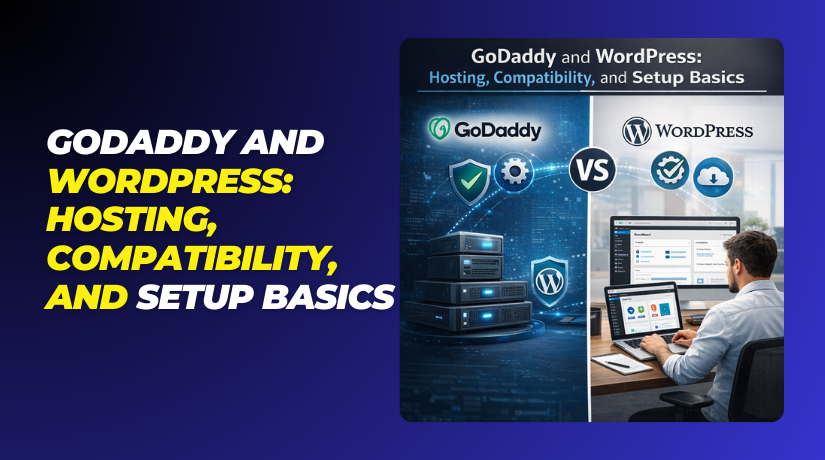
GoDaddy and WordPress: Hosting, Compatibility, and Setup Basics
Table of Contents
- Introduction
- Is GoDaddy a WordPress Hosting Provider?
- WordPress hosting vs normal hosting on GoDaddy
- When GoDaddy WordPress hosting makes sense
- Is GoDaddy Compatible With WordPress?
- Can You Install WordPress on GoDaddy?
- Installing WordPress on GoDaddy Hosting
- What You Need Before Installing WordPress
- Can You Connect an Existing WordPress Site to GoDaddy?
- When You Need to “Connect” WordPress Instead of Installing
- Ways to Connect WordPress With GoDaddy
- Best GoDaddy Hosting Option for WordPress
- Shared Hosting (Best for Small Sites)
- Managed WordPress Hosting (Best for Easy Maintenance)
- VPS / Dedicated (Best for High Traffic)
- GoDaddy WordPress Pros and Cons
- Common GoDaddy and WordPress Questions
- Conclusion
- FAQ
Introduction
GoDaddy is a popular place to buy domains and hosting. Many site owners also use it for WordPress. If you are new to hosting, GoDaddy can feel simple. You can register a domain and host your website together. That makes setup easier for many beginners.
This guide explains how GoDaddy works with WordPress. You will learn what hosting options support WordPress. You will also learn if WordPress is compatible on GoDaddy. We will cover installing WordPress on GoDaddy hosting. We will also cover connecting an existing WordPress site. Finally, you will see which GoDaddy plan fits your needs.
Is GoDaddy a WordPress Hosting Provider?
Yes, GoDaddy is a WordPress hosting provider. It offers multiple hosting plans that can run WordPress. Some plans are labeled as WordPress hosting. Other plans are general hosting, but still support WordPress.
GoDaddy mainly offers these WordPress-friendly hosting types.
- Shared web hosting
- Managed WordPress hosting
- VPS hosting
- Dedicated server hosting
WordPress does not require a special host name. It only needs a server with basic features. GoDaddy provides those features on many plans. That is why WordPress works on GoDaddy hosting.
WordPress hosting vs normal hosting on GoDaddy
Many people get confused by plan names and marketing labels. The key difference is management and convenience, not compatibility.
Regular hosting usually gives you a control panel to manage everything. You install WordPress yourself using tools available there. You also manage updates, backups, and security settings.
WordPress hosting is often built for WordPress from day one. It may include automatic setup and some WordPress tools. It may also include extra features for WordPress support.
Managed WordPress hosting usually goes one step further. It focuses on easy setup and easier maintenance. It may include automatic updates and backups. It often hides some advanced server settings. That can be good for beginners.
When GoDaddy WordPress hosting makes sense
GoDaddy WordPress hosting is a good idea if you want faster setup. It also helps if you do not want to manage many settings. If you want a simple dashboard and fewer steps, choose managed plans.
If you like full control, regular hosting can still be better. It can be cheaper, depending on your needs. It can also be flexible for custom setups.
Is GoDaddy Compatible With WordPress?
Yes, GoDaddy is compatible with WordPress. WordPress runs on standard web servers. GoDaddy uses common server environments that support WordPress. So you can run WordPress on GoDaddy with the right plan.
Why WordPress works on GoDaddy
WordPress needs a few basic things to run correctly. Most hosting providers include them. GoDaddy also includes them on WordPress-ready plans.
WordPress usually needs:
- A web server to deliver pages to visitors
- A database to store posts, pages, and settings
- PHP support to run WordPress code
- File storage for themes, plugins, and media
GoDaddy plans that include these features can run WordPress.
Hosting types on GoDaddy that support WordPress
WordPress works on several GoDaddy hosting options. Each option fits a different type of website.
- Shared Hosting: Good for small websites and blogs.
- Managed WordPress: Best for quick setup and easy updates.
- VPS Hosting: Better for growing sites and higher traffic.
- Dedicated Hosting: Best for large sites needing full server control.
What can cause WordPress issues on any host
WordPress issues can happen on any hosting provider. These problems are not always about GoDaddy. They are often related to setup and configuration.
Common causes include:
- A plugin conflict that breaks site features
- A theme issue that affects layout and scripts
- Outdated WordPress core or plugin versions
- Wrong PHP version for certain plugins
- Limited resources on lower hosting plans
- Incorrect DNS settings when connecting a domain
The good news is most issues are fixable. You just need the right steps and tools. Choosing the right hosting plan also reduces many problems.
Can You Install WordPress on GoDaddy?
Yes, you can install WordPress on GoDaddy. You can install it on shared hosting, VPS, and dedicated servers. You can also start WordPress easily using managed plans.
There are two common ways to install WordPress.
- One-click installation from the hosting dashboard
- Manual installation using files and database setup
Most beginners prefer one-click installation because it is faster.
Installing WordPress on GoDaddy Hosting
One-click install option
On many GoDaddy hosting plans, you can install WordPress using a built-in installer. The installer guides you through simple steps. You choose a domain, set admin details, and finish.
The process usually looks like this.
- Log in to your GoDaddy account
- Open your hosting dashboard
- Find the WordPress installer option
- Choose the domain where WordPress will run
- Set your WordPress admin username and password
- Start the installation and wait for completion
After installation, you can log in to WordPress and start building pages.
Manual install option
Manual installation is also possible on GoDaddy. This method is useful when you want full control. It is also helpful when installers are not available.
The manual process usually includes:
- Upload WordPress files to your hosting space
- Create a database and user
- Connect WordPress to the database
- Run the WordPress setup page in your browser
Manual installation takes more time. But it gives you better understanding of the system.
What You Need Before Installing WordPress
Before installing WordPress, prepare the key items. This prevents delays and setup errors.
Domain name
You need a domain name for your website address. It can be registered at GoDaddy or anywhere else. If it is registered at GoDaddy, setup is easier. If it is registered elsewhere, you can still use it. You just need to point DNS correctly.
Hosting plan
You need a hosting plan that supports WordPress. Shared hosting is usually enough for starters. Managed WordPress is good if you want simple maintenance. VPS is better for bigger sites with more traffic.
SSL certificate
SSL protects your site connection using HTTPS. It keeps visitor data safer during browsing. Many hosts include SSL with some plans. If your plan does not include it, you can add it. A WordPress site should use HTTPS for trust and basic security.
Admin email and login details
You will create a WordPress admin login during setup. Use a strong password and a secure email. Your admin email also gets site alerts and updates. Keep your login details stored safely.
Can You Connect an Existing WordPress Site to GoDaddy?
Yes, you can connect an existing WordPress site to GoDaddy. This is common when you already have a WordPress site elsewhere. It is also common when you want to use a GoDaddy domain with another host.
Connecting can mean different things depending on your goal. You may be moving your website to GoDaddy hosting. Or you may only be pointing your domain to another server.
When You Need to “Connect” WordPress Instead of Installing
You already have WordPress on another host
If your WordPress site is already live on another host, you may not need a new install. You may want to move the same site to GoDaddy. In that case, you will migrate the site. After migration, you connect your domain to the new hosting.
You are moving your domain to GoDaddy
Sometimes users move their domain registration to GoDaddy. This does not automatically move the website. The website stays on its current host. After domain transfer, you may need to update DNS settings. This keeps the website working correctly.
You want to point a GoDaddy domain to another WordPress host
Many people buy domains from GoDaddy and host elsewhere. This is completely normal. In this case, you connect the GoDaddy domain to your WordPress hosting provider. You do it by changing nameservers or DNS records.
Ways to Connect WordPress With GoDaddy
Option 1: Change nameservers
Nameservers decide where DNS is managed. If you change nameservers, you move DNS control to another provider. This is common when your host wants to manage everything.
When you change nameservers:
- DNS control moves away from GoDaddy
- Your host manages DNS records in their panel
- Email settings may also change if tied to DNS
This method is simple, but it changes where you manage DNS.
Option 2: Update DNS records in GoDaddy
This method keeps DNS control inside GoDaddy. You point specific records to your hosting provider. This is common when you want GoDaddy to remain the DNS manager.
Typical DNS records include:
- A record pointing to your server IP address
- CNAME pointing “www” to your main domain
This method offers more control and stability. It is also good if you use GoDaddy email.
Option 3: A record + CNAME method
This is a popular approach for connecting a domain to hosting. You point the root domain using an A record. Then you point “www” using a CNAME record.
A simple example looks like this.


- A record: @ → server IP address
- CNAME: www → your root domain
The exact values depend on your hosting provider. So always use their instructions.
What to expect during DNS propagation
After you change DNS settings, updates take time. This waiting period is called DNS propagation. During this time, your site may load differently for different users. Some may see old hosting and some may see new hosting.
Propagation time can vary. It can take a few minutes or longer. You should avoid making repeated DNS changes during this period. That can slow down the process.
Best GoDaddy Hosting Option for WordPress
Choosing the right hosting depends on your website goals. A small blog needs less power than an online store. A business site needs better uptime and stability. A high traffic site needs stronger resources.
Below are common options and who they suit best.
Shared Hosting (Best for Small Sites)
Shared hosting means many websites share the same server resources. It is usually the most affordable option. It is often enough for simple sites and early-stage projects.
When to choose shared hosting
Shared hosting is a good fit for:
- Personal blogs with low traffic
- Small business websites with basic pages
- Simple portfolios with a few images
- New websites still building content
Pros of shared hosting
- Lower cost for beginners
- Setup is usually simple
- Works fine for basic WordPress sites
- Good for learning WordPress basics
Cons of shared hosting
- Limited resources during traffic spikes
- Speed can vary due to shared usage
- Advanced control can be limited
- Large sites may outgrow it quickly
If your site grows, you can upgrade later. That is a normal growth path.
Managed WordPress Hosting (Best for Easy Maintenance)
Managed WordPress hosting is built to simplify WordPress management. It focuses on easy setup and simple tools. It may include automatic updates and backups.
What “managed” means
Managed hosting usually means the host handles common tasks for you. The goal is to reduce the need for technical work.
Typical managed features include:
- Quick WordPress setup
- Automated updates for core software
- Built-in backups on a schedule
- Security monitoring tools
- WordPress-focused support
Pros of managed WordPress hosting
- Faster setup for beginners
- Less time spent on maintenance tasks
- Helpful tools designed for WordPress
- Better support for common WordPress issues
Cons of managed WordPress hosting
- It can cost more than shared hosting
- Some advanced settings may be locked
- Certain plugins may be restricted sometimes
- Less flexibility for custom server setups
Managed plans are great for people who want simplicity. They are also good for business owners who want less hassle.
VPS / Dedicated (Best for High Traffic)
VPS and dedicated hosting are advanced options. They provide more server power and control. They are best for large sites or demanding projects.
VPS hosting
A VPS is a virtual private server. It gives you reserved resources on a server. It is more stable than shared hosting. You also get more control over settings.
VPS is good for:
- Medium-sized business sites
- Stores with many products
- Sites with steady growing traffic
- Custom plugins needing extra resources
Dedicated hosting
A dedicated server gives you full server access. Your site does not share resources with others. This is the highest control option.
Dedicated hosting is good for:
- Very high traffic sites
- Large stores and busy platforms
- Sites needing custom server rules
- Projects needing special security controls
These plans require more technical skills. Many site owners use a developer or support team. That helps manage updates and server performance.
GoDaddy WordPress Pros and Cons
Pros
GoDaddy can be a good choice for WordPress users. It is especially helpful for beginners who want everything in one place.
Key benefits include:
- Domain and hosting can be managed under one account
- WordPress can be installed quickly on many plans
- Support is available through GoDaddy channels
- Multiple hosting options exist for different site sizes
- Easy to scale up as your site grows
If you want a simple entry point, it can work well.
Cons
No hosting provider is perfect for every situation. GoDaddy may not be ideal for all needs, depending on your plan and expectations.
Possible downsides include:
- Entry-level plans can feel limited for big sites
- Add-ons can increase costs over time
- Some advanced configurations need higher plans
- Speed depends heavily on plan quality and setup
- Migration and DNS changes need careful handling
These points are manageable when you plan properly. Picking the right plan early helps a lot.
Common GoDaddy and WordPress Questions
Is GoDaddy good for WordPress beginners?
Yes, it can be good for beginners. It offers simple setup and common tools. Many users like having domain and hosting together. Beginners should choose a plan that includes SSL. They should also choose a plan with enough storage.
Does GoDaddy include SSL for WordPress?
Some plans include SSL and some do not. SSL is important for HTTPS and trust. If your plan includes SSL, enable it early. If it does not include SSL, you can buy it or upgrade. A site without SSL can show warnings in browsers.
Can I use Elementor or WooCommerce on GoDaddy?
Yes, you can use Elementor and WooCommerce on GoDaddy. These tools run inside WordPress. The main requirement is enough server resources. Stores using WooCommerce may need better hosting. They also need good caching and image optimization.
Can I use email with WordPress on GoDaddy?
Yes, you can use email with GoDaddy and WordPress. Email is managed through your domain and hosting settings. WordPress can send website emails for forms and orders. Sometimes you need SMTP settings for better delivery. That helps reduce email failures.
Conclusion
GoDaddy can host WordPress and it supports many WordPress setups. It is compatible with WordPress on multiple hosting plans. You can install WordPress using an installer or manual steps. You can also connect an existing WordPress site to GoDaddy.
If you want a simple setup, managed WordPress can be helpful. If you want more control, shared hosting or VPS may fit better. The best choice depends on your site size and growth plans.
Next, you can follow the step-by-step setup guide in Article 2. That guide can cover installation and managed setup in detail.
FAQ
1) Is GoDaddy a good hosting choice for WordPress?
GoDaddy can be a good WordPress hosting choice for many users. It offers beginner-friendly setup and multiple plan options. It also works well when you want domain and hosting together. The best results depend on choosing the right plan. For a simple site, shared hosting can work. For easy maintenance, managed WordPress is often better.
2) Can I install WordPress on GoDaddy shared hosting?
Yes, you can install WordPress on GoDaddy shared hosting. Many plans support one-click WordPress installation from the dashboard. You can also install WordPress manually if needed. You will need your domain, hosting access, and admin details. After installation, you can log in and start building your site.
3) Does GoDaddy support WooCommerce stores?
Yes, GoDaddy can support WooCommerce stores on WordPress. WooCommerce works as a WordPress plugin and runs on standard hosting. For small stores, shared hosting may work at first. For larger stores, managed WordPress or VPS can be better. Store speed and stability improve with better resources and proper setup.
4) Can I use my GoDaddy domain with another WordPress host?
Yes, you can use your GoDaddy domain with another WordPress host. You can connect the domain by changing nameservers or updating DNS records. Many users keep domains at GoDaddy and host elsewhere. This setup is common and works well. Just follow your hosting provider’s DNS instructions carefully.
5) Do I need Managed WordPress hosting to run WordPress on GoDaddy?
No, you do not need managed WordPress hosting to run WordPress. WordPress can run on shared hosting, VPS, and dedicated servers too. Managed hosting simply makes setup and maintenance easier. It is best for users who want fewer technical tasks. If you want full control, regular hosting can be a good choice.
6) How long does DNS take when connecting WordPress with GoDaddy?
DNS changes can take time to update across networks. Sometimes it updates quickly within minutes. Other times it takes longer, depending on settings and caches. During that time, users may see different versions of your site. Avoid repeated DNS edits during this period. Let the change settle before making more updates.