What is the difference between a WordPress theme and a template?
Table of Contents
- Introduction
- What Is a WordPress Theme?
- What Is a WordPress Template?
- WordPress Theme vs Template: Key Differences
- When to Use a Theme vs Template
- Full Site Editing (FSE) and Page Builders
- Common Misconceptions
- Conclusion
Introduction
It can be difficult for many WordPress beginners to distinguish between a theme and a template. Although these terms are sometimes used synonymously, they have distinct effects on the appearance and functionality of your website. If you’re building or managing a WordPress site, knowing this difference can save you time, effort, and frustration.
Themes and templates control the appearance of your website, but in different ways. Your entire website’s design is controlled by a WordPress theme. A WordPress template is used for specific sections or pages within that site. Choosing the right one depends on what you’re trying to do — whether you’re changing your site’s overall look or just customizing a single page.
We’ll provide a detailed explanation of both words in this guide. We’ll go over actual examples to show you when to utilize a template, a theme, or both. If you’re a blogger, business owner, or web developer, this article will give you a clear foundation.
What Is a WordPress Theme?
A WordPress theme is a set of files that governs your website’s general layout and look. It specifies the layout, colors, fonts, spacing, and other elements of your website that visitors will see. The visual design of the entire website is altered when you install and activate a theme.
Themes apply their design settings across all pages and posts. For example, the layout of your homepage, blog archive, product pages, and contact form will all follow the theme’s default design unless customized.
Typical things that a WordPress theme manages are as follows:
- Overall layout (one column, two columns, sidebar position)
- Typography (fonts, sizes, line spacing)
- Colors and background styles
- Header and footer layout
- Responsive behavior on mobile devices
Numerous customization options are available with well-known WordPress themes like Astra, Divi, and GeneratePress. Many are built to be lightweight and fast, helping improve site performance and SEO.
WordPress themes are made of various files. These usually include a style.css file for styling, functions.php for adding features, and sometimes templates like home.php, page.php, and single.php to manage how content is displayed.
Users can personalize their themes using the WordPress Customizer or design tools like Elementor. To help you get started quickly, some themes even provide starter templates or example websites.
In summary, a theme is what gives your website its overall look and structure. It’s the base design layer that affects everything site-wide.
What Is a WordPress Template?
A WordPress template is a file used to define the layout of a particular page or section of your website. While a theme manages the site’s full design, a template focuses on one single page or post. Think of it as a layout blueprint for certain content.
Templates are part of a theme but only apply to individual sections. For example, your homepage, contact page, blog posts, and product pages can each use a different template. Each template decides how that page looks and how the content is arranged.
Using a WordPress template, you can:
- Make a distinctive landing page design.
- Change the layout of blog posts
- Customize your product or service pages
- Display special features like banners or custom headers
Templates are created using PHP files and follow WordPress’s template hierarchy. Depending on the kind of content, this hierarchy instructs WordPress on which template to use. For example:
- home.php is used for the homepage
- single.php is used for blog posts
- page.php is used for basic pages
- archive.php is used for category or tag listings
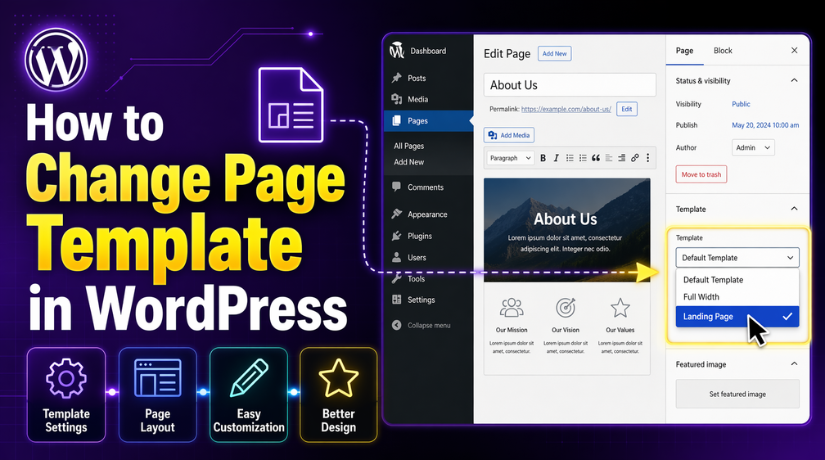
Additionally, you can design unique templates for particular requirements. For example, you may want your contact page to be full-width. In that case, you can build a template called page-contact.php and assign it in your page settings.
Template files are stored inside your theme folder. Even if you change a template, your main theme stays the same. That’s the key difference — a theme controls everything, while templates control parts.
Templates are also used by page builders such as Divi and Elementor. In those tools, templates are called template kits or saved templates. They allow users to design and reuse sections or full pages. These are not PHP files, but they serve the same purpose — managing the layout of specific pages.
In short, a WordPress template gives you layout control over single pages or sections. It works inside a theme but focuses on smaller areas.
WordPress Theme vs Template: Key Differences
Now that you know what both terms mean, let’s break down the main differences. This will help you choose what to use and when.
The main distinctions between a theme and a template are as follows:
| Feature | WordPress Theme | WordPress Template |
| Scope | Entire website | Single page or section |
| Purpose | Controls global design | Controls layout of one page |
| File Types | Multiple PHP, CSS, JS files | Usually one PHP file |
| Location | Root theme folder | Inside theme folder |
| Can be changed? | Yes, changes whole site | Yes, changes only specific pages |
You can think of it like this:
- A theme is your full outfit — top to bottom.
- A template is one piece — like a shirt or pair of shoes.
They work together. A theme sets the overall design rules. Templates give you flexibility on specific pages.
Knowing this difference helps you customize your WordPress site better. You can mix and match templates without changing the whole theme. You also avoid breaking your site by editing the wrong file.
When to Use a Theme vs Template
Choosing between a theme and a template depends on what you want to change. Although they have different purposes, both are beneficial. Time can be saved and errors can be prevented by knowing when to use each.
You should use a theme when:


- You’re starting a new WordPress site
- You wish to completely alter the appearance and feel of your website.
- Your current design is outdated or hard to use
- You want better performance, layout, or mobile experience
- You need site-wide changes like typography, color, or structure
For example, if your website looks cluttered and outdated, switching to a modern theme can fix that in one step. Themes are best for site-wide design control. They come with styling, layout settings, and sometimes demo content.
Conversely, using a template when:
- You wish to modify just one particular page.
- You require a unique layout for your own landing page.
- You want different designs for blog posts or service pages
- You want to test different layouts without switching the theme
Templates help you design special pages without touching the main theme. For example, you might want a full-width layout for your homepage but keep a sidebar layout for your blog. In that case, using two different templates is the right choice.
Making the choice is made simpler if you’re using a page builder like Divi or Elementor. These tools allow you to build and apply custom templates visually. You can assign saved templates to specific pages without writing any code.
At WooHelpDesk, we often help clients decide when to switch themes or create custom templates. In many cases, clients just need a new template — not a new theme. This saves time and avoids major changes.
In summary, use a theme for large, site-wide changes. Use a template for targeted, page-level updates. Both work together to give you flexibility in design.
Full Site Editing (FSE) and Page Builders
WordPress introduced Full Site Editing (FSE) to give users more control. This new feature allows you to edit headers, footers, and layouts without using traditional templates. Instead of editing files, you can now build your entire site visually.
FSE works with block themes, like Twenty Twenty-Two or Blocksy. These themes support full customization using blocks. You can change the layout, fonts, and sections of every page — all from the WordPress editor.
The distinction between a theme and a template gets more hazy when using FSE. You can create and apply templates directly in the editor. These templates are saved in the database, not as PHP files. This gives you more flexibility, especially if you don’t know how to code.
Similar control is provided by page builders like Beaver Builder, Divi, and Elementor. They allow you to design and save page templates or sections. You can:
- Build a page once and reuse its layout
- Create global headers or footers
- Use the same layout on several pages.
These builders do not use WordPress template files directly. Instead, they create saved layouts that behave like templates. It’s a faster way to design custom pages without coding.
Whether you use FSE or a builder, the concept remains the same. Templates control specific page layouts. Themes still manage global styles and structure. Both are helpful, and your needs and available resources will determine which option is best for you.
Common Misconceptions
Many WordPress users believe themes and templates are the same. One of the most frequent errors made by beginners is this one. Despite working together, their roles are extremely different.
A theme controls your entire website’s design. A template is used for a specific page. Some people think that changing a template will change the whole website. That’s not true. A template only affects one page or type of content.
Another misconception is about page builders. Tools like Elementor, Divi, or WPBakery let you create layouts visually. These layouts are often called templates, but they are not traditional WordPress templates. They don’t use PHP files. Instead, they are saved designs created inside the page builder.
Additionally, some users think that a template can be used without a theme. In reality, you must have an active theme for your WordPress site to work. Templates live inside the theme folder. Without a theme, WordPress doesn’t know how to display your site at all.
Here are quick facts to clear things up:
- You can’t use a template without a theme
- Templates don’t control the full site, only sections or pages
- Page builder templates are different from PHP template files
- Changing your theme affects everything; changing a template affects one part
Understanding these points helps you avoid mistakes during setup and updates. It also helps when you work with developers or support teams.
Conclusion
Themes and templates are both important in WordPress design. A theme gives your site its main structure and style. A template lets you adjust layouts on a page-by-page basis.
Choosing the right theme builds a strong foundation. Using templates gives you flexibility when needed. When combined, they assist you in creating a visually appealing and functional website
If you’re still unsure or need help customizing themes or templates, WooHelpDesk is here to assist. Our experts can guide you through setup, design, and custom solutions — no matter your site’s size.
Let us help you get the design you want, without the stress.