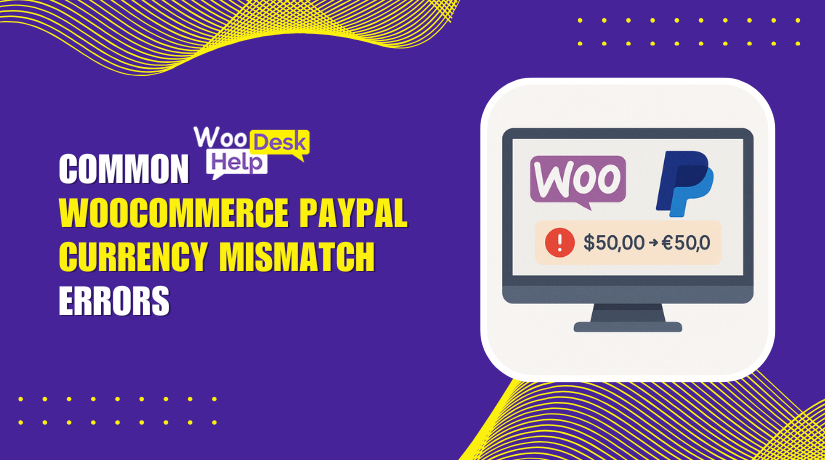
Common WooCommerce PayPal Currency Mismatch Errors
Table of Contents
- Introduction
- Understanding Currency Mismatch Errors
- Common PayPal Currency Errors: What They Mean
- Plugin Conflicts with PayPal in WooCommerce
- How to Identify a Plugin Conflict
- Setting Up PayPal for Multi-Currency in WooCommerce
- Test Before You Go Live
- Developer Tips for Debugging Currency Errors
- Best Practices to Avoid Future Errors
- Conclusion
Introduction
If you run a WooCommerce store, PayPal is likely your go-to gateway. It’s trusted, easy to use, and widely accepted. But sometimes, things don’t go smoothly. One of the most common issues users face is currency mismatch errors.
These errors can confuse customers and stop sales. They happen when the store and PayPal aren’t aligned in terms of currency settings. This can result in failed checkouts or payments in the wrong currency.
This guide is written for WooCommerce store owners who use PayPal. It’s especially helpful if your store supports multiple currencies or sells internationally. We’ll explain why these errors happen and how to fix them step by step.
By the end of this article, you’ll know how to prevent:
- Cart or checkout failures due to currency problems
- Errors like CANNOT_MIX_CURRENCIES or UNPROCESSABLE_ENTITY
- Issues from plugin conflicts or unsupported PayPal currencies
Let’s start by understanding why these problems happen in the first place.
Understanding Currency Mismatch Errors
Currency mismatch errors happen when WooCommerce and PayPal “don’t speak the same language.” For example, your store may be set to accept multiple currencies. But if PayPal is not set up to support those currencies, it leads to issues.
Some store owners also use currency switcher plugins. These tools let customers choose their currency. While helpful, they can cause problems if not synced properly with PayPal.
Here are a few common situations that cause currency errors:
- WooCommerce is set to a currency not supported by PayPal
- A customer switches currency at checkout, but PayPal can’t process it
- Cart items or shipping fees are in different currencies
- The plugin sends the wrong currency code to PayPal
When this happens, you may see errors like:
- PayPal currency mismatch error in WooCommerce
- PayPal currency code invalid in WooCommerce
- WooCommerce PayPal unsupported currency
These errors are frustrating. But the good news is—they are fixable. You don’t need to be a developer to get things working. You just need to follow the right steps.
Also, remember that PayPal only supports certain currencies. If your store uses a rare or unsupported currency, it may never work without conversion.
Here’s what you can do to prevent mismatch issues:
- Use only currencies supported by both WooCommerce and PayPal
- Avoid switching currencies mid-checkout
- Make sure your plugins (like currency switchers) are updated
- Test transactions using PayPal sandbox before going live
Common PayPal Currency Errors: What They Mean
When your WooCommerce store sends the wrong currency data to PayPal, errors happen. These errors can block payments or confuse your customers. It’s important to understand what each error means and how to fix it.
Let’s look at the most common PayPal currency errors in WooCommerce.
CANNOT_MIX_CURRENCIES PayPal WooCommerce
This error means different currencies are being used in one transaction. For example, your product may be priced in USD, but shipping or a fee is in EUR. PayPal can’t process mixed currencies in a single order.
This often happens when:
- You use a multi-currency plugin, and settings are not synced
- Shipping or taxes are set to a different currency than the cart
- Manual product pricing is inconsistent with store currency
How to fix it:
- Ensure all cart elements use the same currency
- Set store currency in WooCommerce > Settings > General
- Align shipping, tax, and product settings to match store currency
- Disable or update multi-currency plugins if needed
This error is common but can be fixed quickly once found.
UNPROCESSABLE_ENTITY PayPal WooCommerce
This is a generic error that means something in the transaction can’t be processed. In WooCommerce, it’s often tied to currency settings or plugin conflicts. PayPal does not give full details in this error, which makes it tricky.
Here’s what may cause it:
- Sending an unsupported currency to PayPal
- Invalid or missing currency code in the payment request
- Conflicts between WooCommerce and your PayPal plugin
Steps to resolve this error:
- Check that your selected currency is supported by PayPal
- Use PayPal-approved currency codes (like USD, GBP, EUR)
- Update your PayPal plugin to the latest version
- Disable custom functions that might alter currency code
If you see this error, check your WooCommerce logs for more details. It may give you a clue about what failed.
PayPal currency code invalid WooCommerce
This error happens when WooCommerce sends the wrong currency code. For example, instead of “USD,” it sends “US” or some other wrong code. PayPal rejects the request because the currency code is not valid.
This may happen because:
- A plugin is incorrectly modifying the currency code
- The currency switcher is not sending proper values
- A custom script is interfering with PayPal requests
Fix it by:
- Checking the currency code set in WooCommerce > General Settings
- Disabling plugins one at a time to find the conflict
- Contacting plugin support if the error comes from their code
PayPal unsupported currency code WooCommerce
PayPal only supports certain currencies for transactions. If you try to use one that PayPal doesn’t support, it will throw this error. It’s common when selling globally with local currencies.


For example, PayPal does not support the Nigerian Naira (NGN) or Vietnamese Dong (VND) for many account types. If you use these in WooCommerce, PayPal cannot process the payment.
How to handle this:
- Switch to a supported currency like USD or EUR
- Use a currency conversion plugin that changes the currency before checkout
- Check the PayPal currency list: PayPal Supported Currencies
If your target customers use unsupported currencies, consider using a third-party processor.
Plugin Conflicts with PayPal in WooCommerce
Multi-currency plugins are great tools for global stores. They let users switch currencies and see prices in their local money. But these tools can also cause problems with PayPal.
PayPal expects one currency per transaction. If the checkout page shows a different currency than the one sent to PayPal, errors happen. This leads to failed payments or wrong payment amounts.
The most common conflict is when the customer selects one currency, but PayPal receives another. This usually means the plugin didn’t sync correctly with PayPal.
Here are popular plugins known to create such issues:
- WOOCS – WooCommerce Currency Switcher
- Aelia Currency Switcher
- WPML with Multi-Currency support
These tools work well on the front end. But if not properly configured, they can break PayPal transactions. For example, a product might show in Euros, but PayPal gets USD. This causes mismatch and throws errors like:
- PayPal checkout wrong currency WooCommerce
- WooCommerce PayPal currency switcher conflict
- PayPal currency mismatch error WooCommerce
How to Identify a Plugin Conflict
Sometimes it’s hard to tell which plugin is causing the problem. But you can look for signs like:
- Payment fails only after changing currencies
- Checkout shows the correct price, but PayPal doesn’t
- Orders are created but marked as “failed” in WooCommerce
Try this simple test:
- Disable the currency switcher plugin
- Try a checkout using the default currency
- If the payment works, the plugin is likely the issue
This doesn’t mean the plugin is broken. It means PayPal integration needs extra settings to work with it.
Setting Up PayPal for Multi-Currency in WooCommerce
To reduce errors, you must align PayPal and WooCommerce. This means using supported currencies and setting them correctly.
Here are some basic setup tips:
- Set a default store currency that PayPal supports (e.g., USD, EUR)
- Enable only those currencies in the switcher plugin that PayPal also supports
- Make sure product prices are correctly converted by the plugin
- Check if your PayPal plugin supports multi-currency (some do not)
You should also review your PayPal plugin settings. Some plugins offer options to:
- Force currency conversion at checkout
- Match customer currency to store currency
- Send a fixed currency to PayPal (regardless of user selection)
Choose the option that works best for your store model. If you’re using a plugin like WooCommerce PayPal Payments, go to its settings and review currency handling features.
Test Before You Go Live
Testing is key to preventing errors in live transactions. Use PayPal’s sandbox mode to run test purchases. This lets you:
- Check if the right currency reaches PayPal
- Make sure the plugin passes the correct values
- Spot currency errors before customers do
Testing saves time and avoids customer complaints. Make sandbox testing a regular part of your setup process.
Developer Tips for Debugging Currency Errors
Even with the right setup, things can still go wrong. When they do, debugging is your best friend. You don’t need to be a developer. But knowing where to look can save you hours.
Start by checking the WooCommerce logs:
- Go to: WooCommerce > Status > Logs
- Select a log related to PayPal or checkout
- Look for lines with “currency,” “error,” or PayPal response codes
If you see terms like CANNOT_MIX_CURRENCIES or UNPROCESSABLE_ENTITY, you’re in the right place. These logs can help trace which currency or plugin caused the issue.
Use browser tools too. Open the developer console in Chrome or Firefox. Check the network tab during checkout. This shows what data WooCommerce sends to PayPal.
Also, visit the PayPal Developer Dashboard. Use their sandbox environment to run test orders. You’ll get error messages with more detail than live mode.
Best Practices to Avoid Future Errors
To keep PayPal working smoothly, follow these smart habits:
- Use only PayPal-supported currencies in your store
- Keep WooCommerce and plugins updated at all times
- Always test changes in a staging environment before going live
- Avoid using more than one currency plugin at a time
- Review PayPal plugin documentation before editing currency settings
These simple steps help avoid major headaches later.
Conclusion
PayPal is a powerful payment tool for WooCommerce stores. But currency mismatch errors can block sales and hurt trust. These errors often come from plugin conflicts, wrong settings, or unsupported currencies.
In this guide, we explained:
- What currency mismatch errors are
- What each error message really means
- How plugin conflicts can trigger issues
- What to check before going live
If you’re still facing errors, don’t worry. Fixes are often simple once the cause is clear. For more help, check our other WooCommerce guides or reach out to us at WooHelpDesk.
We’re here to make your store run smoother and sell better.