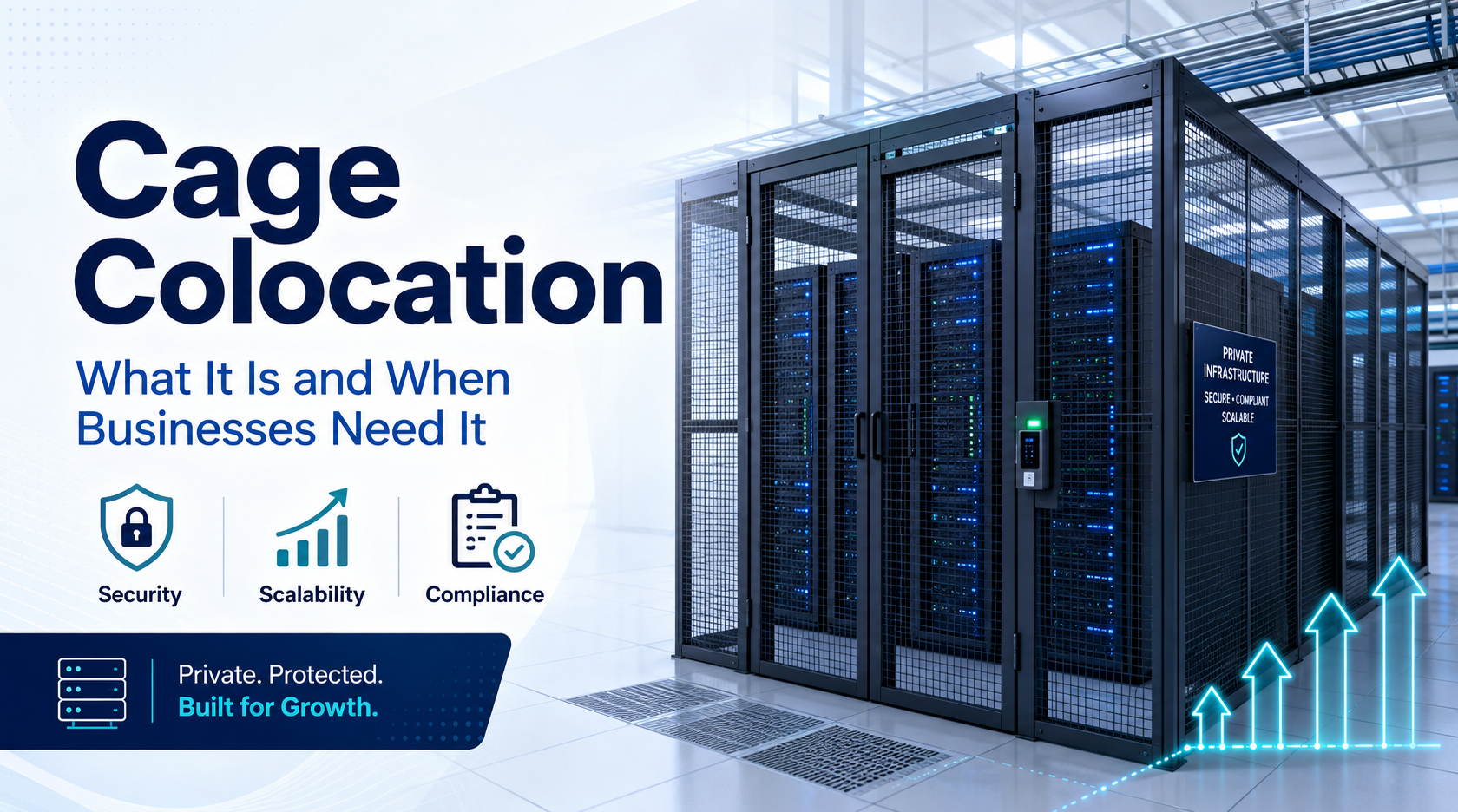
Cage Colocation: what it is and when businesses need it
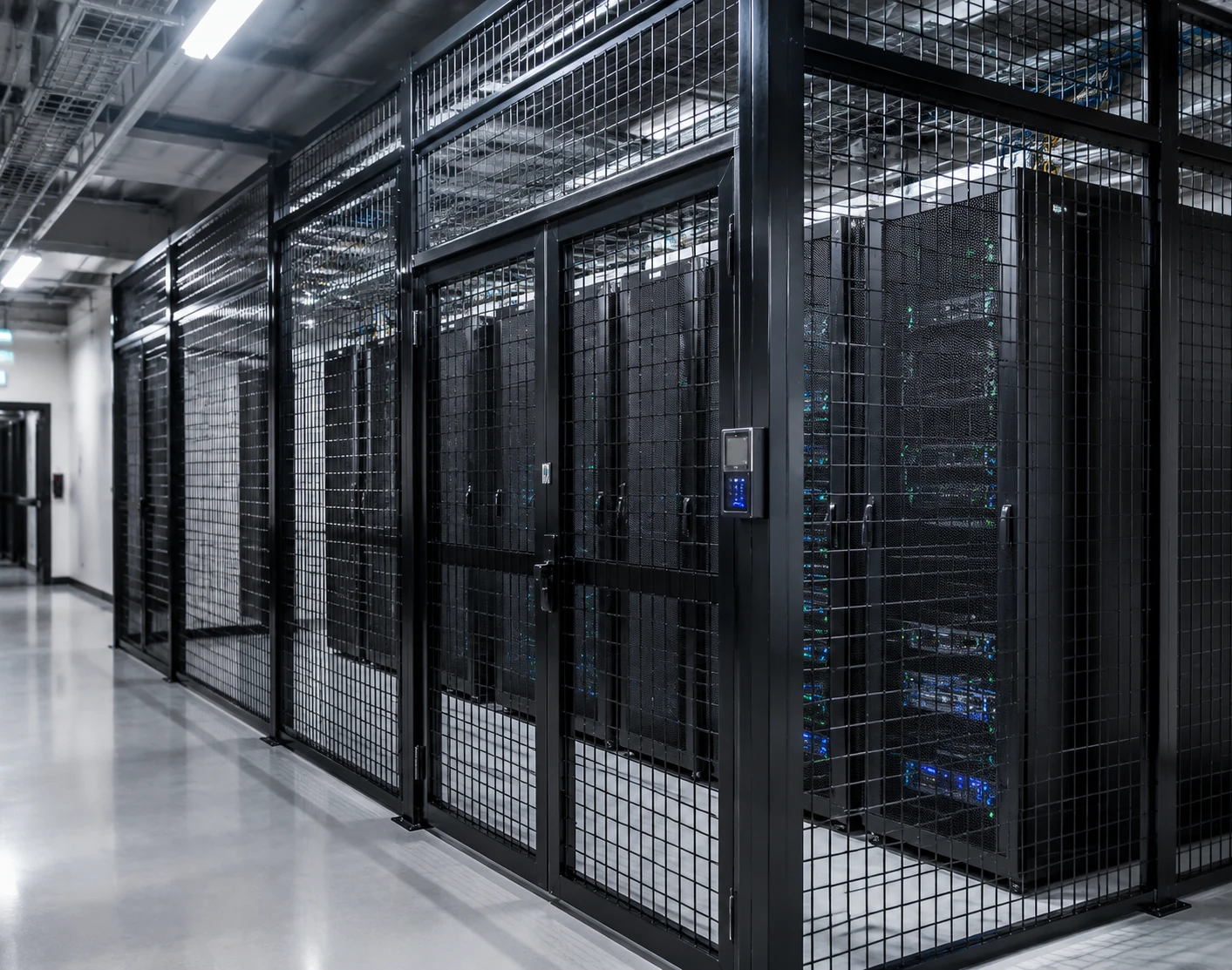
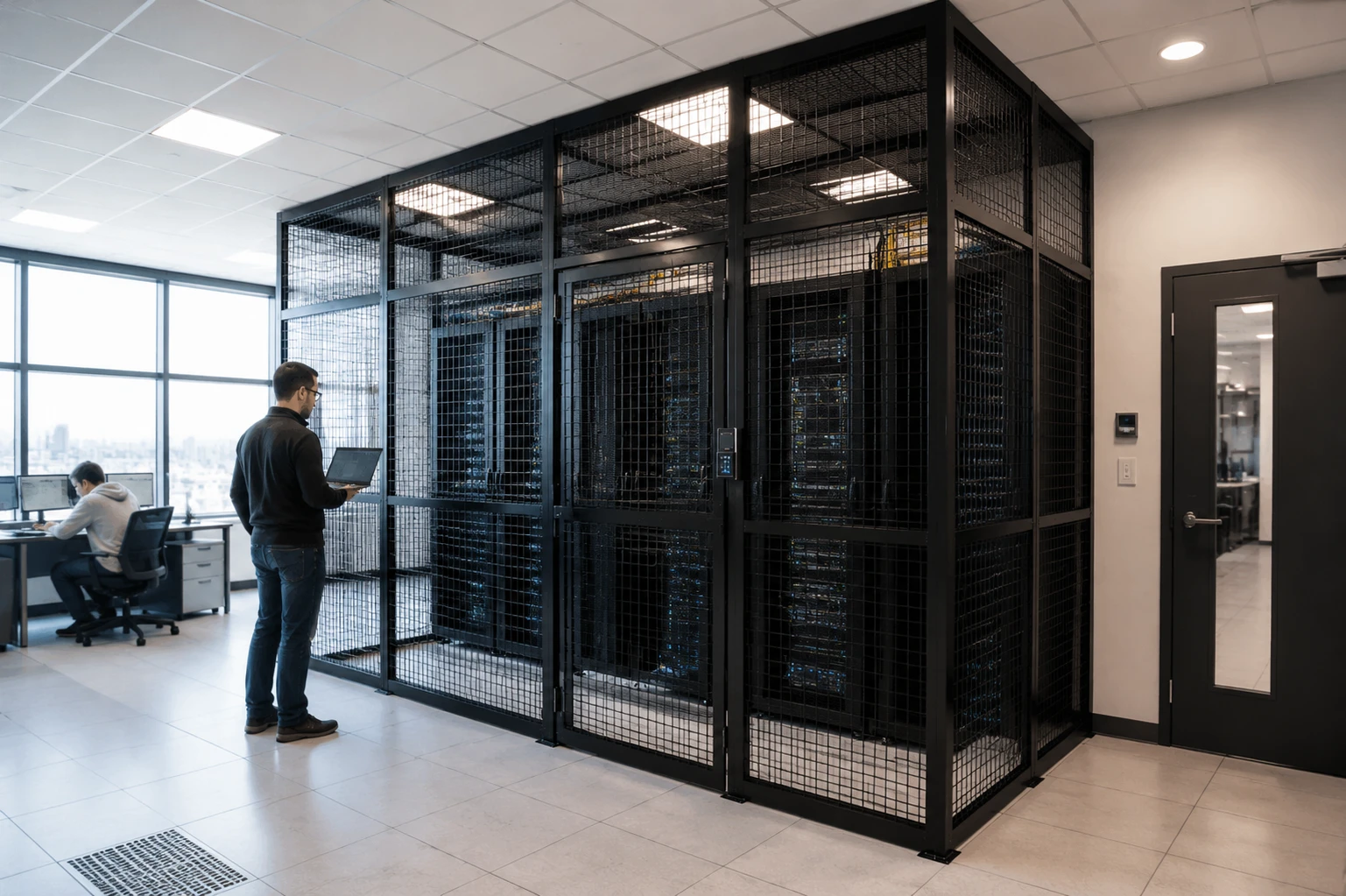
Cage Colocation is a data center hosting model where a client receives not just racks or rack units, but a fully isolated physical space enclosed by a mesh or metal structure (a “cage”). In practice, it is a “closed zone” inside a server hall, dedicated exclusively to a single company.
This approach is used when standard colocation is no longer sufficient: higher security levels, stricter access control, and the need to place a large amount of equipment in one physically isolated environment become critical requirements.
What Cage Colocation is
Cage Colocation is an extended form of colocation services. Unlike renting individual rack units (U) or even a full rack, the client receives a physically enclosed area inside the data center.
Inside a cage, companies typically place:
- server equipment
- network devices
- storage systems
- additional infrastructure hardware
The key feature is physical isolation. Only the client or authorized personnel have access to the cage.
How Cage Colocation differs from other models
To understand the value of cage-based solutions, it is important to compare them with other deployment models.
Colocation (rack or units)
- equipment is placed in a shared environment
- access to racks may be restricted, but there is no full isolation
- suitable for small and medium-scale infrastructure
Cage Colocation
- a dedicated enclosed area inside the data center
- higher level of physical security
- ability to scale within a single controlled space
Private Cage (extended version)
- a separate room inside the data center
- used for large enterprise clients or service providers
Thus, cage colocation sits between standard colocation and a fully private data hall.
When businesses need Cage Colocation
Not every project requires a cage. This solution becomes justified at a certain scale and level of requirements.
Main use cases:
1. Large number of servers
When a company operates dozens or hundreds of servers, managing them in shared colocation becomes less convenient and less secure.
2. Higher security requirements
Cages are used when restricting physical access is critical:
- financial systems
- corporate databases
- infrastructure with sensitive data
3. Compliance requirements
Some standards require strict physical access control, including:
- GDPR
- ISO 27001
- internal corporate security policies
4. Service providers and MSPs
Cages are commonly used by:
- hosting providers
- managed service providers
- telecom operators
- cloud integrators
They need physical separation between customer environments.
5. High-density infrastructure


When deploying dense server setups (e.g., GPU or HPC clusters), more space, cooling, and flexibility within a single zone are required.
Advantages of Cage Colocation
Moving to a cage model provides several key benefits.
Physical isolation
The main advantage is a dedicated space inside the data center that is inaccessible to other clients.
Enhanced security
Access control typically includes:
- individual keys
- biometrics
- video surveillance
- access logs
Flexible layout
The company defines how the space is organized:
- rack placement
- network equipment layout
- maintenance zones
Scalability
Unlike standard rack colocation, cages allow easier expansion without changing the physical layout logic.
Simplified operations
All systems are located within a single enclosed space, which simplifies:
- maintenance
- inventory management
- cable management
- infrastructure audits
Disadvantages and limitations
Despite its advantages, cage colocation is not always justified. Key limitations include:
- higher cost compared to standard colocation
- minimum hardware volume requirements
- long-term contracts from many providers
- overkill for small projects
For startups or small IT teams, a cage is usually an excessive solution.
Cage Colocation vs Private Room vs Rack
It is important to understand the difference between key formats:
- Rack Colocation – one or more racks in a shared environment
- Cage Colocation – a fenced-off area inside a server hall
- Private Room / Suite – a separate room inside the data center
Cage colocation is often chosen as a balance between cost and isolation level: cheaper than a private room, but significantly more secure than standard colocation.
How to choose a Cage Colocation provider
When selecting a provider, pricing is not the only factor – infrastructure matters more.
Data center
- Tier III or higher
- redundant power supply (N+1 or 2N)
- industrial-grade cooling systems
Network capabilities
- access to multiple carriers
- presence of internet exchange points
- support for high data transfer speeds
Security
- multi-level access control
- 24/7 video surveillance
- full access logging
Support
- 24/7 availability
- Remote Hands / Smart Hands services
- fast incident SLAs
Cage configuration flexibility
Some providers allow:
- resizing the cage
- adding racks
- customizing internal layout
Practical applications of Cage Colocation
In practice, cage colocation is most often used for:
- SaaS platform infrastructure
- data-intensive services (AI, analytics, big data)
- cloud and hybrid solutions
- telecommunications nodes
- enterprise IT systems of large companies
Cage colocation is especially relevant where physical security and scalability must be combined in one environment.