How to Display Color Options and Size Chart in WooCommerce Products (Complete Guide)
Table of Contents
- Introduction
- Why Showing Color Options and Size Charts Matters in WooCommerce
- Things You Need Before Adding Color Options and Size Charts in WooCommerce
- How to Add Color Options in WooCommerce Products Step by Step Guide
- How to Show Color Swatches Instead of Dropdowns in WooCommerce Products
- Common Problems When Adding Color Options and Size Charts
- Conclusion
Introduction
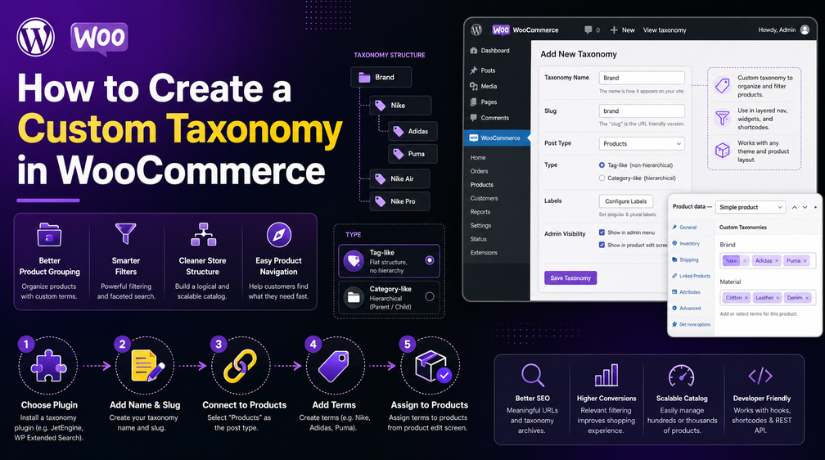
When people shop online, they want quick and clear product details. They want to see colors, sizes, and helpful buying information. That is why many store owners now add color and size charts in WooCommerce product pages. These features make shopping easier and more confident for buyers. A customer can check the available color before ordering. The same customer can also confirm the correct size quickly. This reduces guesswork and improves the full shopping experience. It also helps the product page look cleaner and more useful. If you sell clothes, shoes, or fashion items, this matters more. Even accessory stores can benefit from better option display methods. Many users also search for ways to add color options to WooCommerce product pages without confusion. A well-built product page supports faster decisions and better trust. It also helps buyers stay on the page longer. In many cases, it can also improve product conversions.
WooCommerce already supports product options through attributes and variations. This means you can create color and size choices easily. The process starts with proper WooCommerce variable products setup. After that, you can build better product pages step by step. You can use default dropdowns or improve the design later. Many stores also use a WooCommerce color swatches plugin for a better view. Some also install a WooCommerce size chart plugin for size help. Both methods can improve the user experience in a simple way.
Why Showing Color Options and Size Charts Matters in WooCommerce
Color options make product selection faster for online shoppers
Clear color choices help buyers understand available options very quickly. They do not need to read long product descriptions first. A shopper can simply click the color they want. This makes the page easier to use and understand. When you add color options WooCommerce product pages become more useful. It also saves time during the buying process.
Size charts help customers choose the correct product size
Many buyers leave a store when sizing feels confusing. A clear size chart removes that problem very fast. Customers can compare measurements before placing an order. This gives them more confidence while shopping on your site. That is why many stores use a WooCommerce size chart plugin. It helps reduce wrong purchases caused by size confusion.
These features make WooCommerce product pages look more professional
A product page should look complete and easy to use. Basic product pages often feel plain or unfinished to buyers. Color options and size charts improve that experience a lot. They make the page look more modern and customer-friendly. When you add color and size chart in WooCommerce, the page feels stronger. It also shows that your store is built with care.
Better product details can reduce returns and exchange requests
Returns often happen when buyers choose the wrong color or size. Good product options help prevent these common mistakes early. Buyers can review their choices before adding items to cart. This leads to better order accuracy and fewer support issues. A helpful size chart and clear color display both matter. They support a smoother shopping journey from start to finish.
These options are very useful for fashion and variable products
Fashion, footwear, and clothing stores need clear product choices most. These stores usually sell items in many sizes and colors. That is where WooCommerce variable products setup becomes very important. It allows stores to manage choices in one product page. It also helps buyers select exactly what they need. This creates a better experience for both store owners and customers.
Things You Need Before Adding Color Options and Size Charts in WooCommerce
Your WooCommerce store should already have products added
You need existing products before setting up colors and sizes. This makes the setup process much easier to manage. You can decide which products need variation options first. It also helps you plan the product page clearly. A proper product base saves time during later setup steps.
Product attributes like color and size must be ready first
WooCommerce uses attributes to create variation options for products. These attributes can include values like red, blue, small, or large. Without attributes, you cannot build useful product variations correctly. This is the first real step before moving ahead. It is also essential for how to add product variations to WooCommerce properly.
The product must use the variable product type
A simple product cannot handle multiple color or size choices. You need to switch the product type to variable. This gives you access to product variation settings. It also allows separate stock, price, and image control. A strong WooCommerce variable products setup starts with this step.
Product images should match each available color option
Images help buyers understand product choices more clearly. A blue variation should show a blue product image. A black variation should show the black version instead. This improves the shopping experience on the product page. It also works well with a WooCommerce color swatches plugin. Matching images make color selection much easier for shoppers.
You need a method to display the size chart properly
Size charts can be added in different ways in WooCommerce. Some store owners use manual tables inside the product page. Others use a WooCommerce size chart plugin for easier setup. Both methods can work when used correctly. The best option depends on your store design and needs. The goal is to keep the chart clear and easy to read.
You may also need a plugin for better color display
WooCommerce can show colors in a basic dropdown style. But many stores want a more visual option display. That is where a WooCommerce color swatches plugin becomes useful. It replaces plain dropdowns with better-looking color choices. This makes the page more attractive and easier to use. It also improves the way shoppers interact with product variations.
How to Add Color Options in WooCommerce Products Step by Step Guide
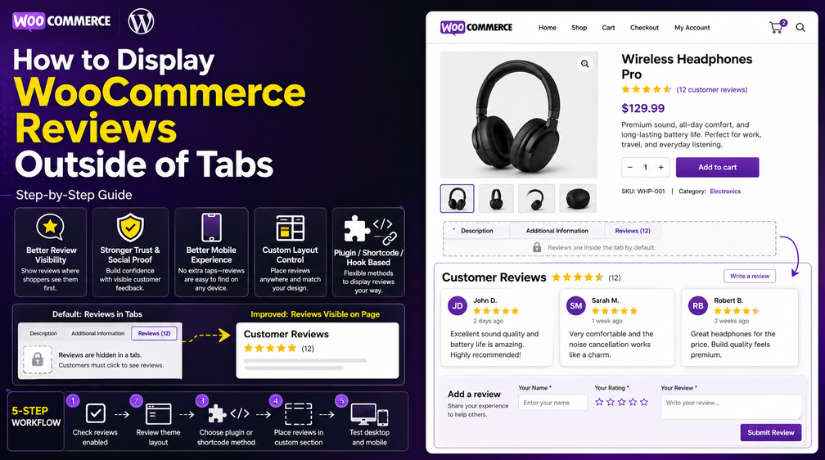
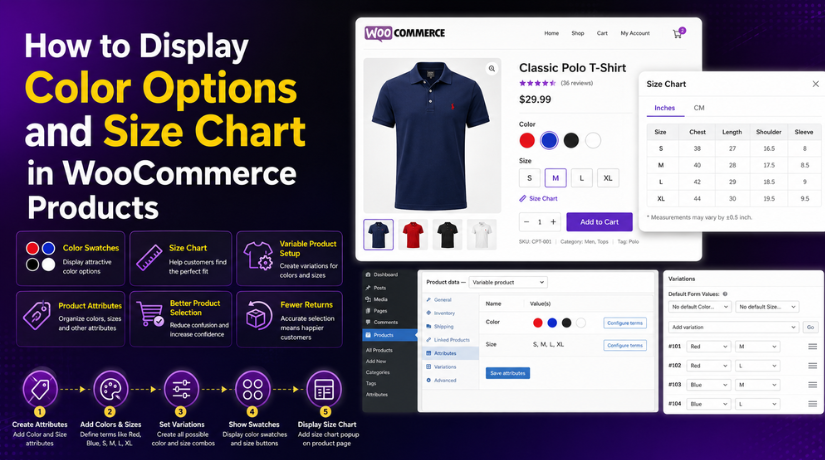
Adding color options in WooCommerce is easier than many store owners think. You only need to follow the correct steps in order. Once the setup is done, buyers can choose their preferred color quickly. This improves the product page and makes shopping more simple. It is also a key part of WooCommerce variable products setup. If you want to add color options to WooCommerce product pages the right way, start here.
Step 1: Open the attributes section in WooCommerce
- Go to your WordPress dashboard.
- Click Products and then click Attributes.
- This page lets you create new product attributes.
Step 2: Add the color attribute name
- In the name field, type Color.
- You can keep the slug simple or leave it blank. WooCommerce can create it for you automatically.
Step 3: Save the attribute
- Click the Add attribute button.
- Now WooCommerce will create the new color attribute.
Step 4: Add color terms under the attribute
- After saving, click Configure terms under the Color attribute.
- Now add your color names one by one. You can add terms like Red, Blue, Black, White, or Green.
Step 5: Keep color names short and clear


- Use simple color names that buyers understand quickly.
- Clear names make the product page easier to use. They also make future changes easier for you.
- This step gives you the base for adding color choices.
- Without this part, WooCommerce cannot show color variations properly.
Once the color setup is ready, adding a WooCommerce size chart plugin becomes much easier. That is why starting with the right structure always matters.
How to Show Color Swatches Instead of Dropdowns in WooCommerce Products
Default dropdowns work, but they do not look very modern. Many store owners want a more visual product option style. That is why they use color swatches instead. A swatch shows the actual color choice on the page. This makes selection faster and easier for customers. It also helps you add color options to WooCommerce product pages in a better way. Follow these simple steps to replace dropdowns with swatches.
Step 1: Create the color attribute in WooCommerce first
- Go to Products > Attributes in your WordPress dashboard.
- Create a new attribute and name it Color.
- Click Add attribute and save the changes properly.
- Then open the color attribute terms page.
- Add values like red, blue, black, or white.
- This is the first step in WooCommerce variable products setup. Without this, swatches will not work correctly.
Step 2: Assign the color attribute to your product
- Now open the product where you want color options.
- Change the product type to Variable product if needed.
- Go to the Attributes section inside product data.
- Select the Color attribute and add the values.
- Check the box that says Used for variations.
- Then save the attribute settings. This helps how to add product variations to WooCommerce the right way.
Step 3: Create the product variations from the color attribute
- After adding the attribute, open the Variations tab.
- Choose the option to create variations from all attributes.
- WooCommerce will create separate color variations automatically.
- Now edit each variation one by one.
- Add price, stock, and image for every color option.
- This step is very important for a working setup. Each swatch should connect to a real variation.
Step 4: Install a WooCommerce color swatches plugin
- WooCommerce shows dropdowns by default on variable products.
- To replace them, install a WooCommerce color swatches plugin. You can choose a plugin from the WordPress plugin area.
- After installing it, click Activate from the dashboard.
- Most plugins add new swatch settings automatically.
- This is the easiest way to improve product option display. It also makes the page look more attractive.
Step 5: Configure the swatch settings for the color attribute
- Open the swatches plugin settings or attribute settings page.
- Find the Color attribute that you created earlier.
- Change its display type from dropdown to color swatch.
- Then assign the correct shade to each color term.
- For example, red should show red and blue should show blue.
- Save all settings after completing this part. This turns plain options into visual swatches.
Step 6: Check the product page on the front end
- Now visit the product page from your store front end. You should see color swatches instead of dropdown fields.
- Click each swatch and test how it behaves.
- Make sure the image, stock, and price update correctly.
- Also test the page on mobile and desktop screens.
- A swatch feature should work well on every device. This creates a better shopping experience for users.
Step 7: Keep the swatches clean and easy to use
- Use simple color names that customers already understand easily.
- Match each swatch with the correct product image always.
- Do not make the swatches too small or crowded.
- Keep enough spacing between each option for better clicks.
- A clean design improves the buying experience a lot. It also helps buyers choose faster with less confusion.
Step 8: Test after theme or plugin changes
- Sometimes swatches stop working after theme or plugin updates. That is why regular testing is very important.
- Open a few variable products and check each color option.
- Make sure the swatches still display and function properly.
- This helps avoid customer issues on the live store.
- A quick check can save many support problems later.
Color swatches give your store a more modern product layout. They also help customers make faster and better decisions. When done correctly, they improve both usability and product presentation.
Common Problems When Adding Color Options and Size Charts
These features are very useful, but setup errors can happen. Most problems come from missing settings or theme issues. The good part is that most of them are easy to fix. You just need to check the setup step by step. This helps keep your store working properly.
Color options may not show when attributes are not enabled for variations
Sometimes the color attribute exists, but it is not active. If Used for variations is not checked, options may not appear. This is a very common setup mistake. Open the product settings and review the attribute section. Make sure the color values are linked to variations properly. This matters when you add color options to WooCommerce product pages.
Color options may fail when the variation setup is incomplete
A product may have attributes but no full variation data. Missing price, stock, or saved settings can cause issues. Review each variation one by one on the product page. Make sure every option is created and saved correctly. This is an important part of how to add product variations to WooCommerce the right way. Incomplete setup often causes missing options.
Theme or plugin conflicts can stop swatches from showing correctly
Sometimes the problem is not in WooCommerce settings. A theme or another plugin may block the swatches. This is more common when using a WooCommerce color swatches plugin. Try testing with a default theme if needed. Also disable extra plugins one by one for testing. This helps you find the real issue faster.
The size chart may not display when the location setting is wrong
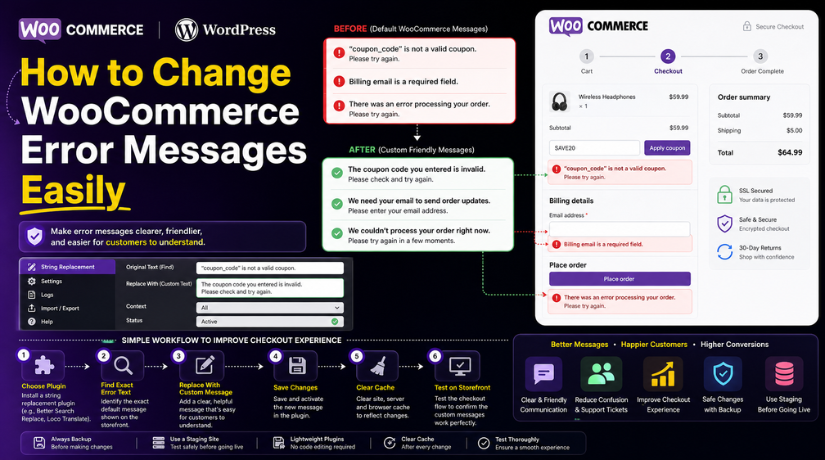
A chart can exist but still stay hidden on the page. This often happens when the display location is incorrect. Check whether the chart is set for tab, popup, or inline view. Then confirm that the product supports that location. A small setting mistake can hide the full chart. Always test the page after changes.
Plugin settings can also stop the size chart from appearing properly
Some chart plugins need extra rules before display. The chart may not show until products are assigned. It may also need category selection or visibility settings. Review the full plugin setup carefully from start to finish. A WooCommerce size chart plugin usually works well after correct setup. Most display issues come from skipped steps.
Styling issues can make the size chart hard to read
Sometimes the chart appears, but the design looks broken. Table width, font size, or spacing may look wrong. This often happens because of theme styles. A chart should stay clean and easy to scan. If needed, adjust the layout with simple CSS. Good styling makes the chart more useful for buyers.
Swatches or size charts may not work well on mobile screens
Mobile users need a clear and responsive product layout. Small swatches or wide tables can break the design. Always test your product page on phones and tablets. Check taps, spacing, and chart readability carefully. Better mobile testing helps avoid customer frustration. It also supports stronger store performance.
Conclusion
Showing color options and size charts in WooCommerce can improve the full product page experience. Color choices help customers select the style they want quickly. Size charts help them choose the right fit with less confusion. Together, these features make product pages more helpful, more professional, and easier to use. You can start with the default WooCommerce settings, use a swatches plugin, or add a size chart manually based on your store needs. The key is to keep everything clear, simple, and easy for shoppers to understand. A well-structured product page often leads to better buying decisions and fewer support issues.
If you want expert help to set up color swatches, product variations, or size charts the right way, WooHelpDesk can help you improve your WooCommerce store with practical and reliable support.