Dynamic Pricing vs Role-Based Pricing in WooCommerce (Complete and Detailed Guide)
Table of Contents
- Introduction
- What Is Dynamic Pricing in WooCommerce and How Does It Work in Real Stores?
- Uses of Dynamic Pricing in WooCommerce for Different Store Types
- Benefits of Using Dynamic Pricing in WooCommerce for Better Sales Growth
- What Is Role-Based Pricing in WooCommerce and How Does It Work?
- Uses of Role-Based Pricing in WooCommerce for Different Business Models?
- Benefits of Using Role-Based Pricing in WooCommerce for Better Customer Control
- Dynamic Pricing vs Role-Based Pricing in WooCommerce: Full Comparison
- Which One Should You Choose for Your WooCommerce Store Pricing Strategy
- Conclusion
Introduction
Running an online store needs more than listing products and waiting for sales. You also need a pricing method that matches your business goals. This is where dynamic vs role based pricing WooCommerce becomes an important topic for store owners. Both methods help you control product prices in smarter ways. They also help you target different buyers with better offers. In WooCommerce, flexible pricing can improve sales and create a better shopping experience.
Some stores want discounts based on cart behavior. Other stores want special prices for specific customer groups. That is why many businesses compare these two pricing methods before choosing one. In this guide, we will start with dynamic pricing first. We will explain what it means, how it works, and where it is used. This helps you understand the foundation before comparing it with role-based pricing later.
What Is Dynamic Pricing in WooCommerce and How Does It Work in Real Stores?
Dynamic pricing in WooCommerce means product prices change based on rules. These rules are set by the store owner in advance. The price does not always stay fixed for every buyer. Instead, it changes when certain shopping conditions are met. This makes pricing more flexible and more useful for promotions. Many store owners use a WooCommerce dynamic pricing plugin to create these rules easily. These plugins allow automatic discounts without changing each product manually.
This method is helpful when you want smart offers to run automatically. It can also reduce manual pricing work for larger stores. Dynamic pricing is based on actions, values, or product conditions. It is not based on the customer’s account role. That is the main reason it differs from WooCommerce role based pricing. In dynamic pricing, the discount depends on what the customer buys and how they buy it.
Uses of Dynamic Pricing in WooCommerce for Different Store Types
Dynamic pricing is used in many types of WooCommerce stores. It supports both simple offers and advanced discount strategies. One of its biggest uses is increasing order size. When buyers see savings on higher quantities, they often buy more. This helps improve revenue without increasing traffic. That is why many stores choose dynamic pricing as a sales tool.
Bulk Purchase Discounts
Bulk discounts are one of the top uses of dynamic pricing. They reward customers for buying more units in one order. This method is common in wholesale, supplies, and fast-moving product stores. It also reduces slow sales on products that sell better in packs. Many store owners use this to increase total order value.
Buy One Get One Offers
Buy one get one offers are another popular use. These campaigns attract buyers quickly and improve conversion rates. A store can offer one free item after one paid item. It can also offer discounts on the second item instead. This creates strong value for the customer and helps increase sales volume.
Category Discount Campaigns
Stores often run discounts on complete product categories. This works well during seasonal changes or special events. For example, a fashion store may discount summer wear. A beauty store may discount skincare products for one week. This method is simple for the seller and clear for the buyer. It is one of the easiest dynamic pricing strategies to manage.
Cart Value Discount Offers
Cart value offers encourage buyers to spend more. For example, a customer may get a discount after reaching a target amount. This strategy is very useful for increasing average order size. It also helps stores move customers closer to free shipping thresholds. This use case is common in many successful WooCommerce stores.
Seasonal Sales and Limited-Time Promotions
Seasonal sales depend heavily on dynamic pricing rules. During holidays or major events, stores often change prices temporarily. This helps create urgency and attract more orders. The pricing can return to normal after the campaign ends. A WooCommerce dynamic pricing plugin makes this setup much easier for store owners.
Flash Sales
Flash sales are short promotions with limited time offers. They create urgency and encourage quick buying decisions. Dynamic pricing makes flash sale setup simple and automatic. The discount starts and ends at the scheduled time. This reduces manual work and keeps the promotion controlled.
Stock Clearance Campaigns
Dynamic pricing is also useful for clearing old stock. Slow-moving products can be discounted to attract buyers faster. This helps free storage space and recover product value. Instead of keeping old inventory too long, stores can create smart discount rules. This is a practical business use of dynamic pricing.
In short, dynamic pricing is built for smart promotions and automated discounts. It uses buying behavior instead of user roles to change prices. That is what makes it different from role based discounts WooCommerce setups. While WooCommerce custom pricing by user role focuses on who the customer is, dynamic pricing focuses on what the customer does in the cart. This makes it a powerful option for stores that want flexible offers, larger orders, and better campaign control.
Benefits of Using Dynamic Pricing in WooCommerce for Better Sales Growth
Dynamic pricing helps WooCommerce stores sell in a smarter way. It does not just change product prices. It supports sales goals, promotions, and better order value. Many store owners use this method to improve results without manual work. With the right WooCommerce pricing rules, discounts can run automatically in the background. This saves time and keeps pricing offers more consistent. It also helps customers feel they are getting better value. That often leads to faster buying decisions. When comparing dynamic vs role based pricing WooCommerce, this is one major strength of dynamic pricing. It reacts to shopping behavior, not user type. That makes it very useful for sales campaigns and store-wide offers.
Increases Average Order Value in WooCommerce
One major benefit of dynamic pricing is a higher order value. Customers often spend more when they see a discount target. For example, they may add more items to unlock savings. They may also increase cart value to reach a better offer. This helps the store earn more from each order. It is one of the most useful dynamic pricing WooCommerce examples in real stores.
Encourages Customers to Buy More Products
Dynamic pricing gives shoppers a reason to buy extra items. A simple quantity discount can change buying behavior quickly. Customers may choose three items instead of one item. They do this because the deal feels more valuable. This is good for both the customer and the store. It supports higher sales without changing the full pricing structure.
Supports Smart Promotional Campaigns in WooCommerce
Dynamic pricing is very useful for planned promotions. Store owners can create offers for products, categories, or cart totals. These offers can run during holidays, weekends, or special campaigns. A good WooCommerce dynamic pricing plugin makes this process easy to manage. Instead of changing prices manually, the store follows automatic pricing rules. This keeps the campaign smooth and more accurate.
Improves Conversion Opportunities During Shopping
Shoppers often respond well to visible discounts and offers. When they see a pricing benefit, they may complete checkout faster. Dynamic pricing helps remove hesitation during the buying process. It gives customers a strong reason to act now. This can improve conversion rates during important sales periods. It also helps make the shopping experience feel more rewarding.
Automates Discount Handling for Store Owners
Manual discount setup takes time and creates more work. Dynamic pricing reduces that effort with automatic rule-based actions. Once the rules are set, the pricing works on its own. This is useful for stores with many products and regular campaigns. It also reduces mistakes that happen with manual editing. Strong WooCommerce pricing rules help the store stay organized and efficient.
Helps Move Slow-Selling Products Faster
Some products stay in stock for too long. Dynamic pricing can help push those items with better offers. A discount on selected products can attract more buyers. This is useful for seasonal stock or old inventory. It helps store owners clear space and recover product value. Many stores use this strategy to keep inventory moving smoothly.
Makes Seasonal Offers Easier to Manage
Seasonal campaigns need fast and clear pricing control. Dynamic pricing makes this much easier for WooCommerce stores. You can set start dates, end dates, and discount conditions. After the campaign ends, prices return automatically. This saves time and avoids pricing errors later. It is one reason many businesses install a WooCommerce dynamic pricing plugin for promotions.
What Is Role-Based Pricing in WooCommerce and How Does It Work?
Role-based pricing in WooCommerce means different users see different prices. The price depends on the user role, not shopping actions. This pricing method is based on who the customer is. It is not based on cart value, quantity, or product conditions. That is the key difference from dynamic pricing. In WooCommerce role based pricing, each customer group can have its own pricing level.
This helps stores serve wholesale buyers, retailers, members, or VIP customers more effectively. It also helps control who can see special prices. In WordPress and WooCommerce, users can have different account roles. A store owner can assign pricing based on those roles. For example, wholesale buyers may get lower prices than retail customers.
Members may get exclusive prices after logging into their account. This makes role-based pricing very useful for private or segmented selling. Many businesses use it for B2B and B2C stores together. It also supports long-term pricing strategies better than many promotion-based methods.
Uses of Role-Based Pricing in WooCommerce for Different Business Models?
Role-based pricing is useful when stores serve more than one customer group. It helps create better price control without changing the store for everyone. Instead of using shopping behavior, it uses user identity and account type. This is very useful for B2B stores, private shops, and membership websites. It creates a more personal pricing experience for each group.
Wholesale Customer Pricing
Wholesale stores often need separate prices for business buyers. These customers usually order more and expect better rates. Role-based pricing helps show the correct price after login. This avoids public discount display and keeps pricing private. It is one of the top uses of WooCommerce role based pricing.
Member-Only Pricing
Membership stores often offer benefits to paid or active members. One strong benefit is special product pricing. Logged-in members can access lower prices or exclusive deals. This adds more value to the membership program. It also helps increase renewals and user loyalty over time.


B2B and B2C Pricing Separation
Some WooCommerce stores sell to both businesses and regular buyers. These two groups often need different pricing. Role-based pricing helps separate them without running two websites. Business users can see one price. Retail users can see another price. This keeps pricing clean and easier to manage.
Reseller Pricing Setup
Resellers may need a different pricing level from standard wholesale buyers. Role-based pricing allows that extra control. The store owner can assign a custom role and set special prices. This helps manage business partnerships more effectively. It also avoids confusion between different account types.
VIP Discounts for Selected Users
Some stores want to reward top buyers with better pricing. This can be done through role assignment. VIP users can receive lower prices or hidden offers. These discounts stay limited to the selected group. This creates exclusivity and improves customer loyalty. It is another practical use of role based discounts in WooCommerce settings.
Private Store Pricing
Private stores often serve approved buyers only. In these stores, product pricing should stay hidden from public users. Role-based pricing helps control this access. Only approved users can log in and see prices. This is useful for wholesale catalogs and restricted-order businesses. It gives the store owner full pricing control.
Hidden Prices for Non-Logged-In Users
Many stores want users to register before viewing prices. Role-based pricing helps make that possible. Guests may see product details but not product prices. Once they log in, they can see their assigned rates. This supports lead generation and account creation. It also protects private pricing structures.
Exclusive Deals for Selected Customers
Some businesses run special pricing for selected groups only. This may include partners, repeat buyers, or internal teams. Role-based pricing helps manage these deals cleanly. The prices stay hidden from other users. This makes the offer more personal and more secure. It also supports long-term pricing relationships.
Benefits of Using Role-Based Pricing in WooCommerce for Better Customer Control
Role-based pricing gives store owners more control over who sees what price. It is very useful when one store serves different customer groups. Instead of changing prices by cart actions, it changes prices by user role. This makes pricing more stable and more personal. In dynamic vs role based pricing WooCommerce, this is one of the biggest differences. Role-based pricing focuses on customer identity. Dynamic pricing focuses on customer behavior. That is why both methods support different store goals.
Creates Personalized Prices for Different User Groups in WooCommerce
Not every customer should always see the same price. Some buyers purchase in bulk. Some join as members. Others may be resellers or business clients. Role-based pricing helps match prices to these groups. This creates a better and more personal shopping experience. With WooCommerce custom pricing by user role, stores can set clear pricing levels for each customer type. This makes pricing more relevant and more useful.
Supports Wholesale and B2B Selling in WooCommerce
Wholesale and B2B stores often need a special pricing structure. Business buyers usually expect lower rates than regular shoppers. Role-based pricing makes this possible without affecting public store prices. Wholesale users can log in and see their assigned pricing. Guest users still see standard product prices. This is one reason WooCommerce role based pricing is popular with business stores. It supports serious pricing control.
Separates Retail and Wholesale Pricing More Clearly
Many stores sell to both retail and wholesale users together. In that case, one fixed product price is not enough. Retail buyers need one price. Wholesale buyers need another. Role-based pricing helps separate these two models inside one store. This reduces confusion and keeps the store organized. It also avoids the need for a second website just for wholesale buyers.
Works Well for Membership-Based WooCommerce Stores
Membership stores often offer special benefits to logged-in users. Pricing is one of the strongest benefits they can offer. Role-based pricing allows members to see exclusive prices after login. This makes memberships feel more valuable. It also gives users a good reason to stay subscribed. Many stores use WooCommerce custom pricing by user role to support member pricing in a simple way.
Improves Customer Segmentation for Store Owners
Customer segmentation means dividing customers into useful groups. Role-based pricing makes this process much easier in WooCommerce. You can create separate prices for retailers, VIP buyers, members, and resellers. This helps the store match pricing to business goals. It also helps store owners manage offers more clearly. Better segmentation often leads to better long-term sales control.
Protects Special Pricing from Public Visitors
Some prices should not be visible to everyone. This is common in wholesale and private stores. Role-based pricing helps protect those prices from guest users. Only approved or logged-in users can see the correct rates. This keeps business pricing private and more professional. It is a strong reason many stores use role based discounts WooCommerce setups instead of public discount methods.
Gives Store Owners Better Control Over Pricing Visibility
Pricing is not only about discount value. It is also about who can access that value. Role-based pricing gives store owners better visibility control. They can show prices to one group and hide them from another. This is useful for private catalogs, wholesale accounts, and approved buyer programs. It makes the pricing system more flexible without becoming confusing.
Dynamic Pricing vs Role-Based Pricing in WooCommerce: Full Comparison
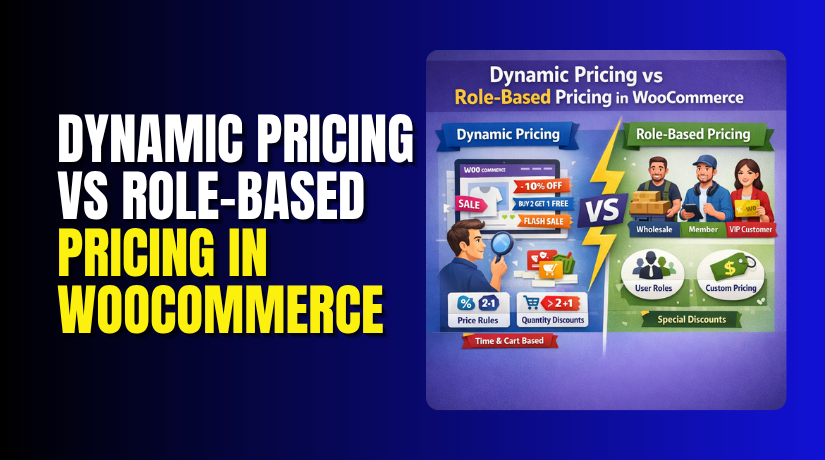
When choosing between these two pricing methods, store owners should first understand how each one works in practice. Both options help control product pricing, but they do it in very different ways. Dynamic Pricing vs Role-Based Pricing in WooCommerce is not only about discounts. It is also about business goals, customer targeting, and pricing control. To make this easier, let us first look at Dynamic Pricing in detail, then Role-Based Pricing, and then understand the key difference between them.
Dynamic Pricing in WooCommerce
- Pricing changes by shopping conditions: Dynamic pricing works when a customer meets certain rules. These rules can depend on quantity, cart total, product type, category, or time-based offers.
- Focuses on customer actions: This pricing method looks at what the customer does in the store. If they buy more, spend more, or choose selected products, the discount applies.
- Best for promotional campaigns: Dynamic pricing is useful for sales events, bulk discounts, flash deals, seasonal offers, and cart-based promotions.
- Helps increase order value: Store owners often use it to encourage customers to add more items. This helps raise the average order size.
- Works well for short-term offers: It is a strong option for limited-time campaigns. Prices can change automatically and return to normal after the offer ends.
- Needs pricing rules setup: The store owner must create clear pricing conditions. These rules are usually managed through a WooCommerce dynamic pricing plugin.
- Common in growth-focused stores: Stores that want better conversions and larger carts often use this method.
- Examples of dynamic pricing: Buy more, save more offers, category discounts, cart total discounts, and holiday promotions are common dynamic pricing WooCommerce examples.
Role-Based Pricing in WooCommerce
- Pricing changes by user role: Role-based pricing works according to the customer’s account type. Different users can see different prices for the same product.
- Focuses on customer type: This method does not depend on cart actions. It depends on whether the user is a wholesaler, member, retailer, subscriber, or VIP buyer.
- Best for customer-specific pricing: It is ideal for wholesale stores, B2B shops, private stores, and membership-based businesses.
- Helps create personalized pricing: Store owners can show special prices only to selected customer groups. This makes the pricing structure more targeted.
- Works well for long-term pricing strategy: Role-based pricing is not mainly for temporary promotions. It is better for stable pricing models that stay tied to user roles.
- Needs role setup and access control: The store owner must create or manage user roles properly. Pricing is then assigned to each role using WooCommerce role based pricing settings or plugins.
- Common in wholesale and membership stores: Stores serving different buyer groups often use this method for better control.
- Examples of role-based pricing: Wholesale discounts, member-only pricing, reseller rates, hidden prices for guests, and WooCommerce custom pricing by user role are common examples.
Both pricing methods are useful, but they solve different problems. Dynamic Pricing is better when you want flexible offers based on shopping actions. Role-Based Pricing is better when you want special prices for specific customer groups. In simple words, one focuses on customer behavior, while the other focuses on customer type. That is why the right choice depends on how your WooCommerce store is set up and what kind of pricing strategy you want to build.
Which One Should You Choose for Your WooCommerce Store Pricing Strategy
The right choice depends on your store model and sales goals. There is no single answer for every WooCommerce business. Some stores only need one pricing method. Other stores need both.
Choose Dynamic Pricing in WooCommerce If Your Store Needs Promotion-Based Offers
Choose dynamic pricing if your main goal is to run offers. This is the better option when you want quantity discounts, cart total discounts, category promotions, or seasonal deals. It is also useful when you want to increase the average order value. If your store depends on campaigns and sales events, dynamic pricing will usually fit better. A good WooCommerce dynamic pricing plugin can help manage these rules easily.
Choose Role-Based Pricing in WooCommerce If Your Store Serves Different Customer Types
Choose role-based pricing if your store has separate customer groups. This includes wholesale buyers, members, retailers, resellers, subscribers, or VIP users. If different people need different product prices, this method makes more sense. WooCommerce role based pricing is the better option when you want stable prices by account type instead of changing offers by cart actions.
Choose Both Pricing Methods Together If Your WooCommerce Store Has Advanced Pricing Needs
Some stores need both pricing methods together. For example, a wholesale buyer may already have a special role-based price. On top of that, the same buyer may get an extra discount for bulk orders. In that case, role-based pricing handles the customer group, and dynamic pricing handles the promotional rule. This setup can work very well, but it needs careful planning. If rules are not configured properly, price conflicts can happen.
Conclusion
Both pricing methods are useful, but they solve different business needs. Dynamic pricing is better for stores that want promotions, cart-based discounts, and flexible offers. Role-based pricing is better for stores that need customer-specific pricing and account-based control. In simple words, dynamic pricing focuses on shopping behavior. Role-based pricing focuses on customer identity. That is the real difference between them. So before choosing one, think about how your store sells products, who your customers are, and what kind of pricing strategy you want to build. The better choice is the one that matches your store model clearly.
If you need help setting up WooCommerce pricing rules, choosing a WooCommerce dynamic pricing plugin, or configuring WooCommerce custom pricing by user role, WooHelpDesk can help. Our team can assist with dynamic pricing setup, role-based pricing configuration, plugin issues, and pricing display problems in WooCommerce. Whether you want promotional discounts or customer-specific rates, WooHelpDesk can help you build the right pricing setup for your store.