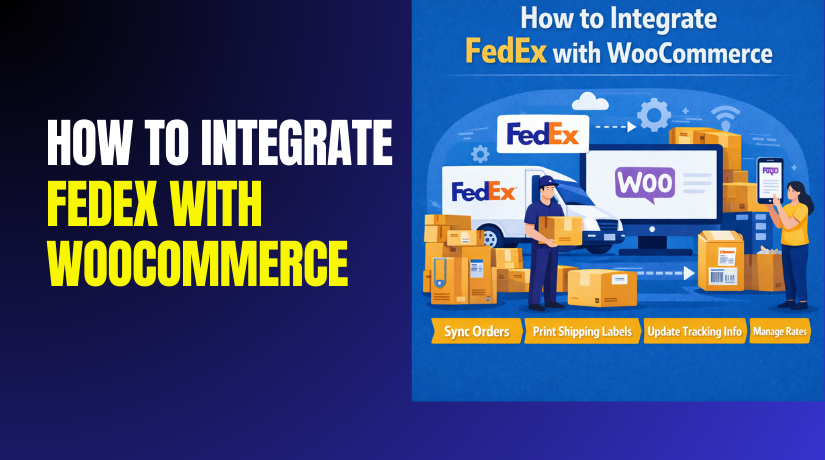
How to Integrate FedEx with WooCommerce Step by Step?
Table of Contents
- Introduction
- What is FedEx?
- How FedEx Shipping Works Inside WooCommerce?
- What Are The Key Features of FedEx?
- What Is Needed Before Integrating FedEx With WooCommerce?
- How to Integrate FedEx with WooCommerce Step by Step?
- What Are The Important FedEx Settings That Impact Checkout Rates?
- How to Avoid Common FedEx Rate Errors?
- What Are The Advanced FedEx Rules That Should Be Set For Real Stores?
- How To Exclude FedEx For Specific Locations?
- How To Improve FedEx Rate Loading Speed?
- What Are The Common FedEx WooCommerce Integration Mistakes?
- Final Verdict
Introduction
Fast shipping can decide if a customer buys or leaves. Many WooCommerce stores lose sales due to unclear delivery costs. You can fix this with FedEx shipping tools and rates.
Shipping is not just delivery, it is also trust. Customers want clear costs before they pay you. Customers also want tracking after they place orders. FedEx offers reliable delivery and tracking for many locations.
When you integrate FedEx with WooCommerce, you reduce manual work. You can show live rates based on address and weight. You can also automate labels, tracking, and shipping emails. This improves customer experience and reduces support tickets. It also reduces mistakes caused by manual entry.
This guide explains FedEx WooCommerce integration in clear steps. You will learn how to connect FedEx to WooCommerce properly. You will also learn how rate quotes work at checkout. You will avoid common setup errors that break shipping rates.
This content focuses on real setup, not just theory. You will see what to prepare before you install anything. You will also understand which FedEx options fit your store. This helps you choose the right WooCommerce FedEx plugin. It also helps you avoid wrong settings and wrong prices.
What is FedEx?
FedEx is a global shipping and logistics company. It offers package delivery, freight, and supply services. FedEx supports domestic and international shipping for businesses. It offers many delivery speeds and service levels. It also provides tracking for every shipment created.
FedEx also offers pickup options for business locations. FedEx can calculate shipping rates based on package details. FedEx can also create shipping labels for packages. These tools can connect with online stores using plugins.
What Are The FedEx Services That May be Used With WooCommerce?
FedEx offers different services for different needs. You should understand these before you connect anything. You can then map them to your store shipping rules.
- FedEx Ground is cost friendly for regular delivery. It fits non urgent orders with normal delivery needs. It fits heavier boxes and standard shipping promises.
- FedEx Home Delivery is built for residential delivery. It fits stores shipping mainly to home addresses. It can support evening delivery in some areas.
- FedEx Express is for faster delivery options. It fits urgent orders and premium shipping checkout choices. It can include overnight or two day options.
- FedEx International is for cross border shipping. It fits stores selling to Canada and other countries. It may need customs forms and extra address checks.
- FedEx Freight is for large and heavy shipments. It fits pallets and bulk shipping for big orders. It often needs special packaging and pickup planning.
How FedEx Connects to WooCommerce in Simple Terms?
- WooCommerce does not include FedEx rates by default.
- You need a WooCommerce FedEx plugin for integration.
- The plugin talks to FedEx using an API connection.
- The plugin sends package details to FedEx for rates.
- FedEx returns rates based on address, weight, and service.
- WooCommerce shows those rates during checkout automatically.
- Some plugins can also create labels from your orders.
- Some plugins can push tracking numbers to customers. This is the core of FedEx WooCommerce integration.
How FedEx Shipping Works Inside WooCommerce?
Many store owners want rates, labels, and tracking together. Understanding the flow helps you avoid wrong settings later.
Step flow of WooCommerce FedEx shipping
- The customer adds products and goes to checkout. WooCommerce reads product weights and dimensions for packages.
- The customer enters an address and selects a shipping method. The FedEx plugin sends address and package details to FedEx.
- FedEx returns live rates for available services. WooCommerce shows the rate options and the customer chooses one.
- Order is placed and WooCommerce stores the selected service. Your store now knows which FedEx service was chosen.
- You fulfill the order inside WooCommerce order screen. The plugin can create a FedEx label for the package.
- Tracking is saved and sent to the customer. Customers can track using email or their account page.
What Are The Key Features of FedEx?
FedEx offers features that help stores ship with speed. These features also reduce manual handling and errors. When you integrate FedEx with WooCommerce, you use many of these.
- Real time shipping rates
Real time rates show shipping costs based on actual details. The rate uses destination, package weight, and service speed. This prevents guessing shipping fees in your store. It reduces overcharging that hurts conversion and trust. It reduces undercharging that cuts your profit margin. Live rates also support multiple FedEx service choices. Customers can pick cheaper or faster shipping at checkout.
- Multiple shipping services and delivery speeds
FedEx provides many shipping methods under one account. You can offer Ground, Express, and international choices. You can offer economy and premium options together. This increases checkout flexibility and customer control. It also supports different product types and delivery needs.
- Shipment tracking and status updates
FedEx tracking helps customers follow their package journey. Tracking includes pickup, transit, and delivery updates. Tracking reduces “where is my order” support messages. It also builds trust during delivery timelines.
- Shipping labels and label printing
FedEx can generate shipping labels for packages. Labels include sender details, receiver details, and barcodes. Label printing makes fulfillment faster and more accurate. It also reduces manual writing and typing mistakes.
- Address validation and delivery rules
FedEx systems can support clean address formatting. Some tools can reduce address errors and failed deliveries. This helps reduce return shipments and extra delivery attempts.
- Pickup scheduling and drop off support
FedEx supports pickups for business accounts in many areas. You can schedule pickups based on your daily dispatch plan. You can also drop packages at FedEx locations.
- International shipping support
FedEx supports cross border services and delivery networks. It can handle international rate quotes and service selection. Many shipments may need customs paperwork and product details. Some setups support commercial invoices for customs needs.
What Is Needed Before Integrating FedEx With WooCommerce?
You can integrate FedEx with WooCommerce faster with preparation. This reduces failures when you connect the API later.
Prepare your FedEx account and store details
- Create or confirm your FedEx account before plugin setup. Your account should support API access for rates.
- Confirm your store origin address in WooCommerce settings. Your shipping origin affects zone and rate results.
- Add product weights for every product you will ship. Live rates need weight data to return correct prices.
- Add product dimensions when box size impacts shipping. This is critical for large or odd sized products.
- Decide packaging rules for how you pack orders. You may use one box, multiple boxes, or flat packaging.
- Confirm units settings for weight and dimension in WooCommerce. Wrong units can break FedEx rate results.
Prepare your shipping policy and checkout options
- Decide which FedEx services to show in checkout. Too many options can confuse customers and reduce sales.
- Decide if you will add handling fees to cover packing costs. Many plugins allow a fixed or percent handling fee.
- Decide if you will ship to PO boxes or exclude them. Many carriers have service limits for such addresses.
- Decide if you will support free shipping thresholds. You can combine free shipping rules with carrier rates.
How to Integrate FedEx with WooCommerce Step by Step?
These steps apply to most FedEx shipping plugins. Labels can differ by plugin provider. The workflow stays the same in most cases.
Step 1: Create or confirm your FedEx account settings
You need the right FedEx account setup for API usage. Many stores fail due to missing account access. Do this step before you install any WooCommerce FedEx plugin.
FedEx Website → Sign In → Account Dashboard → Account Details / Billing → Account Number
- Log in to your FedEx account dashboard in your browser.
- Confirm your business details are correct and verified.
- Confirm the billing address matches your shipping origin address.
- Confirm your account can create shipments and print labels.
- Confirm your FedEx account number is visible in the dashboard.
- Save your account number securely for later plugin setup.
If you do not have a business account, create one first. Some tools need approval for API access or keys. Keep your email and phone active for verification.
Step 2: Set WooCommerce shipping basics correctly
FedEx rates depend on store location and shipping settings. If these settings are wrong, rates will be wrong. Set these values before you connect FedEx to WooCommerce.
WordPress Dashboard → WooCommerce → Settings → General
WordPress Dashboard → WooCommerce → Settings → Products → Measurements
- Go to the WordPress Dashboard and open WooCommerce settings.
- Open the General tab and confirm store address details.
- Confirm country, state, city, and ZIP are correct.
- Open Products settings and confirm weight unit selection.
- Confirm dimension unit selection is correct for your region.
- Save settings and clear any caching if your site uses it.
Also confirm shipping is enabled in WooCommerce. You should already have shipping zones planned or created. FedEx methods will be added inside those zones later.
Step 3: Add product weights and dimensions for accuracy
Live rates need accurate package data for each order. Missing weights can cause wrong rates. Missing dimensions can cause pricing issues for large items.
WordPress Dashboard → Products → All Products → Edit Product → Product Data → Shipping
- Open a product in WooCommerce product editor.
- Open the Shipping tab inside the Product Data section.
- Add weight and dimensions for the product carefully.
- Repeat for all products that will use FedEx shipping.
- For variable products, update each variation shipping data.
- Save changes and confirm data appears on the product screen.
If you sell only digital products, you do not need FedEx. If you sell mixed products, shipping classes can help exclude non shippable items from rates.
Step 4: Install your selected WooCommerce FedEx plugin
Now install the plugin you selected earlier. Use a stable plugin that fits your feature needs. Always install from a trusted source and keep it updated.
WordPress Dashboard → Plugins → Add New → Search Plugin → Install → Activate
WordPress Dashboard → Plugins → Add New → Upload Plugin → Install → Activate
- Go to the WordPress Dashboard and open the Plugins section.
- Click Add New and search for your chosen plugin name.
- Click Install and then click Activate after installation.
- If premium, upload the zip file instead and activate it.
- Confirm the plugin appears in your plugins list.
- Open the plugin settings page from WooCommerce settings.
After activation, do not configure anything yet. First confirm there are no site errors. Check your front end and admin for any conflicts.
Step 5: Create shipping zones before enabling FedEx rates
Shipping zones decide where your shipping methods appear. If zones are wrong, customers will not see FedEx. Create zones carefully based on where you ship.
WordPress Dashboard → WooCommerce → Settings → Shipping → Shipping Zones → Add Zone
- Go to WooCommerce settings and open the Shipping tab.
- Click Shipping Zones and then click Add zone.
- Name the zone like the United States or Domestic Shipping.
- Add region selection like US states or ZIP ranges.
- Click Add shipping method inside that zone and save.
- Create a separate zone for international shipping if needed.
Keep zones simple and avoid overlapping regions. Overlaps can cause methods to show incorrectly. Add FedEx only in zones where you want it.
Step 6: Add the FedEx shipping method inside a zone
Once zones are ready, add the FedEx method to the zone. This is where live rates show at checkout. The method name depends on your plugin provider.
WordPress Dashboard → WooCommerce → Settings → Shipping → Shipping Zones → Edit Zone → Add Shipping Method → FedEx → Edit
- Open a shipping zone and click Add shipping method.
- Select the FedEx method provided by the plugin dropdown.
- Click Add shipping method and then click Edit method.
- You will see settings like API credentials and services.
- Keep this page open for the next step configuration.
At this stage, rates will still not work yet. You must connect the API and enable services first.
Step 7: Connect FedEx to WooCommerce using API credentials
This is the key step in FedEx WooCommerce integration. The plugin needs credentials to request rates. Without correct credentials, checkout rates will not load.
FedEx Developer Portal → Web Services / API → Get Credentials → Copy Keys
WordPress Dashboard → WooCommerce → Settings → Shipping → Shipping Zones → Edit Zone → FedEx Method → API Settings
- Open your FedEx developer or web services section.
- Request API access for web services credentials if needed.
- Copy the key, password, account number, and meter number.
- Paste them into the plugin settings fields carefully.
- Save settings and avoid extra spaces in pasted values.
- Enable test mode first if your plugin supports test mode.
Credentials you may need
- FedEx Account Number for billing account reference.
- Meter Number issued for API usage in many setups.
- Authentication Key as your API key value.
- Password tied to your API key configuration.
- Web Services URL for test or production endpoint.
If your plugin offers test and live mode, start with test mode. After testing rates, move to live credentials. This reduces customer facing issues during setup.
Step 8: Select the FedEx services you want to show
FedEx has many service options and you should limit them. Too many choices confuse customers and reduce conversion. Pick services that match your delivery promises.


WordPress Dashboard → WooCommerce → Settings → Shipping → Shipping Zones → Edit Zone → FedEx Method → Services
- Open the Services section in the plugin settings page.
- Enable FedEx Ground for cost friendly delivery.
- Enable FedEx Express for premium fast shipping options.
- Enable Home Delivery if most buyers are residential.
- Enable International services only if you ship across borders.
- Save changes and keep only three to five services visible.
Many plugins let you rename services at checkout. Use simple labels customers understand quickly. Keep labels consistent with your shipping policy page.
Step 9: Configure packaging and box settings correctly
Packaging rules decide what FedEx sees as your shipment. Wrong settings create wrong rates at checkout. This step is critical for WooCommerce FedEx shipping accuracy.
WordPress Dashboard → WooCommerce → Settings → Shipping → Shipping Zones → Edit Zone → FedEx Method → Packaging
Packaging options you may see
- Per item packing creates one package per product item.
- Box packing fits items into saved box sizes.
- Single package groups items into one package by default.
Choose based on your workflow
- If you ship one product per order, per item works well.
- If you ship multiple products in one box, box packing helps.
- If you ship small items in one bag, a single package can work.
If box sizes are supported, add your common boxes
- Add box names like Small Box or Medium Box.
- Add inside dimensions and maximum weight per box.
- Save each box and keep only those you use often.
- Test rates using those boxes to confirm accuracy.
Step 10: Set origin address and pickup settings in plugin
FedEx rate calculation depends on origin and pickup location. If this is wrong, rates can be higher or lower. Your origin should match where packages ship from daily.
WordPress Dashboard → WooCommerce → Settings → Shipping → Shipping Zones → Edit Zone → FedEx Method → Origin / Pickup
- Open Origin settings in your FedEx plugin settings.
- Enter the ship from the address exactly as your business address.
- Enter the ship from ZIP code and state carefully.
- Choose residential or commercial origin if asked.
- Save settings and confirm they match WooCommerce store addresses.
If you ship from multiple locations, some plugins support that. If not, use your main warehouse as the origin. You can later upgrade to multi origin shipping support if needed.
What Are The Important FedEx Settings That Impact Checkout Rates?
Once FedEx WooCommerce integration is connected, fine tuning starts. These settings decide what customers see at checkout. These settings also decide how accurate your rates remain daily. Many stores skip these settings and face wrong pricing later.
- Residential delivery detection
FedEx often prices residential delivery differently than business delivery. Some plugins ask you to enable residential detection. If disabled, rates can be inaccurate for home addresses.
- Enable residential detection if your plugin provides it.
- Keep it automatic based on customer address type.
- If automatic is missing, allow customer type selection.
- Test with a home address and compare rate changes.
- Save settings and keep the checkout experience simple.
- Delivery confirmation and signature options
Some FedEx services support signature confirmation on delivery. Signature options can add cost and improve security for high value items. You should enable it only when needed to avoid high rates.
- Enable signature only for high value products and orders.
- Use order value rules if your plugin supports it.
- Use shipping classes for products that need signature.
- Inform customers in shipping policy about signature delivery.
- Test rate changes after enabling confirmation options.
- Insurance and declared value handling
Declared value can increase shipping cost when insurance applies. Some plugins set the declared value automatically from order total. This is useful for expensive items but increases shipping cost.
- Enable declared value only for products needing protection.
- Use per product rules if your plugin supports it.
- Use a threshold like orders above a certain amount.
- Confirm your shipping policy matches the declared value rule.
- Test a low value cart and a high value cart.
How to Avoid Common FedEx Rate Errors?
Many FedEx rate issues come from data and settings mismatch. Fixing them requires a simple checklist approach. Use these steps when rates disappear or look wrong.
- Rates not showing for some states or ZIP codes
This usually happens due to shipping zone setup overlap or gaps. It can also happen due to missing services for that region.
- Check shipping zones and confirm the region is included.
- Ensure zones do not overlap with the same region rules.
- Confirm that the FedEx method is enabled inside that zone.
- Confirm the enabled services support that destination region.
- Test with another ZIP in the same state and compare.
- Rates showing as zero or very low
This usually happens due to missing product weight or wrong units. It can also happen due to box packing using zero dimensions.
- Confirm each shippable product has a weight saved.
- Confirm WooCommerce weight unit matches your product weights.
- Confirm dimensions are not saved as zero values.
- Confirm packaging rules are not forcing empty package sizes.
- Re-test after saving correct product shipping data.
- Rates are too high for small products
This often happens due to wrong box size or wrong dimensional data. It can also happen due to declared value or signature settings.
- Test rate using per item packing as a comparison.
- Reduce box sizes to match your real packing method.
- Disable declared value temporarily and re test rates.
- Disable signature options and re test rates again.
- Confirm residential detection is not forcing premium services.
- API error messages in plugin logs
API errors usually come from credential mismatch or blocked server requests. Some hosts block outbound requests in security settings.
- Re copy and paste credentials and avoid extra spaces.
- Confirm you are using test credentials in test mode.
- Confirm you are using live credentials in live mode.
- Check if your host blocks outbound API connections.
- Ask the host to allow outbound connections for FedEx endpoints.
What Are The Advanced FedEx Rules That Should Be Set For Real Stores?
Basic FedEx WooCommerce integration works for simple catalogs. Real stores need rules for product types and special cases. These settings keep checkout clean and avoid wrong rates. They also protect you from shipping losses on heavy items.
1. Hide FedEx for non shippable products
Many WooCommerce stores sell digital and physical products together. Digital products should not trigger FedEx shipping rates at checkout. You should separate them so rates show only when needed.
- Mark digital items as virtual or downloadable in product settings.
- Ensure virtual items do not have shipping enabled.
- Test cart with only digital items and confirm no shipping.
- Test mixed cart and confirm FedEx shows for shippable items.
- If mixed cart breaks, use shipping classes to control behavior.
2. Restrict FedEx services by shipping class
Shipping classes help you apply different shipping behavior by product type. This is useful for fragile items, heavy items, or oversized items. You can reduce checkout confusion and protect profit margin.
- Create a class for heavy items and name it Heavy Items.
- Create a class for fragile items and name it Fragile Items.
- Create a class for oversized items and name it Oversized Items.
- Assign classes to products based on packing and carrier needs.
- Use plugin rules to restrict services for each shipping class.
3. Add a fallback shipping method for errors
Carrier rates can fail if API is down or blocked. A fallback method prevents checkout from breaking completely. This protects your store from lost sales during outages.
- Add the Flat Rate method in the same shipping zone.
- Name it Backup Shipping or Standard Shipping.
- Set a safe average value that covers typical shipments.
- Set it to show only when FedEx rates fail if possible.
- If the plugin cannot do this, show it as the last option.
How To Exclude FedEx For Specific Locations?
Some stores do not ship everywhere with FedEx. You may want to exclude PO boxes or certain states. You may also want to block shipping to remote areas. This keeps operations predictable and reduces losses.
1. Excluding PO boxes and restricted address types
FedEx service limits can apply to PO boxes. Some plugins can detect PO box patterns in address lines. If your plugin supports it, enable the rule to avoid failed deliveries.
- Enable PO box detection and block FedEx methods.
- Show a message asking the customer to use a street address.
- Add a fallback method if you still want to ship.
- Test using a PO box style address for confirmation.
2. Excluding states, ZIP ranges, or countries
- Edit shipping zones and remove restricted regions.
- Create a separate zone for allowed states only.
- Add FedEx methods only in allowed shipping zones.
- For international, add FedEx only for supported countries.
- Test with excluded address to confirm no FedEx shows.
How To Improve FedEx Rate Loading Speed?
Live rates can slow checkout if requests are heavy. Slow rate loading can reduce conversions and create timeouts. You should improve performance while keeping rates accurate.
- Reduce enabled services
Each enabled service can add time to rate results. Fewer services often means faster response at checkout. Keep only the services you actually want to sell.
- Disable unused services and save settings.
- Keep three to five services for most stores.
- Retest checkout and compare the loading time.
- Use caching carefully
Some plugins cache rates for a short period. Caching can reduce repeated calls for similar carts. Caching must be short so rates stay accurate for changes.
- Enable plugin rate caching if available.
- Use a short duration so rates remain stable.
- Clear cache when you change boxes or product weights.
- Test checkout after cache settings change.
- Reduce packing complexity when possible
Box packing can be heavier than simple per item packing. For small stores, per item packing can be faster. For complex catalogs, box packing improves accuracy. Balance speed and accuracy based on your store needs.
- Use per item packing for simple catalogs and single items.
- Use box packing for mixed items and multi item carts.
- Keep the box list short to reduce packing calculations.
- Re test carts with multiple items and compare rate results.
- Avoid conflicts with caching plugins
Caching plugins can break dynamic checkout updates. They can also store shipping responses incorrectly. Ensure cart and checkout pages are excluded from cache.
- Exclude cart page from caching plugin page cache.
- Exclude checkout page from caching plugin page cache.
- Exclude account pages if they show order tracking details.
- Purge cache and test rates again in an incognito window.
What Are The Common FedEx WooCommerce Integration Mistakes?
Avoiding mistakes is better than troubleshooting after launch. These errors are common and cause most shipping failures. Fixing them early keeps your store stable.
- Shipping zones are not planned properly
Shipping zones control which methods show in checkout. If zones overlap, methods can show unpredictably. If zones are missing, customers see no shipping at all.
- Keep zones simple and avoid overlap.
- Use one domestic zone and one international zone first.
- Add FedEx methods only where you want FedEx used.
- Test addresses from multiple regions to confirm behavior.
- Wrong units for weight and dimensions
Wrong units cause wrong rate requests and wrong results. This can lead to huge costs or zero rate results. Always confirm units before entering product data.
- Confirm WooCommerce weight unit matches your scale reading.
- Confirm WooCommerce dimension unit matches your box sizes.
- Re check a few products and ensure values look realistic.
- Test one product with known weight and compare results.
- Enabling too many services without testing
More services does not mean better checkout experience. Customers can become stuck choosing the right option. Some services may not even apply to their address.
- Start with three services and test thoroughly first.
- Add one service at a time after confirming checkout stability.
- Disable services with errors or missing destination support.
- Ignoring caching and performance settings
Checkout shipping rates need live updates after address change. If caching stores pages, the rate request can break. Always exclude cart and checkout from page cache.
- Exclude cart, checkout, and account pages from caching.
- Clear cache after changing FedEx settings and boxes.
- Test in an incognito window after every major change.
Final Verdict
FedEx WooCommerce integration is a strong choice for many stores. It improves shipping accuracy and reduces manual fulfillment work. It also gives customers trusted delivery and reliable tracking updates.
The best results come from correct product weight and packaging setup. The best results also come from clean shipping zones and limited services. Use a stable WooCommerce FedEx plugin that matches your workflow.
If you ship daily, use a plugin with labels and tracking. If you ship occasionally, rates only can be enough. Always test rates for multiple addresses before going live. Keep a fallback method for carrier outages and API failures.
Maintain the setup monthly to keep rates accurate and checkout stable. This approach will help you connect FedEx to WooCommerce successfully and scale shipping smoothly.
Have questions before starting with WooCommerce & WordPress? Get support here at WooHelpDesk.