How to Fix Elementor Error 500 When Editing in WordPress (Step-by-Step Guide)
Table of Contents
- Introduction
- What is the 500 Internal Server Error in Elementor?
- Root Causes of the Elementor 500 Error
- Step-by-Step Guide to Fixing Elementor 500 Internal Server Error
- Prevention & Long-Term Solutions
- When to Hire a Professional
- Conclusion
Introduction
Elementor is one of the most popular page builders for WordPress. It lets users build websites using a drag-and-drop interface. In addition to being powerful, it is simple to use. However, like all plugins, Elementor can sometimes run into problems.
One common issue is the Elementor 500 Internal Server Error. When people attempt to edit a page, this issue frequently shows up. Sometimes, Elementor fails to load, crashes, or shows a blank screen. For newcomers in particular, this can be extremely annoying.
You may see messages like:
- 500 error when opening Elementor
- Elementor throws 500 error on edit
- WordPress Elementor error 500
These messages usually mean there is a server-side problem. But don’t worry. This post will describe the error’s meaning and provide a step-by-step guide to fixing it.
We’ll also show you how to prevent this issue in the future. This manual is intended for users worldwide as well as in the United States. It is simple to understand and SEO-friendly. Whether you run a blog, business, or eCommerce site, this article will help you solve the problem.
What is the 500 Internal Server Error in Elementor?
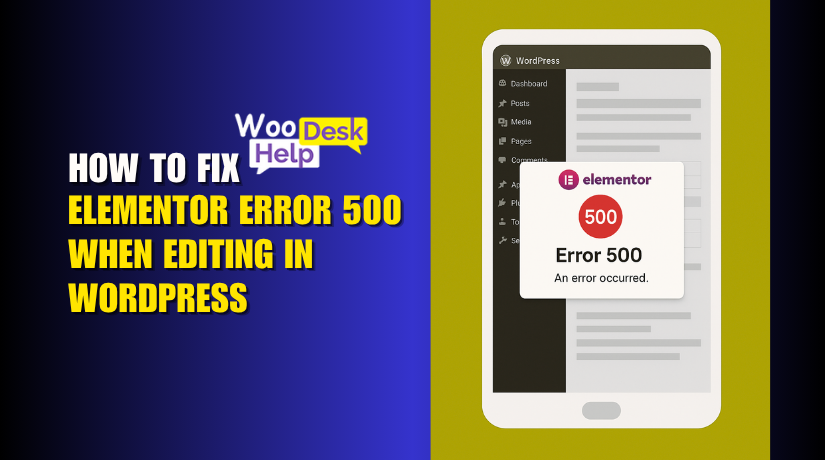
A common server-side issue is the 500 Internal Server issue. It indicates that the server encountered an issue and was unable to process the request. The server cannot tell you exactly what went wrong, but to put it simply, something went wrong behind the scenes.
The page builder does not load correctly when this problem occurs within Elementor. You may see a blank screen when you try to edit a page. Sometimes, the editor starts loading but then crashes without warning. Other times, it simply refuses to open at all.
This error can feel confusing because it doesn’t always give much information. You may just see a generic “500” message without details. But in most cases, it’s linked to how your WordPress site or server is set up.
There are several possible causes:
- Your website’s PHP memory limit might be too low.
- Elementor may be interrupted by a theme or plugin conflict.
- It’s possible that the.htaccess file is corrupted or broken.
- Your hosting server might be hitting its resource limits.
- A PHP version that is out-of-date or incompatible could be problematic.
In Elementor’s case, the error often shows up when you try to open the editor. The server fails to process the request, so the editor can’t display your page or content. As a result, you’re stuck and unable to make changes.
If you’re in the process of creating or modifying a live website, this is quite annoying. The good news is that most of the time, this issue can be fixed. All it takes to get things functioning again is a clear grasp of what’s going on and a few easy measures.
Root Causes of the Elementor 500 Error
Understanding why the 500 Internal Server Error occurs in Elementor is the first step toward fixing it. This error is usually caused by something breaking in the background—either with your WordPress setup, your server, or a plugin conflict. Knowing what might be causing the problem is crucial before attempting to solve it. Let’s examine the most frequent causes of this annoying problem.
- Plugin Conflicts
Plugin conflicts are one of the most frequent causes. Elementor communicates with other plugins that are installed on your website as it loads. If one of those plugins doesn’t follow WordPress coding standards, it may interfere with Elementor.
Security, cache, or optimization plugins are often involved in such conflicts. These plugins may block scripts or prevent Elementor from loading properly. Sometimes the error occurs before you even realize there is a conflict.
You can test this by turning off all plugins other than Elementor. If Elementor starts working again, a plugin is likely the issue.
- Server Resource Limitations
Elementor requires enough server resources to function smoothly. A 500 error could appear if your server is experiencing low memory or CPU power.
Server utilization is frequently subject to stringent limitations in shared hosting plans. If Elementor hits those limits, it can’t process the request, and the server throws an error.
Common server limits that cause problems:
- PHP memory limit too low
- Max execution time too short
- Upload size restrictions
Usually, you may change these limits by modifying files like php.ini or.htaccess or by using the hosting management panel.
- Corrupt .htaccess File
The .htaccess file controls important server settings. Your website may function weirdly if this file gets corrupt. The 500 Internal Server Error is one possible result.
This often happens after changing permalink settings or installing new plugins. Even a small syntax error in .htaccess can break the site.
Luckily, you can reset this file easily. Just click Save Changes after selecting Settings → Permalinks in your WordPress dashboard. WordPress will rebuild the .htaccess file automatically.
- Theme Compatibility Issues
Some WordPress themes are not fully compatible with Elementor. If your theme uses outdated code or loads conflicting scripts, it may block Elementor from loading.
This is more common with free themes from unreliable sources. It can be helpful to test for problems by switching to a default theme, such as Twenty Twenty-Four.
Your current theme is probably the issue if Elementor uses a default theme.
- PHP Version Incompatibility
Elementor recommends using PHP version 7.4 or higher. Older PHP versions may not support some features Elementor needs to run.
If your server is running outdated PHP, it may lead to 500 errors. Through your hosting company, you can verify and update your PHP version.
Step-by-Step Guide to Fixing Elementor 500 Internal Server Error
A 500 Internal Server Error in Elementor can stop your editing workflow. The good news is that with a few doable actions, it may frequently be resolved. To use these techniques, you don’t have to be a developer. To check if the problem has been fixed, start from the beginning and test Elementor after each step.
- Deactivate All Plugins Except Elementor
Checking for plugin conflicts is the initial step. Other plugins frequently cause Elementor to malfunction. This is common with caching, security, or optimization tools.
Here’s how to test for conflicts:
- Go to your WordPress dashboard.
- Navigate to Plugins → Installed Plugins.
- With the exception of Elementor and Elementor Pro, deactivate every plugin.
- Try to open a page using “Edit with Elementor.”
If Elementor loads correctly, one of the deactivated plugins caused the error. Reactivate each plugin individually. Test Elementor once more after each activation. This will assist you in determining which plugin is the issue.
Use File Manager or FTP if the problem prevents you from accessing the dashboard:
- Use FTP to connect to your website.
- Go to wp-content/plugins.
- Rename each plugin folder (e.g., from plugin-name to plugin-name_old).
- Switch to a Default WordPress Theme
Your current theme could be incompatible with Elementor. Themes that use old code or load conflicting scripts may trigger a 500 error.
To test this:
- Select the Appearance → Themes menu.
- Set a default theme, such as Twenty Twenty-Four, to active.
- Try editing a page with Elementor.
If Elementor starts working, your theme is the likely cause. You can either:
- For a solution, get in touch with the theme developer.
- Switch to a theme that is fully compatible with Elementor.
This step helps rule out theme-related issues.
- Increase PHP Memory Limit and Execution Time
Elementor needs enough memory and time to load properly. A low PHP memory limit or short execution time can cause the editor to fail.
To increase PHP limits:
- Edit wp-config.php
- Add the following line just before /* That’s all, stop editing! */:
define(‘WP_MEMORY_LIMIT’, ‘256M’);
- Edit .htaccess file
-
- Add these lines at the top:
php_value memory_limit 256M
php_value max_execution_time 300
- Edit php.ini (if available)
-
- Add or update these lines:
memory_limit = 256M
max_execution_time = 300
After making these changes, refresh your website and test Elementor again. These settings ensure that Elementor has enough server resources to run smoothly.


- Regenerate the .htaccess File
A malfunctioning.htaccess file may result in server issues. You can safely regenerate it without editing code manually.
To do this:
- Go to your WordPress dashboard and select Settings → Permalinks.
- Without making any changes, click Save Changes.
WordPress will automatically rebuild the .htaccess file. This simple action often fixes internal server errors.
Use FTP if you are unable to access the dashboard:
- Go to the root folder of your website.
- Find the .htaccess file.
- Rename it to .htaccess_old.
- Then log in to WordPress and save permalinks to create a new one.
- Check and Update Your PHP Version
Elementor requires PHP version 7.4 or higher. Your server might not be able to support all of Elementor’s features if it is running an earlier version.
To check your PHP version:
- Enter the control panel for your hosting (such as cPanel).
- Look for a section called PHP Version or Select PHP Version.
If the version is below 7.4, update it to the latest stable release. Most hosting companies allow you to do this with one click. If not, get in touch with your hosting company and request an upgrade.
Running a modern PHP version improves both performance and compatibility.
- Use Elementor’s Safe Mode
Safe Mode is a built-in feature in Elementor. It allows you to load the editor without other plugins or the theme affecting it. This is great for identifying the source of the issue.
To enable Safe Mode:
- Access your WordPress dashboard.
- Navigate to Elementor → Tools → Safe Mode.
- Enable it and try editing a page.
If Elementor is operating in Safe Mode, a plugin or theme conflict is most likely the source of the issue. This demonstrates that Elementor is not the source of the problem.
Safe Mode is a great troubleshooting tool and doesn’t affect your live website.
- Reinstall Elementor Plugin
Sometimes the Elementor plugin files become corrupted during an update or install. Reinstalling the plugin can fix the error.
Follow these steps:
- Go to Plugins → Installed Plugins.
- Elementor and Elementor Pro should be deactivated and deleted.
- Don’t worry—your designs are saved in the database.
- Reinstall the plugins from the WordPress repository or upload the latest zip files.
After reinstalling, try editing a page again. This step refreshes the plugin files without deleting your content.
- Contact Your Hosting Provider
The problem can be server-related if none of the aforementioned fixes resolve it. Your hosting provider can help check error logs, increase server limits, or adjust settings.
Contact support and mention:
- You’re receiving a 500 Internal Server Error when using Elementor.
- For more information, ask them to look at the server logs.
- Request updates to PHP settings, if needed.
Hosting issues are common causes of 500 errors. A good support team can quickly identify and resolve the problem.
Final Tip: Backup Before Making Changes
Before trying any fixes, always back up your website. You can use tools like UpdraftPlus or your hosting control panel. This guarantees that in the event that a problem arises during troubleshooting, you can restore your website.
Prevention & Long-Term Solutions
Preventing the error is more important than fixing it. Once your Elementor editor is back to normal, take steps to avoid facing the same issue again. Here are some simple, long-term solutions to keep your site running smoothly.
- Keep Elementor and Other Plugins Updated
Outdated plugins can cause conflicts or security issues. Always keep Elementor and all other plugins up to date.
To do this:
- Check for updates weekly.
- Enable auto-updates if available.
- Update Elementor Pro when the free version is updated.
Running the latest versions helps prevent compatibility problems that trigger 500 errors.
- Use High-Quality Themes and Plugins
Avoid poorly coded or untested themes and plugins. They often don’t follow WordPress standards and can conflict with Elementor.
Look for tools that are:
- Regularly updated
- Compatible with Elementor
- Well-reviewed by other users
Stick to plugins from trusted developers or the official WordPress repository.
- Choose a Reliable Hosting Provider
Your hosting plan plays a big role in site performance. Cheap hosting can have low memory limits and outdated PHP versions.
Look for hosting that offers:
- PHP 7.4 or higher
- SSD storage
- Regular server backups
- Elementor support
Good hosting reduces the chances of server errors like error 500.
- Use a Staging Site for Testing
Test changes on a staging site before making significant ones. This enables you to identify problems without compromising your live website.
A staging site can be made with the help of:
- Your control panel for hosting
- A plugin like WP Staging
This extra step can save your site from downtime.
With these tips in place, your Elementor setup will be more stable. You’ll avoid many of the problems that lead to server errors and enjoy a smoother website-building experience.
When to Hire a Professional
Not every website owner is comfortable making technical changes. If you’ve tried all the fixes and still see the error, it may be time to get expert help.
You ought to think about working with an expert if:
- You’re not comfortable making changes to server files.
- Your site is live and traffic is affected.
- The error keeps coming back after each fix.
- You run an online store or business site.
Fixing the 500 Error Code error in Elementor may sometimes involve custom server or code-level changes. A skilled developer or support staff can swiftly locate more serious issues and safely resolve them.
At WooHelpDesk, we specialize in solving issues like:
- Elementor throws 500 error on edit
- Elementor crashes with 500 error
- Elementor fails to load editor error 500
Getting expert support saves time, avoids risk, and gives you peace of mind.
Conclusion
Running into a 500 Internal Server Error in Elementor is annoying—but it’s something you can fix. In most cases, the issue comes from plugin conflicts, theme problems, or server limitations. By following the steps in this guide, you can identify the cause, apply the right fix, and stop the error from happening again.
If the problem continues, don’t wait too long to get expert help. Services like WooHelpDesk can diagnose and resolve the issue quickly and safely.
Elementor mistake correction doesn’t have to be a stressful task. You can quickly restore your editor’s functionality by following the correct procedures.