How to Fix WooCommerce Cart Page Not Found Error (Step-by-Step Guide)
Table of Contents
- Introduction
- Main Reasons Why the WooCommerce Cart Page Is Not Found
- Important Things to Check Before You Start Fixing the Error
- How to Fix WooCommerce Cart Page Not Found Error (Step by Step Guide)
- How to Test If the WooCommerce Cart Page Is Working Again
- How to Prevent WooCommerce Cart Page Not Found Error in the Future
- Conclusion
Introduction
The cart page is one of the most important pages in WooCommerce. It shows selected products before customers move to checkout. This page helps buyers review items, update quantity, and remove products. When this page stops loading, the shopping flow breaks very fast. Many store owners first notice this after a customer complaint.
Some see a 404 page instead of the cart screen. Others notice the WooCommerce cart page not working after updates or edits. This issue can hurt user trust and reduce completed orders. It can also make a working store feel broken to visitors. The good news is that this problem is usually fixable.
In most cases, the cause is simple and easy to trace. A deleted page, wrong setting, or broken link is often responsible. Sometimes the problem comes from a larger WooCommerce pages setup issue. In other cases, the page exists, but the cart content is missing. That is why store owners should check the basics first. Once you find the real cause, the fix becomes much easier.
Main Reasons Why the WooCommerce Cart Page Is Not Found
The WooCommerce Cart Page May Have Been Deleted by Mistake
One common reason is that the cart page was deleted accidentally. This can happen during site cleanup or page editing work. A team member may remove the page without noticing its role. Some owners delete unused pages and remove the cart page too. In some cases, the page is not fully gone yet. It may still be sitting inside the WordPress trash area. When that happens, the store loses the assigned cart destination. Customers then click the cart icon and see an error page. This creates the feeling that the WooCommerce cart page missing problem appeared suddenly. If the page was deleted, WooCommerce cannot open it correctly.
The Cart Page May Not Be Assigned Correctly in WooCommerce Settings
WooCommerce needs to know which page should act as the cart. It uses internal settings to connect the page properly. If that setting is blank, the cart may fail. If the wrong page is selected, the link can break. This often happens after reinstalling WooCommerce or importing site data. It can also happen during redesign or page replacement work. A new page may be created, but not assigned correctly. Then the store looks fine, but the cart route fails. This can lead to the WooCommerce cart page not finding errors. It may also make the store owner think the page disappeared. In reality, the page may still exist inside WordPress. The problem is that WooCommerce is not linked to it. This kind of WooCommerce pages setup issue is very common.
The Cart Page Slug May Have Been Changed Without Updating Links
The page slug is the URL part after the domain name. If that slug changes, the old cart link may stop working. For example, a cart page may change from /cart to /my-cart. If menus or theme links still point to /cart, users see errors. This problem often appears after SEO edits or URL cleanup work. Sometimes a page editor changes the slug to make it shorter. Other times, a migration tool changes it automatically during import. When that happens, the old link becomes invalid or outdated. This can look like the WooCommerce cart page not working. The page itself may still exist and load normally. But visitors are sent to the wrong address instead. That creates confusion for both owners and customers.
The Cart Page Content May Be Removed or Broken
Sometimes the cart page exists, but the content is incomplete. The page title may still say Cart, but nothing loads. In many stores, this happens after manual page editing. Someone opens the page and removes the default WooCommerce content. The page then loses the function needed to show cart details. In shortcode-based setups, the cart may depend on WooCommerce content blocks. If that part is deleted, the page stops working properly. This is where the WooCommerce cart shortcode not working issue appears. The page may open, but it does not show the cart. Users may only see a blank page or normal text. They cannot review items or continue to checkout smoothly. This problem often happens after theme edits or builder changes.
Broken Permalink Settings Can Cause the Cart Page to Show a 404 Error
Permalinks control how WordPress builds page URLs across the website. If permalink settings break, valid pages can show 404 errors. This issue often appears after migrations, plugin installs, or server changes. It can also happen after switching themes or editing rewrite rules. The cart page may still exist inside the dashboard correctly. But the front-end URL may no longer work as expected. That can trigger the WooCommerce cart page not found message for visitors. In some cases, all other pages work except the cart. That makes the problem harder to understand at first.
Theme or Plugin Conflict Can Break the Cart Page
Not every cart problem starts from the cart page itself. Sometimes another plugin creates the real issue in the background. A caching plugin, redirect plugin, or custom feature can affect the cart URL. Some plugins change WooCommerce behavior without showing clear warnings. A theme can also override WooCommerce templates in the wrong way. When that happens, the cart page may stop loading correctly. This often leads to the WooCommerce cart page not working. In some stores, the page opens but shows a broken layout. In others, the cart icon sends users to a missing page.
Cache or CDN Can Keep Showing an Old Broken Cart Page
Cache helps websites load faster for returning visitors. But sometimes cache keeps an old broken version active. This means the real fix is done, but users still see errors. A browser cache can save the old cart page address. A plugin cache can keep the wrong cart content alive. A CDN can also deliver an outdated version of the page. This often confuses store owners during testing. They make changes, but nothing seems to improve. That creates the feeling that the fix WooCommerce cart page error steps failed.
Important Things to Check Before You Start Fixing the Error
Take a Full Website Backup Before Making Any Cart Changes
Before changing anything, create a full website backup first. This includes your site files and database together. A backup gives you a safe return point. If anything goes wrong, you can restore the old version. This step is very important during WooCommerce troubleshooting work. Cart issues sometimes connect with other store settings too. A small change can affect checkout or account pages later. So working without backup always adds more risk. Many store owners skip this and regret it later. Even simple edits can create new problems by mistake. A backup helps you test fixes with confidence. It also protects orders, products, and customer data. This step should always come before major WooCommerce edits. Safe troubleshooting starts with proper backup support in place.
Make Sure the WooCommerce Plugin Is Installed and Active
This may sound basic, but it matters a lot. First, confirm that WooCommerce is installed on the website. Then check that the plugin is active in WordPress. Sometimes plugins become inactive after updates or server issues. A failed update can also leave WooCommerce partly broken. If WooCommerce is not active, the cart cannot work. Core pages may still exist, but their function will fail. This can look like the WooCommerce cart page not working. It may also create missing settings inside the dashboard. In some cases, store owners troubleshoot pages for nothing. The real cause is simply an inactive plugin. That is why this check should come early. It saves time and removes confusion during later steps. A working WooCommerce plugin is the base requirement here.
Check Whether the Cart Page Still Exists in WordPress Pages
Go to the Pages section inside your WordPress dashboard. Search for a page named Cart or similar. If it exists, open it and review the setup. If it is missing, check the trash folder too. Sometimes deleted pages stay there for a while. This is the fastest way to confirm a WooCommerce cart page missing problem. If the page is in trash, you can restore it. If it is gone fully, you may need to recreate it. This step helps you understand the real issue early. It tells you whether the problem is page deletion or not. Many owners guess the page is present without checking. But the page may be missing from WordPress completely. So this simple step can save a lot of time.
Note the Current Cart URL Before You Start Fixing Anything
Open the cart from your site header or menu. Then check the full URL in the browser bar. Copy that URL and keep it noted. This helps you compare the current path later. It also helps you spot slug or redirect issues quickly. For example, the URL may show an old cart slug. It may also send users to an unrelated page path. That gives an early clue about the problem. A wrong URL often points to broken settings or redirects. This step is very useful during deeper troubleshooting. It helps confirm whether links are pointing correctly or not. So always note the active cart URL before making changes.
Test the Problem in an Incognito Window Before Deeper Troubleshooting
Open your website in an incognito or private browser window. Then repeat the same cart page test there. This removes many browser-based saved files from the session. It helps rule out cache, cookie, or login issues fast. Sometimes the cart works fine in private mode. That means the issue may be local, not site-wide. In other cases, the same error still appears there. Then the problem is likely on the website itself. This simple test saves time before advanced fixes begin. It also gives clearer results during plugin and setting checks. Many users skip this and test only while logged in.
How to Fix WooCommerce Cart Page Not Found Error (Step by Step Guide)
Step 1: Check Whether the Cart Page Still Exists
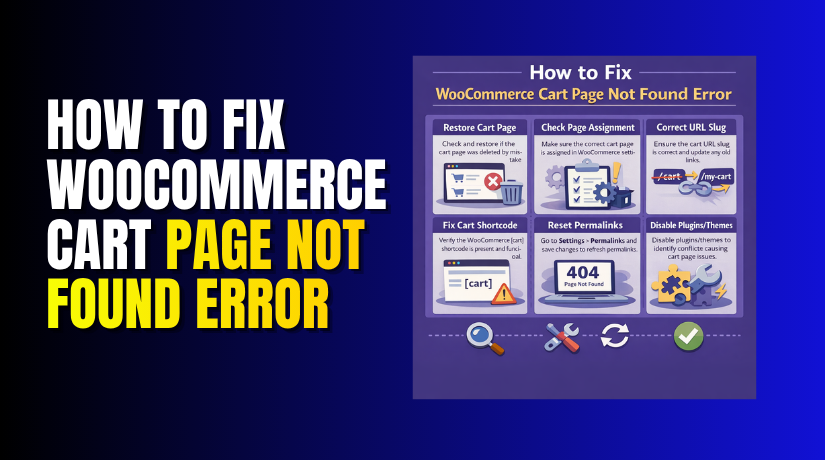
Open your WordPress dashboard first. Go to Pages and search for the Cart page. If you find it, open it and review it. If you do not find it, check the Trash folder too. Many times, the page was deleted by mistake. This is one of the most common causes. If the page is in Trash, restore it immediately. Then save the page and test the cart again. This simple step can quickly restore WooCommerce cart page access.
Step 2: Create a New Cart Page If the Old One Is Missing
If the page is not in Trash, create a new one. Go to Pages > Add New in WordPress. Name the page Cart and publish it. Keep the URL simple and clean for easy use. Do not add random text or extra layout first. Create the basic page and save it properly. This step helps when the WooCommerce cart page missing issue is real. Once the page exists again, WooCommerce can use it.
Step 3: Assign the Correct Cart Page in WooCommerce Settings
Now connect that page with WooCommerce settings properly. Go to WooCommerce > Settings > Advanced in the dashboard. Find the option for the Cart page there. Select the correct Cart page from the dropdown. Then click Save changes at the bottom. This fixes many WooCommerce pages setup issue cases. Sometimes the page exists, but WooCommerce is not linked. Then visitors see the WooCommerce cart page not found error. So this step is very important.
Step 4: Check the Cart Page Content Carefully
Open the Cart page and inspect its content. Make sure the page contains the correct WooCommerce cart content. If your store uses the block editor, add the Cart block. If your setup uses shortcode, restore the cart shortcode. Missing cart content can break the page completely. This often causes the WooCommerce cart shortcode not working. The page may open, but it will not show products. So always check the content before moving ahead.
Step 5: Save Permalink Settings Again
Go to Settings > Permalinks in WordPress. Do not change anything unless needed. Just click Save Changes again on that page. This refreshes the URL structure of your website. Broken permalinks often cause page 404 errors. That includes cart, checkout, and account pages too. This is a fast way to fix WooCommerce cart page error problems. After saving, reload the site and test the cart again.
Step 6: Check the Cart Page Slug
Now review the slug of the Cart page. Open the page editor and check the page URL. Make sure the slug is correct and not confusing. If the slug changed before, old links may still exist. That can make the WooCommerce cart page not work. Keep the slug short, clear, and easy to track. After changing it, update menu links and header links too. This prevents users from opening the wrong page path.
Step 7: Clear Website, Browser, and CDN Cache
After page and setting changes, clear every cache layer. First clear your browser cache and reload the site. Then clear the cache from your WordPress caching plugin. If you use a CDN, purge that cache too. Cached data can keep showing the old broken cart page. This makes it seem the fix did not work. Many cases of WooCommerce cart page missing are only cache-related. So do not skip this important step.
Step 8: Disable Other Plugins One by One
Go to the Plugins section in WordPress. Temporarily disable non-WooCommerce plugins one by one. After disabling each plugin, test the cart page again. This helps find conflicts causing the problem. Some plugins affect redirects, cache, or page loading. Others may break WooCommerce functions directly. If the cart works after one plugin is disabled, you find a conflict. This step is useful when the error appears suddenly. It is also helpful after installing new plugins.


Step 9: Switch to a Default Theme for Testing
If plugins are not the cause, test the active theme. Temporarily switch to a default WordPress theme. Then check whether the cart page starts working. Some themes override WooCommerce templates in the wrong way. Others may use broken custom cart settings. If the cart works with the default theme, your theme is likely the issue. This step helps narrow down the source clearly. It also saves time during deeper troubleshooting.
Step 10: Check Redirect Rules and Custom URL Settings
Now review any redirect settings on the site. Check redirect plugins for rules affecting the cart URL. Also review any custom rules added by developers. Wrong redirects can send users to missing pages. This makes the cart look deleted when it is not. If needed, also inspect server-side redirect settings. A redirect issue can fully block the correct cart page. So this step matters a lot in advanced cases.
Step 11: Review WooCommerce Status and Page Setup Again
Go to WooCommerce tools and status-related sections. Check whether WooCommerce reports setup warnings or template issues. Make sure the main store pages are still assigned properly. Confirm the cart, checkout, and account pages all look correct. Sometimes a small setting mismatch creates a bigger issue later. This final review helps confirm the setup is stable. It also catches hidden problems before they affect customers.
Step 12: Test the Cart Page on the Front End
Now go to the front end of the website. Add a product to the cart from a product page. Open the cart using the menu, icon, or button. Make sure the page loads correctly and shows products. Test the page on mobile and desktop too. Also test while logged in and logged out. This confirms the issue is fully fixed for real users. Once this works, your cart flow is back to normal.
How to Test If the WooCommerce Cart Page Is Working Again)
Step 1: Add a Product to the Cart From a Product Page
Open your store on the front end first. Visit any product page and add one product. After that, check whether the cart count updates correctly. If the product is added, the cart function is responding. This is the first sign that the fix is working. If nothing is added, review the cart setup again. A working add-to-cart action is the first basic test.
Step 2: Open the Cart Page Directly and Check the Product
Now click the cart button, cart icon, or cart link. Open the cart page from the front end normally. Make sure the page loads without any error message. The added product should appear inside the cart properly. Check the product name, quantity, and price details too. If the page opens and shows the item, that is a good result. This confirms the WooCommerce cart page not working issue may be fixed.
Step 3: Test the Cart Link From the Header or Menu
Many stores have multiple ways to open the cart. So do not test only one button and stop there. Click the cart icon in the header area. Then test the cart link from the main menu too. If you use a mini cart, test that as well. All cart links should open the same correct page. If one works and another fails, a link is outdated. This step helps catch hidden navigation problems.
Step 4: Update the Quantity and Remove a Product
Now test cart actions inside the cart page. Increase the product quantity and update the cart. Then remove the product and check the result. These actions should work without page errors or broken loading. If the cart updates correctly, the page is functioning well. This test confirms that the cart is not only loading. It also confirms that the cart actions work correctly.
Step 5: Test the Cart Page on Mobile and Desktop
Open the same cart page on a mobile device too. Then compare the result with the desktop version. Some cart problems only appear on smaller screens. A theme or layout issue may break the mobile cart page. So both views should be tested carefully. Make sure the page opens, loads, and updates normally. This helps confirm the cart works for all users.
Step 6: Test the Cart While Logged In and Logged Out
Now test the cart in two user conditions. First, stay logged in as an admin or customer. Then open a private browser window and test again logged out. Some session-based issues appear only for one user type. A cart may work for admin but fail for visitors. This step helps catch those hidden access problems. Both logged-in and logged-out users should see a working cart page.
Step 7: Continue From Cart to Checkout
Once the cart page works, move to the next step. Click the button to continue to checkout. Make sure the checkout page opens correctly too. If checkout fails, the cart flow is still incomplete. A healthy cart page should pass users smoothly forward. This test confirms the shopping process is working fully. It also shows whether related WooCommerce pages are set properly.
Step 8: Repeat the Test With Another Product
Finally, repeat the full test using a different product. This helps confirm the fix is not limited to one item. Test a simple product first, then test another type if needed. If both products work, the fix is more reliable. This final check gives better confidence before closing the issue. A full repeat test helps confirm the cart is stable again.
How to Prevent WooCommerce Cart Page Not Found Error in the Future
Do Not Delete Core WooCommerce Pages Without Checking Their Purpose
WooCommerce creates important pages for the main shopping process. These pages include cart, checkout, shop, and my account. They are not normal content pages on your website. Each one has a direct role in store function. If you delete one by mistake, customers may face broken links. That can quickly create the WooCommerce cart page not found error. Before deleting any page, always confirm what it does. Check WooCommerce settings first and verify page assignments carefully. This simple habit can prevent many avoidable store problems.
Avoid Changing the Cart Page Slug Without Updating Store Settings
The cart page slug controls the page URL on your website. If you change that slug, old links may stop working. Your menu, cart icon, or buttons may still use the old path. That can make the cart page look broken or missing. Many store owners face this issue after simple URL edits. If you must change the slug, update WooCommerce settings too. Also update any custom links inside menus or theme sections. This keeps the new cart URL connected everywhere correctly. A small slug update should never be done carelessly.
Keep WooCommerce, Themes, and Plugins Updated Regularly
Old software often causes compatibility problems in WooCommerce stores. A plugin update may require a newer WooCommerce version. A theme may also use old WooCommerce templates by mistake. These mismatches can affect the cart page and other store areas. In some cases, the WooCommerce cart page not working issue starts this way. That is why regular updates are very important. Keep WooCommerce, your theme, and all useful plugins current. But always update carefully and check the store after changes. A well-maintained website is less likely to face page errors.
Use a Staging Website Before Making Major Store Changes
Big changes should always be tested before going live. This includes redesign work, plugin changes, or WooCommerce updates. A staging site gives you a safe place to test everything. If the cart page breaks there, your live site stays safe. This helps prevent sudden customer-facing issues in the main store. Many WooCommerce pages setup issue cases can be caught early here. Staging also helps you review menus, links, and cart flow calmly. It is one of the best ways to reduce risk. Testing first always saves time later.
Review Redirect Rules After Migration or URL Changes
Redirects help send users from old URLs to new ones. But wrong redirects can easily break the cart page path. This often happens after migration, redesign, or slug edits. A redirect may send users to the wrong page entirely. That makes the cart page look deleted even when it exists. After any major URL change, review all redirect rules carefully. Check redirect plugins, server settings, and manual redirect entries too. Make sure the cart URL points to the correct live page. Good redirect review helps avoid hidden cart access problems.
Keep Regular Backups Before Editing WooCommerce Pages
Backups are one of the best safety tools for store owners. Before changing WooCommerce pages, create a fresh full backup. This includes your site files and your database together. If something breaks, you can restore the older working version. That makes recovery much easier during unexpected cart errors. Backups are especially useful before page edits and plugin changes. They also help when migration causes cart page issues. A current backup gives you more confidence during troubleshooting. Safe stores always have a strong backup habit in place.
Test the Cart Page After Every Major Website Update
Even small changes can affect WooCommerce store pages sometimes. A theme update or plugin update may create hidden issues. That is why you should test the cart page after updates. Add a product and open the cart immediately after changes. Then make sure the page loads and works correctly. Also test the cart link in the menu or header. This quick habit helps catch problems before customers notice them. It is a simple but powerful prevention step. Regular testing keeps your shopping flow stable and reliable.
Conclusion
The WooCommerce cart page not found error can stop sales fast. It affects the shopping flow and creates a poor user experience. The good part is that this issue is usually easy to fix. In most cases, the problem comes from a missing page, wrong page setting, broken slug, cache, or plugin conflict. If you check each step carefully, you can usually solve it without much trouble. It is also important to test the cart page after every fix. That helps make sure customers can add products and continue to checkout without problems. A little regular checking can also prevent this issue later.
If your WooCommerce cart page does not work, expert help can save time and stress. WooHelpDesk helps store owners fix WooCommerce page errors, cart problems, checkout issues, plugin conflicts, and other store-related issues. If you want your store fixed properly and quickly, reach out to WooHelpDesk for professional WooCommerce support.