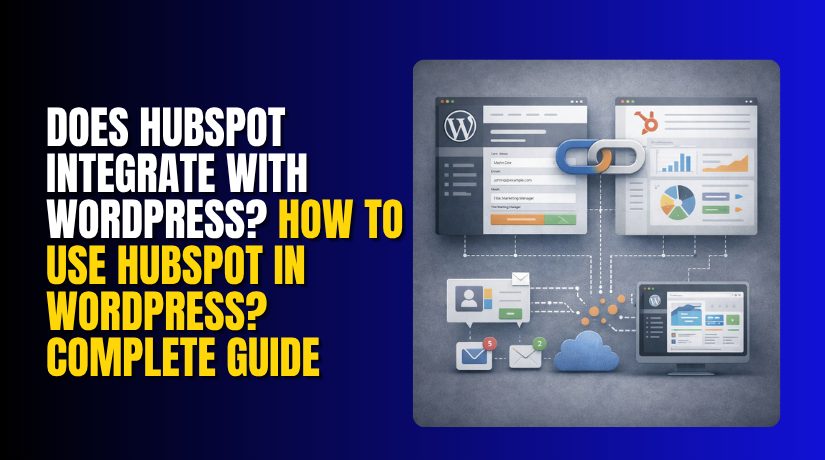
Does HubSpot Integrate With WordPress? How to Use HubSpot in WordPress? Complete Guide
Table of Contents
- Introduction
- What is HubSpot?
- What are the Key Features of HubSpot?
- Does HubSpot Integrate With WordPress?
- What are the Advantages of Integrating HubSpot with WordPress?
- How to Connect a WordPress Site with HubSpot?
- Final Verdict
- Frequently Asked Questions
Introduction
Imagine having a single dashboard that tracks every visitor to your site, captures every lead, and automates your follow-up emails. No more switching between tools. No more lost data. No more missed opportunities.
This is the promise of combining WordPress with HubSpot. HubSpot is a powerful CRM (Customer Relationship Management) platform that helps businesses attract visitors, convert leads, and close customers. It offers marketing automation, sales tools, and customer service features all in one place.
The good news is that HubSpot integrates seamlessly with WordPress. In fact, it offers one of the smoothest CRM-to-WordPress integration experiences available. Whether you want to add simple contact forms, track visitor behavior, or build complex marketing automation workflows, HubSpot has you covered.
This guide will show you everything you need to know. You’ll learn what HubSpot is, how it works with WordPress, and step-by-step instructions to connect them. By the end, you’ll have a fully integrated marketing system running on your WordPress site.
What is HubSpot?
HubSpot is an all-in-one growth platform that provides free CRM, marketing, sales, and customer service tools. It was built around inbound marketing methodology—attracting customers through valuable content rather than interruptive ads.
HubSpot combines several powerful products into one system:
- CRM (Customer Relationship Management) – Track every customer interaction and get a 360-degree view of your contacts
- Marketing Hub – Email marketing, automation, analytics, and lead generation tools
- Sales Hub – Pipeline management, meeting scheduling, and sales automation
- Service Hub – Customer support tools, ticketing, and knowledge base
- CMS Hub – Content management tools for building websites
Free vs Paid Tiers
HubSpot offers a generous free tier that many businesses start with:
- Free Tier: Includes basic CRM, forms, live chat, email marketing (up to 2,000 sends/month), and contact management
- Paid Tiers (Marketing Hub, Sales Hub, Service Hub): Add advanced features like lead scoring, A/B testing, workflows, and more sophisticated automation
The free tier works fully with the WordPress plugin, so you can start without any cost. As your business grows, you can upgrade to paid plans while keeping your WordPress integration intact.
What Makes HubSpot Different?
- Unlike enterprise CRMs that require extensive configuration before they’re useful, HubSpot is designed to be usable out of the box.
- This philosophy extends to WordPress integration. HubSpot built tools that non-technical users can actually implement without custom code.
- The platform is particularly popular with small to medium-sized businesses and marketing teams who want an all-in-one solution for their content strategy.
What are the Key Features of HubSpot?
HubSpot offers a comprehensive set of features that work seamlessly with WordPress.
-
Forms and Lead Capture
HubSpot’s form builder lets you create beautiful, customizable forms in minutes. You can choose from several form types:
- Embedded forms – placed directly on your pages
- Standalone pages – full-page forms
- Dropdown banners – subtle notification bars
- Slide-in boxes – left or right side popups
The forms are “smart” — they adjust to user behavior and can show different questions based on previous answers. Forms automatically create or update contacts in your CRM when submitted.
-
Email Marketing and Automation
HubSpot includes a drag-and-drop email newsletter builder with 20+ pre-designed templates . You can:
- Create automated email sequences triggered by form submissions
- A/B test different subject lines and content
- Track open rates, click-through rates, and delivery metrics
- Send personalized messages based on user behavior
For e-commerce stores, you can even automate abandoned cart recovery emails.
-
Live Chat and Chatbots
The plugin adds a live chat widget to your WordPress site. You can:
- Customize styling to match your brand
- Set up chatbots that qualify leads or schedule meetings
- Manage all conversations from HubSpot’s inbox
- Connect to Slack for real-time notifications
This combination of live support and automation improves customer satisfaction while increasing conversions.
-
Analytics and Visitor Tracking
Once installed, HubSpot automatically tracks visitor behavior on your site You can see:
- Which pages visitors view
- How long they stay
- Where they click
- What forms they submit
- How they found your site
All this data ties directly to contact records in your CRM, powering lead scoring and automated marketing features.
-
CRM and Contact Management
Your CRM becomes your command center. You can:
- See a unified timeline of each contact’s page views and conversations
- Segment contacts based on form submissions or behavior
- Track deals through your sales pipeline
- Manage customer support tickets
-
E-commerce Integration (WooCommerce)
For online stores, specialized plugins like MWB HubSpot for WooCommerce let you:
- Sync WooCommerce orders to HubSpot
- Track abandoned carts automatically
- Map order statuses to deal stages
- Create post-purchase email sequences
- Segment customers by purchase history
-
Forms Plugin Integration
HubSpot works with most popular WordPress form plugins, including:
- Contact Form 7
- WPForms
- Elementor Forms
- Ninja Forms
- Formidable Forms
- Gravity Forms
- Forminator
Third-party plugins like Integration for HubSpot let you map form fields directly to HubSpot objects.
Does HubSpot Integrate With WordPress?
Yes, absolutely. HubSpot offers one of the most complete and user-friendly WordPress integrations available.
The official HubSpot All-In-One Marketing plugin is available for free on WordPress.org. It has been actively maintained for years and works with the free tier of HubSpot. This plugin handles:
- Form building and embedding
- Live chat widget
- Email marketing tools
- Analytics and visitor tracking
- Contact syncing to HubSpot CRM
- Popup forms for lead capture
What the Plugin Does?
Once installed and connected, the plugin automatically:
- Adds HubSpot tracking code to every page
- Syncs form submissions to your CRM
- Tracks visitor behavior and ties it to contact records
- Adds live chat to your site
- Enables email marketing directly from WordPress
Integration Methods
There are three main ways to integrate HubSpot with WordPress:
| Method | Best For | Technical Level |
| Official Plugin | Most users, complete feature set | Beginner |
| Manual Embed Code | Minimal integration, custom placement | Intermediate |
| API Integration | Custom workflows, data display | Advanced |
Third-Party Integrations
Beyond the official plugin, HubSpot integrates with dozens of WordPress tools including:
- Popular form builders (Contact Form 7, WPForms, Gravity Forms, Elementor)
- E-commerce platforms (WooCommerce)
- Page builders (Elementor)
- SEO tools (Yoast, Rank Math)
Gravity Forms Add-On
- For Gravity Forms users, the official HubSpot Add-On version 3.0.2 was released in February 2026.
- This ensures ongoing compatibility with the latest HubSpot features.
Blog Importer Plugin
- If you have existing blog content on HubSpot, the Blog Importer for HubSpot plugin can migrate your posts to WordPress.
- It supports selective import, automatic synchronization, and tag mapping.
What are the Advantages of Integrating HubSpot with WordPress?
Integrating HubSpot with your WordPress site delivers tangible business benefits.
-
Centralized Data and Insights
Instead of juggling multiple platforms, your visitor data lives in one place. You can see:
- How visitors interact with your content
- Which pages drive the most conversions
- What topics resonate with your audience
- How leads move through your funnel
This unified view helps you make data-driven decisions about your content strategy.
-
Automated Lead Nurturing
Marketing automation isn’t optional in 2026 — it’s essential. HubSpot lets you:
- Send automated follow-ups when someone fills out a form
- Trigger email sequences based on user behavior
- Score leads automatically so sales knows who to contact first
- Recover abandoned carts with timely reminders
-
Smart Lead Capture
HubSpot forms are “smart” — they adjust based on user behavior. Returning visitors might see different questions than first-time visitors. This creates a personalized experience that encourages conversion without feeling pushy.
-
Real-Time Engagement
With live chat and chatbots, you can engage visitors the moment they have questions. This immediate support often makes the difference between a bounce and a conversion.
-
E-commerce Power
For WooCommerce stores, the integration tracks products customers view and orders they complete. You can:
- Recover abandoned carts automatically
- Send post-purchase follow-ups
- Segment customers by what they bought
- Build targeted email campaigns based on purchase history
-
Improved Team Efficiency
When marketing, sales, and service teams share the same data, everyone stays on the same page. Sales sees which marketing campaigns brought leads in. Service sees customer history. No more data silos.
-
Scalable Growth
Start with HubSpot’s free tier and upgrade as you grow. The same WordPress integration works whether you have 100 contacts or 10,000. You never need to rebuild your setup.
How to Connect a WordPress Site with HubSpot?
Follow this step-by-step guide to integrate HubSpot with your WordPress site.


Step 1: Check Compatibility
Before you begin, ensure your site meets these requirements :
- A recent version of WordPress (5.0 or higher recommended)
- Administrator access to your WordPress dashboard
- No conflicting plugins that might interfere
If you’re unsure about conflicts, ask your hosting provider or developer.
Step 2: Create a HubSpot Account
If you don’t already have a HubSpot account:
- Go to hubspot.com
- Click “Sign Up” for a free account
- Enter your email and business information
- Verify your email address
- Complete the initial setup wizard
The free account gives you access to the CRM, forms, live chat, and email marketing tools.
Step 3: Install the Official HubSpot Plugin
WordPress Dashboard → Plugins → Add New
- Log in to your WordPress admin dashboard
- In the left menu, hover over “Plugins” and click “Add New”
- In the search box, type “HubSpot”
- Find the plugin titled “HubSpot – CRM, Email Marketing, Live Chat, Forms & Analytics”
- Click “Install Now”
- After installation, click “Activate”
Step 4: Connect Your HubSpot Account
WordPress Dashboard → HubSpot
- After activation, a new “HubSpot” menu item appears in your WordPress left menu
- Click “HubSpot” to open the connection screen
- Click the button that says “Log in to your HubSpot account”
- Enter your HubSpot credentials
- Authorize the connection between WordPress and HubSpot
Step 5: Configure Basic Settings
Once connected, review these settings:
- Tracking Code: Verify that the HubSpot tracking code is active on all pages
- Notification Settings: Choose who receives alerts for new leads
- Contact Sync: Confirm that new contacts are syncing to the correct lists
Step 6: Add Forms to Your Site
HubSpot Dashboard → Marketing → Forms
There are two ways to add forms:
Method A: Using HubSpot Forms
- Create a form in HubSpot (Marketing → Forms)
- In WordPress editor, add the HubSpot Form block
- Select your form from the dropdown
- The form appears on your page
Method B: Using Your Existing Form Plugin
- If you use Contact Form 7, WPForms, or Elementor, install the Integration for HubSpot plugin
- Go to “HubSpot Feeds” and create a new feed
- Map your form fields to HubSpot contact properties
- Enable the feed to send submissions automatically
For Gravity Forms users, the official HubSpot Add-On handles this automatically.
Step 7: Add Live Chat to Your Site
HubSpot Dashboard → Conversations → Chat Flows
- Create a new chat flow or choose a pre-built template
- Customize the welcome message and appearance
- Set availability hours (or use chatbots for 24/7 coverage)
- The chat widget appears automatically on your WordPress site
You can manage incoming chats from HubSpot’s Conversations Inbox.
Step 8: Set Up Email Marketing
HubSpot Dashboard → Marketing → Email
- Choose from 20+ pre-designed email templates
- Use the drag-and-drop builder to customize
- Create lists based on form submissions or behavior
- Schedule automated sequences triggered by user actions
For e-commerce stores, install MWB HubSpot for WooCommerce to sync order data and set up abandoned cart emails.
Step 9: Verify Tracking is Working
HubSpot Dashboard → Reports → Analytics Tools
- Visit your WordPress site in a private browser window
- Complete a test form submission
- Return to HubSpot and check the contact record
- Verify that the form submission and page views appear
The contact’s timeline should show their visit, form fill, and any subsequent activity.
Final Verdict
Does HubSpot integrate with WordPress? Yes, and it does so exceptionally well. The official HubSpot plugin for WordPress is one of the most complete CRM integrations available, handling everything from form capture to visitor tracking to live chat.
For most WordPress users, the official HubSpot All-In-One Marketing plugin is all you need. It installs in minutes, connects to your HubSpot account, and starts working immediately. You can build forms, add live chat, track visitor behavior, and sync contacts to your CRM without writing a single line of code.
For e-commerce stores using WooCommerce, specialized plugins like MWB HubSpot for WooCommerce add powerful features like abandoned cart recovery, order synchronization, and customer segmentation. These tools turn your store into a data-driven marketing engine.
For users of specific form builders, plugins like Integration for HubSpot let you map Contact Form 7, WPForms, or Elementor forms directly to HubSpot objects. Gravity Forms users have an official add-on that handles this seamlessly.
For those with existing HubSpot blog content, the Blog Importer for HubSpot plugin can migrate your posts to WordPress with full formatting preserved.
The free tier of HubSpot is genuinely useful and works with the WordPress plugin. You can start without paying anything and upgrade as your business grows. The integration scales with you, so you never need to rebuild your setup.
Whether you’re a blogger, small business owner, or e-commerce merchant, integrating HubSpot with WordPress gives you the tools to attract visitors, capture leads, and grow your business. The setup is straightforward, the features are powerful, and the results are measurable.
Ready to get started? Install the plugin today and see what unified marketing can do for your site.
Have questions before starting with WooCommerce & WordPress? Get support here at WooHelpDesk
Frequently Asked Questions
Is the HubSpot WordPress plugin free?
Yes, the HubSpot WordPress plugin is free and includes basic CRM, forms, live chat, and email marketing features. Premium features require a paid HubSpot subscription starting from the Starter plan.
What data does HubSpot sync with WordPress?
HubSpot syncs form submissions, contact data, page views, WooCommerce orders (with integration), email interactions, and live chat conversations. All visitor activity on your WordPress site is tracked in HubSpot CRM.
Can HubSpot replace my WordPress contact form plugin?
Yes, HubSpot includes a drag-and-drop form builder that can replace plugins like Contact Form 7 or WPForms. HubSpot forms automatically sync submissions to your CRM for lead management and follow-up automation.
References and Resources