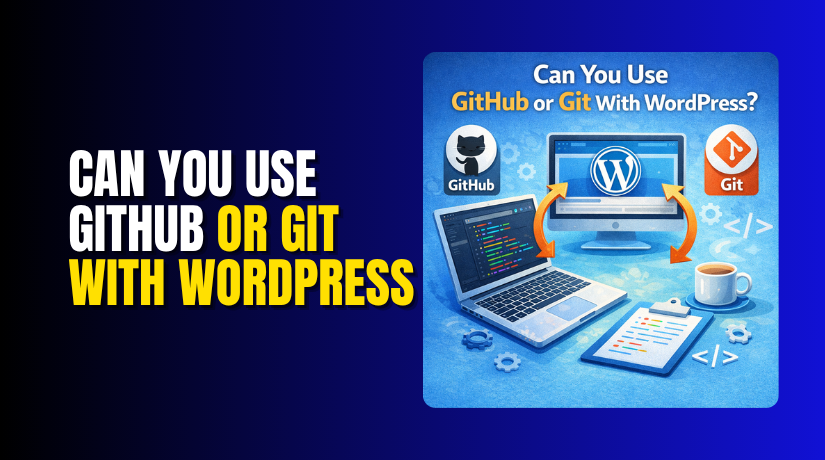
Can You Use GitHub or Git With WordPress?
Table of Contents
-
- Introduction: Can You Use GitHub or Git With WordPress?
- What Is the Difference Between Git and GitHub in WordPress?
- Which Parts of a WordPress Site Can Be Managed With Git
- Which Parts of WordPress Should Usually Not Be Managed With Git
- How Git Is Commonly Used in a Real WordPress Workflow
- Main Benefits of Using Git or GitHub With WordPress
- Common Limitations or Challenges WordPress Users Should Know
- When Using Git or GitHub With WordPress Makes the Most Sense
- Conclusion
- Frequently Asked Questions
Introduction: Can You Use GitHub or Git With WordPress?
Yes, you can use Git with WordPress and also use GitHub with WordPress. Many site owners ask this because WordPress is often managed from the dashboard. It looks simple on the front end, but the files behind the site still need safe change tracking. That is where Git becomes useful. It helps you manage code changes in a clean way. GitHub helps you store and share those tracked files online.
This topic matters because WordPress sites often grow over time. A small blog can turn into a business site. A basic store can become a custom WooCommerce setup. When that happens, direct file edits become risky. One wrong change can break the site layout, remove a feature, or cause a plugin issue. Good WordPress version control helps reduce that risk.
Many users also think Git is only for large software teams. That is not true. Even a single WordPress developer can benefit from it. If you edit theme files, custom plugin files, or CSS, using Git gives you more control. It lets you review changes, save progress, and go back if something goes wrong.
In simple terms, Git gives structure to your WordPress development work. GitHub adds an extra layer for backup, teamwork, and file sharing. Together, they create a better workflow for code-based WordPress tasks.
What Is the Difference Between Git and GitHub in WordPress?
Git and GitHub are related, but they are not the same thing. This is where many beginners get confused.
Git is a version control tool. It tracks changes made to files over time. If you update a theme file today and break it tomorrow, Git helps you compare the changes. It also helps you restore an older working version.
GitHub is an online platform that stores Git repositories. It gives you a place to keep your project online. It also makes teamwork easier. Developers can review changes, manage branches, and work on the same project safely.
A simple way to understand it is this:
- Git tracks your code changes
- GitHub stores and manages those tracked files online
So, when people ask about WordPress GitHub integration, they usually mean using Git for file tracking and GitHub for storage or teamwork. If you want to learn how to use Git with WordPress, first understand this difference. Git does the tracking. GitHub helps you manage that work better.
Which Parts of a WordPress Site Can Be Managed With Git
To use Git with WordPress correctly, you need to know what belongs in it. Git is mainly useful for files that control design, features, and custom behavior. These are the parts of a site that change during development. They also need safe tracking over time. That is why WordPress version control works best with code-based files.
The most common WordPress files managed with Git include:
- Custom themes
- Child themes
- Custom plugins
- PHP template files
- CSS files
- JavaScript files
- Custom functions
- Block development files
For example, if you change a header layout in a theme, Git can track that update. If you edit a WooCommerce template file, Git can save each step. If a styling update breaks the mobile layout, you can review the change and fix it faster. This makes GitHub with WordPress useful for safe testing and better control.
Git also helps when you build custom features. You may add a pricing table, edit a product page layout, or create a new shortcode. These changes should be tracked. They affect how the site works. They may also need updates later. A clean Git history makes that process easier.
Here is a simple view:
| Good for Git in WordPress | Why it fits |
| Theme files | They control design and templates |
| Plugin files | They add or change site features |
| CSS and JS files | They affect styling and front-end behavior |
| Custom PHP code | It controls logic and functionality |
This is the practical side of how to use Git with WordPress. You use it for the development side of the site, not for everything inside WordPress.
Which Parts of WordPress Should Usually Not Be Managed With Git
Not every part of WordPress should go into Git. This is a common mistake for beginners. WordPress stores many important things outside normal code files. These parts change often and are better managed in other ways.
The main things you should usually keep out of Git are:
- Database content
- Media uploads
- Cached files
- Form entries
- Customer orders
- User-generated content
The database stores posts, pages, settings, user data, and plugin data. Git does not track database records in a useful way. Media uploads also create problems. Image folders can grow fast and make the repository heavy. Cached files and temporary files should also stay out because they are rebuilt when needed.
For WooCommerce sites, orders and customer activity should never depend on Git tracking. Those records live in the database and need backups, not commits. The same goes for contact form entries and live user actions.
So, WordPress GitHub integration should focus on files that developers change by hand. Git is powerful, but it is not a replacement for backups, staging, or database tools. The best setup is simple. Use Git for code. Use other systems for content, media, and live site data.
How Git Is Commonly Used in a Real WordPress Workflow
To understand how to use Git with WordPress, think step by step. Git is not usually used directly on a live site. A safer workflow starts before anything reaches production. This helps reduce mistakes and keeps the website stable.
A common Git with WordPress workflow looks like this:
- Work on a local setup or staging site
- Make code changes in theme or plugin files
- Save those changes with a Git commit
- Push the updated files to GitHub
- Test everything carefully
- Deploy the approved changes to the live site
This process gives structure to WordPress development work. Instead of editing live files in a hurry, you work in a safer place first. That is very useful when changing WooCommerce templates, custom functions, or front-end design files.
Branches also play an important role in this workflow. A branch is a separate work path for one task. For example, you may create one branch for a checkout page fix. Another branch can handle a mobile menu update. This keeps tasks organized and avoids mixing unrelated changes.
This is where WordPress GitHub integration becomes useful in daily work. Git tracks the file changes. GitHub stores those changes online and helps teams review them. A developer can push updates, another team member can review them, and then the approved version can move forward.
Here is a simple example:
| Step | What happens |
| Local or staging work | Safe place to edit files |
| Git commit | Saves a record of changes |
| Push to GitHub | Sends updates to the online repository |
| Testing | Checks if the code works correctly |
| Deployment | Moves approved changes to the live site |
This workflow helps WordPress users work more carefully and with less risk.
Main Benefits of Using Git or GitHub With WordPress
Using GitHub with WordPress gives several clear benefits. These benefits matter even more on sites with custom code and regular updates.
Better change tracking


Git records what changed, when it changed, and who changed it. This makes WordPress version control much easier to manage.
Safer edits
A bad code edit can break a feature fast. Git helps you compare old and new versions before making more changes.
Easier teamwork
Many people can work on the same project safely. One person can handle design files. Another can update plugin logic.
Cleaner workflow
Git creates a more organized process. You stop guessing which file changed and start tracking each update properly.
Easier rollback
If a recent change causes a problem, you can go back. This is one of the biggest benefits of using Git with WordPress.
In simple terms, Git adds safety, clarity, and control. GitHub adds online storage and team support. Together, they help WordPress users build and manage code in a more professional way.
Common Limitations or Challenges WordPress Users Should Know
Using Git with WordPress is helpful, but it has limits. It is not a magic tool for every site problem. It works best when you understand what it does well. It also helps to know where it does not help.
The first challenge is the learning curve. Git uses commands, branches, and commit history. That can feel hard for beginners at first. Many WordPress users are comfortable inside the dashboard only. Git asks them to work with files more directly.
Another challenge is that Git does not manage everything in WordPress. It tracks code files very well, but not full site activity. Posts, settings, user data, and orders mostly live in the database. So, WordPress version control is very useful, but still limited to the right parts of the site.
Live edits can also create problems. If someone changes files on the live server, Git may not match the current site state. That makes teamwork messy and can lead to confusion later. A clean workflow matters when using GitHub with WordPress.
Common limits include:
- It takes time to learn the workflow
- It does not replace full website backups
- It does not manage database content well
- It becomes messy with direct live edits
- It needs a clear process for teams
When Using Git or GitHub With WordPress Makes the Most Sense
GitHub with WordPress makes the most sense when code changes happen often. It is a smart choice for developers, agencies, and growing websites. It is also helpful for stores using custom WooCommerce design or features.
This setup is most useful for:
- Custom theme development
- Child theme editing
- Plugin customization
- Team-based WordPress projects
- Websites with regular code updates
It may be less important for a very small site. If someone only writes blog posts and updates pages, Git may not be needed right away. But when custom code becomes part of daily work, WordPress GitHub integration becomes much more useful.
Conclusion
So, can you use GitHub or Git with WordPress? Yes, you can. In fact, it is one of the best ways to manage code safely. It helps track changes, improve teamwork, and reduce update risks. Still, the right setup matters.
If you want to learn how to use Git with WordPress, start with the basics. Use Git for themes, plugins, and custom code. Do not depend on it for full backups or live content. That simple approach makes Git with WordPress easier, cleaner, and more effective over time.
If you need help setting up a safer WordPress workflow, WooHelpDesk can help. Our team supports WordPress users with theme edits, plugin changes, custom development, and technical fixes. If your site needs expert help with code management or WordPress support, reach out to WooHelpDesk for practical and reliable assistance.
Frequently Asked Questions
Can you use Git with WordPress?
Yes, Git is commonly used for WordPress development to track changes in themes, plugins, and configuration files. You can use Git locally or with GitHub/GitLab for collaborative development. Tools like WP Pusher enable GitHub-to-WordPress deployment.
Should I version control the entire WordPress installation?
It is best practice to only version control custom code (themes and plugins you develop). Use .gitignore to exclude WordPress core files, uploads directory, wp-config.php, and node_modules. This keeps your repository clean and secure.
How do I deploy WordPress changes from GitHub?
Use deployment tools like WP Pusher, DeployBot, GitHub Actions, or Buddy. These tools automatically push code changes from your GitHub repository to your WordPress server when you merge to the main branch.
References and Resources