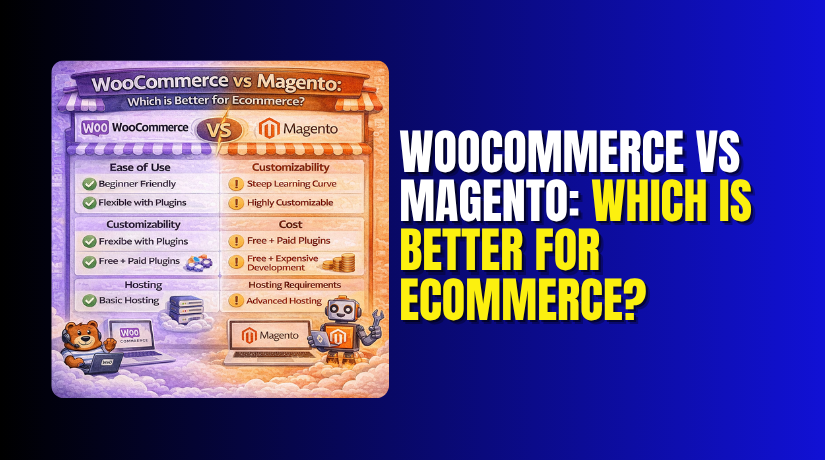
WooCommerce vs Magento: Which Is Better for Ecommerce?
Table of Contents
- Introduction: Why This Comparison Matters for Online Store Owners
- What WooCommerce and Magento Really Are
- Ease of Use and Learning Curve
- Cost, Pricing, and Total Ownership Value
- SEO and Marketing Flexibility
- Which Platform Fits Small Businesses and Growing Stores
- Who Should Choose WooCommerce and Who Should Choose Magento
- Conclusion
Introduction: Why This Comparison Matters for Online Store Owners
Choosing the right platform shapes your store’s future growth. It affects cost, control, speed, and daily management. That is why many business owners compare WooCommerce vs Magento before launching a store. Both platforms are trusted by online sellers. Both can support product listings, payments, shipping, and customer management. Still, they do not serve every business in the same way.
This comparison matters even more when your budget is limited. A wrong platform can raise costs and slow your work. It can also make updates harder later. Many users ask, Is WooCommerce better than Magento for modern ecommerce needs. The answer depends on your store goals, technical comfort, and growth plan.
This guide focuses only on that comparison. It helps you understand which platform fits your business type. It also prepares you for deeper points like pricing, SEO, and ease of use in the next parts.
What WooCommerce and Magento Really Are
WooCommerce is an ecommerce plugin built for WordPress websites. It turns a regular WordPress site into a working online store. You can add products, set prices, manage orders, and install helpful extensions. Many users prefer it because the setup feels simple and flexible. This is one reason WooCommerce vs Magento for beginners is such a common search.
Magento is a dedicated ecommerce platform built for larger and more complex stores. It offers strong control, advanced features, and deep store management options. It can support large product catalogs and custom business rules. However, it usually needs more technical skill to set up and manage well.
Here is the basic difference:
- WooCommerce works well for content-driven and flexible WordPress stores.
- Magento is often chosen for advanced and large-scale ecommerce operations.
- WooCommerce feels easier for small teams and first-time owners.
- Magento suits businesses with bigger budgets and deeper technical needs.
Before comparing features, it helps to know this core difference. A simple store does not always need a complex platform. That is why understanding WooCommerce vs Magento for small business starts with knowing what each platform is built to do.
Ease of Use and Learning Curve
Ease of use matters when you run a store daily. You will manage products, orders, plugins, updates, and design changes. That is why setup experience should never be ignored.
WooCommerce feels easier for most first-time store owners. It works inside WordPress, which many users already know. The dashboard looks familiar and simple to navigate. You can install themes, add plugins, and change pages faster. This makes WooCommerce vs Magento for beginners an important comparison point.
Magento has a steeper learning curve from the start. It is built for advanced ecommerce needs and deeper control. Because of that, the setup feels more technical. Even small changes may require development help. For some businesses, that is acceptable. For many beginners, it can feel heavy and slow.
Here is the practical difference:
- WooCommerce is easier for beginners and smaller teams.
- Magento needs more technical skill and planning.
- WooCommerce helps users launch faster with less confusion.
- Magento offers power, but not always simple management.
If a store owner asks, Is WooCommerce better than Magento, ease of use becomes a major reason behind the answer. A platform should support your work, not slow it down.
Cost, Pricing, and Total Ownership Value
Pricing is not just about the starting software price. You must also consider hosting, design, extensions, security, support, and maintenance. That is where many store owners make wrong assumptions.
WooCommerce is often cheaper to start. The core plugin is free, and you can control your spending better. You choose your hosting plan, theme, and extra features based on your budget. This makes WooCommerce vs Magento pricing a very practical discussion for small businesses.
Magento usually costs more to set up and manage. Development work, stronger hosting, and ongoing support can raise the total budget. If your store needs custom functions, multi-store setup, or large catalog control, costs may rise even more.
Here is a simple comparison:
| Cost Area | WooCommerce | Magento |
| Starting cost | Lower | Higher |
| Hosting flexibility | More flexible | More demanding |
| Extension cost | Can vary | Can be higher |
| Developer need | Lower in many cases | Higher in many cases |
| Maintenance cost | Easier to manage | Often more expensive |
For many growing brands, cost decides the platform choice early. WooCommerce vs Magento for small business often favors WooCommerce because the starting risk stays lower. Magento can still be worth the cost, but mostly for stores with larger budgets and more complex needs.
SEO and Marketing Flexibility
SEO helps online stores reach buyers without paying for every click. That is why platform choice affects long-term traffic and sales growth. In the WooCommerce vs Magento SEO discussion, both platforms offer useful tools. Still, the daily experience feels very different for most store owners.


WooCommerce gets a strong advantage from WordPress content features. You can build product pages, category pages, blogs, and landing pages easily. This helps store owners create useful content around products and search terms. It also supports better internal linking and content planning over time.
Magento also supports strong SEO work for ecommerce websites. You can manage product details, metadata, structured store pages, and URLs. It works well for larger catalogs with many product types. However, the setup and management often feel more technical.
Here is where WooCommerce often feels easier for marketing teams:
- Blog publishing is simple and fast
- Page editing feels smoother for non-technical users
- SEO plugins add more control without deep coding
- Content marketing fits naturally into the store setup
Magento remains strong for bigger stores with advanced catalog needs. But many smaller brands want faster publishing and easier page control. That makes WooCommerce a more comfortable choice for many growing content-led stores.
Which Platform Fits Small Businesses and Growing Stores
Business size plays a big role in this comparison. A small team needs tools that save time and reduce cost. That is why WooCommerce vs Magento for small business matters so much.
WooCommerce usually fits small businesses better at the start. It is easier to manage, easier to expand, and easier to learn. Store owners can launch faster without building a large technical team. This matters when time and budget are both limited.
Magento fits stores with more complex needs and larger operations. It works well for businesses handling advanced pricing, large catalogs, or custom workflows. It can also support growth across multiple stores or regions. Still, that power often comes with more setup work.
A simple way to view the fit is this:
- Choose WooCommerce for smaller teams and faster store management
- Choose Magento for complex stores with bigger technical needs
- Choose WooCommerce when content and ecommerce must work together
- Choose Magento when scale and custom logic matter more
So, Is WooCommerce better than Magento for every business? No. But for beginners, smaller teams, and content-driven brands, WooCommerce often feels like the smarter starting point.
Who Should Choose WooCommerce and Who Should Choose Magento
The final choice depends on your business needs and working style. Both platforms can run a strong online store. Still, they are not built for the same type of user.
WooCommerce is the better fit for many growing online businesses. It works well for sellers who want flexibility and easier control. It is also a strong choice for content-focused brands using WordPress. That is why many users searching WooCommerce vs Magento for beginners often lean toward WooCommerce.
Magento is better for businesses with more advanced ecommerce demands. It suits brands that need deeper custom features and large-scale operations. It also fits teams that already have technical support or a bigger budget.
A simple decision guide looks like this:
- Choose WooCommerce for small to mid-sized online stores
- Choose WooCommerce for content, blogging, and easier store control
- Choose Magento for complex catalogs and advanced store structure
- Choose Magento for enterprise-level growth and custom workflows
So, when readers ask, Is WooCommerce better than Magento, the answer is often yes for smaller businesses, beginners, and flexible WordPress-based stores.
Conclusion
Choosing between WooCommerce vs Magento depends on your store goals, budget, and technical comfort. Both platforms can support ecommerce growth, but they work best for different needs. WooCommerce is usually the better choice for beginners, small businesses, and WordPress users who want flexibility and easier store management. Magento fits larger businesses that need advanced features, deeper customization, and a bigger development budget. For most growing online stores, WooCommerce offers a simpler and more cost-friendly path. It gives you strong control without making daily work too complex.
If you need expert help with your WooCommerce store, WooHelpDesk is here to help. From setup and customization to fixing store issues and improving performance, our team can support your business at every step.