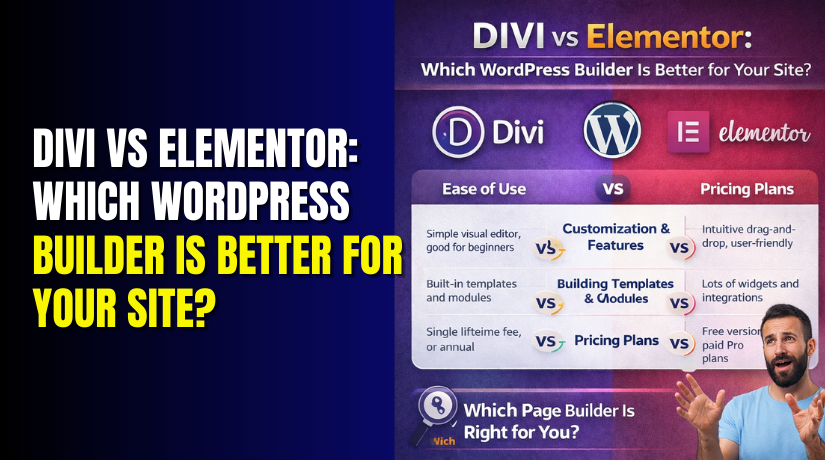
Divi vs Elementor: Which WordPress Builder Is Better for Your Site?
Table of Contents
- Introduction
- Quick Comparison Snapshot
- What Divi and Elementor Are
- Ease of Use and Learning Curve
- Design Control and Building Flexibility
- Support, Updates, and Ecosystem
- Performance and Site Speed Considerations
- Pricing and Value for Money
- Which One Should You Choose for Your Site
- Conclusion
Introduction
Choosing a page builder changes how your site looks and works. It also changes how fast you can design pages. Many site owners want clean layouts without coding every section. That is why builders like Divi and Elementor are popular today. Both tools help you create pages using drag-and-drop controls. You can build homepages, landing pages, and service pages quickly. You can also edit text, images, and buttons in real time.
Still, the choice is not always simple for everyone. Some people want faster editing and fewer settings. Others want deeper design control and ready layouts. Your budget also matters for long-term use. In this guide, we compare both builders with real site needs. You will learn where each builder fits best. By the end, you can decide which is better Divi or Elementor for your site.
Quick Comparison Snapshot
Both builders can create modern pages with strong design control. But the working style feels different during daily use. Here is a quick view before we go deeper.
Divi often works best when you want:
- A single system for theme and visual building.
- Many layout packs to start quickly.
- Strong built-in design settings across modules.
- Consistent styling using global design controls.
Elementor often works best when you want:
- A builder that works with many WordPress themes.
- A clean editing flow with simple layout sections.
- Flexible widget-based building and quick adjustments.
- Easy page edits for content and layout updates.
In most cases, the real difference is workflow and comfort. Divi feels like an all-in-one design system. Elementor feels like a flexible builder layer on top. If you want a quick starting point, both can work. If you prefer a single ecosystem, Divi can feel smoother. If you want theme freedom, Elementor feels easier. This is why the Divi vs Elementor debate depends on your site goals.
What Divi and Elementor Are
Divi is a WordPress theme and a visual builder system. Many users install the Divi Theme and start building pages. The builder is deeply linked with the Divi design setup. You can also use the Divi Builder plugin alone. This helps if you want another theme. Divi works through sections, rows, and modules. Modules are ready blocks like text, image, button, and slider. You place them on the page and style them.
Elementor is a plugin-first page builder for WordPress. You can use it with many themes easily. It also uses sections and columns for layout building. You then add widgets inside the layout areas. Widgets include heading, image, button, form, and more. Elementor feels like a layer you add to WordPress. It helps you design pages without changing your theme system.
Many people compare Divi builder vs Elementor because both feel powerful. But their setup approach is different from the start. Divi often feels like a full design environment. Elementor often feels like a flexible builder tool.
Ease of Use and Learning Curve
Both builders allow real-time page editing with live preview. Still, the editing flow feels different during daily work.
Divi gives many design options inside each module. This is helpful but can feel heavy early. New users may spend time learning where settings live. The builder also supports global styles and saved layouts. This helps keep design consistent across many pages.
Elementor feels simpler when you start building your first page. Many settings appear in a left panel. You edit content on the right side live. This workflow feels clear for many users.
If you are new, Divi vs Elementor for beginners depends on comfort. Divi offers deeper design controls inside modules. Elementor offers a cleaner editing flow for quick changes.
Divi is easier when you want:
- One system for design, layout, and styling control.
- Strong built-in layout packs for fast page creation.
- Detailed styling options inside every module.
Elementor is easier when you want:
- A clean editor with simple panels and quick settings.
- Fast layout building with drag-and-drop widgets.
- Easy updates for text, spacing, and mobile changes.
Design Control and Building Flexibility
Both builders help you design pages without writing code. But the level of control feels different in real use. Divi focuses on design systems and style control. Elementor focuses on flexible widget building with quick layout edits.
Divi offers strong control through modules and design settings. Each module has many styling options. You can control fonts, spacing, borders, shadows, and animations. You can also copy styles between modules quickly. Divi also supports global presets and reusable layouts. This helps you keep the same look across many pages.
Elementor uses widgets and a panel-based editor system. You drag widgets into sections and columns. You then control content, style, and layout from the panel. Elementor also supports global colors and fonts. It supports reusable templates and saved sections too. Many users like how fast they can adjust spacing and alignment.
A key point in the Divi vs Elementor choice is layout workflow. Divi feels like a design studio with deep styling layers. Elementor feels like a layout tool with clear settings panels.
Divi design strengths include:
- Detailed module styling with advanced design controls.
- Quick style copy and paste for consistent sections.
- Global presets for repeated design patterns across pages.
- Large layout packs for fast page starting points.
Elementor design strengths include:
- Widget-based building with clear layout structure.
- Fast spacing and responsive control from one panel.
- Many templates and blocks for common page sections.
- Easy visual editing for pages that change often.
Support, Updates, and Ecosystem
Support and learning resources matter for long-term use. Both builders have large communities and many tutorials. They also offer documentation and step-by-step guides. You can find help for layout issues and design limits.
Divi has a strong ecosystem around its theme framework. Many designers share Divi layouts and child themes. It also has an active user community and support channels. Divi updates often focus on builder features and design tools.


Elementor has a wide ecosystem because it works with many themes. Many add-ons extend widgets and templates. Many developers build tools around Elementor workflows. Elementor updates often focus on editor features and site building tools.
If you want more plug-and-play options, both can work. Your best fit depends on how you build and maintain pages.
Performance and Site Speed Considerations
Page builders can affect speed if pages become too heavy. Heavy pages load slower and feel less smooth. This usually happens due to extra design elements and scripts. It can also happen from large images and too many effects.
Both builders can produce fast pages with good setup. Speed depends more on how you build pages daily. It also depends on your theme, hosting, and caching setup. Still, builder choices can change how clean the output feels.
Divi often encourages design-heavy layouts with many modules. This can add more page weight if you overbuild sections. Elementor can also slow pages if you use many widgets. Add-on packs can also increase scripts and CSS files.
If you see slow pages, focus on page structure first. Reduce extra sections, sliders, and animations where possible. Keep layouts simple and reuse design patterns.
Speed-friendly practices for both builders:
- Use fewer animations and avoid heavy motion effects.
- Keep sections clean and limit nested layouts.
- Compress images and use proper image sizes.
- Use caching and a performance plugin if needed.
- Limit third-party add-ons unless truly required.
- Test changes on mobile view after each big edit.
When you compare builders, focus on workflow and control. Speed is not only about the builder tool. It is about how you build, what you load, and what you keep.
Pricing and Value for Money
Pricing matters because builders are long-term tools. Many site owners keep one builder for years. So the cost structure affects long-term value.
Divi often feels like a bundled design system. It is known for offering theme and builder together. That can feel like strong value if you like one ecosystem. Many users compare Divi vs Elementor pricing because the pricing style differs.
Elementor follows a plugin plan style for many users. You choose a plan based on site needs. You may also pay for extra add-ons if required. This can grow over time if you add many features.
Divi pricing often fits best when you want:
- One design system for multiple pages and templates.
- A single toolset that stays consistent for editing.
Use this table for Divi
| Plan | Display Price | Billing | Websites |
| Divi | $7.42/mo | $89 billed yearly | Unlimited |
| Divi Pro★ | $23.08/mo | $277 billed yearly | Unlimited |
| Divi Lifetime | $249 today | One-time payment | Unlimited |
| Divi Lifetime + Pro★ | $297 today | One-time + Pro services | Unlimited |
Elementor pricing often fits best when you want:
- A builder that works with different themes easily.
- Flexible plan choices based on site count and features.
Use this table for Elementor
| Plan | Display Price | Billing | Websites |
| Essential | $5/mo | Billed annually ($60 today) | 1 |
| Advanced Solo | $7/mo | Billed annually ($84 today) | 1 |
| Advanced | $9/mo | Billed annually ($99 today) | 3 |
| One | $14/mo | Billed annually ($168 today) | 1 |
| Expert | $17/mo | Billed annually ($204 today) | 25 |
| One Agency | $37/mo | Billed annually ($444 today) | Unlimited |
Which One Should You Choose for Your Site
The best choice depends on your workflow and your comfort. Both builders can create clean, modern WordPress pages. The real difference shows up during daily edits and reuse. If you still feel stuck, use this quick decision guide.
Choose Divi if you need:
- A complete design system with consistent styling controls.
- Many ready layouts to speed up page creation.
- Deep module settings for detailed design fine-tuning.
- A builder experience that feels like one unified tool.
Choose Elementor if you need:
- A builder that works well with many WordPress themes.
- A simple editing panel for quick content updates.
- Fast widget-based building for landing pages and sections.
- A clean workflow for frequent layout and spacing changes.
If you are starting your first site, keep the learning curve in mind. Some users prefer Divi’s design depth from day one. Others prefer Elementor’s clear panel-based editing early on. That is why the Divi vs Elementor for beginners question has no single winner.
Before you commit, build one sample page in each builder. Use the same layout, same images, and same section count. Then check how fast you can edit it later. This makes it easier to answer which is better Divi or Elementor for you.
Conclusion
Divi and Elementor both help you build pages without coding skills. Divi works best when you want one complete design system. Elementor fits better when you want flexible building and quick edits. Your best choice depends on your workflow and comfort. Test both on one sample page before deciding. Keep the layout simple and focus on clean structure. That always improves editing and long-term results. If you want expert help choosing the right builder, WooHelpDesk can help. Visit WooHelpDesk to get guidance, fixes, and setup support for your WordPress site.