What Is an LMS in WordPress? Meaning, Features, and How It Works
Table of Contents
- What Is an LMS in WordPress?
- Understanding the Meaning of a WordPress LMS
- Key WordPress LMS Features You Get for Online Courses
- How a WordPress LMS Works Behind the Scenes
- Quick Checks Before You Build an LMS in WordPress
- Step-by-Step Setup to Add an LMS to Your WordPress Site
- Expert Insight from Real WordPress LMS Support Cases
- How to Confirm Your WordPress LMS Setup Worked
- Prevention Tips for a Stable and Fast LMS Site
- Conclusion
- FAQs
What Is an LMS in WordPress?
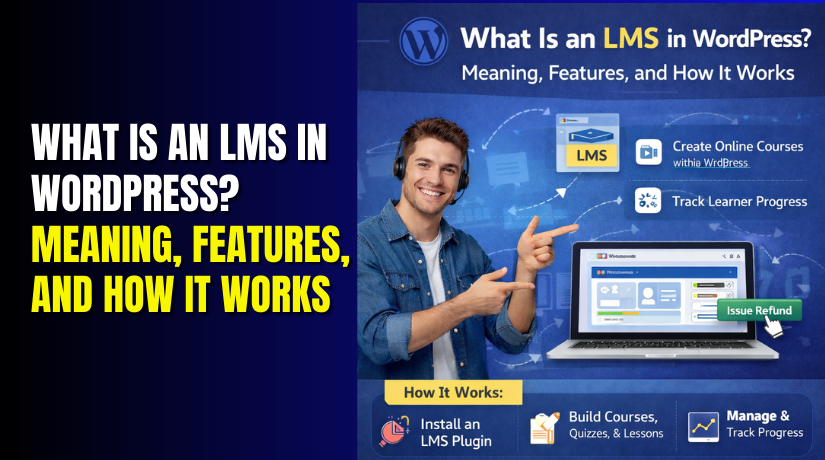
An LMS helps you create and manage online courses on your site. If you ask what is LMS in WordPress, it means using WordPress to run training. You can publish lessons, enroll students, and track progress easily. Many plugins also let you sell courses and restrict access.
Understanding the Meaning of a WordPress LMS
What an LMS means in simple terms
An LMS is a learning system that runs training online. It stores your courses, lessons, and student data in one place. It also controls who can view each lesson and when. Many people ask WordPress LMS meaning because WordPress is not a course platform by default. WordPress becomes an LMS when you add a learning plugin. That plugin turns your site into a course website. It helps you organize lessons and deliver content smoothly.
What an LMS does for course creators and businesses
So, what does an LMS do in real life? It helps you build a learning flow that feels structured. You can create courses with sections and lesson pages. You can add videos, PDFs, and quizzes for learning checks. You can enroll students and control access with rules. You can track progress and show completion status. You can also give certificates after finishing a course. Many LMS tools support payments, so you can sell courses. Some support memberships, so access stays active monthly.
Why people choose WordPress for online training
Many creators start with simple pages and basic downloads. Soon they need tracking, access control, and better course layout. That is when they add an LMS system to WordPress. WordPress is popular because it is flexible and easy to grow. You can start small and expand into a full learning site. You can also connect your LMS with your email tools. That helps you send welcome emails and course updates.
Who benefits most from a WordPress LMS
A WordPress LMS is useful for many types of users. It supports single creators and larger teams too. It impacts people who want training, education, or onboarding systems.
- Coaches selling online programs to US clients
- Small businesses training staff and new hires
- Agencies building course sites for customers
- Schools offering online lessons and resources
- Membership communities teaching skills and tools
If you want full control and ownership, WordPress fits well. You control your content, pricing, and student experience. You can also improve SEO and reach more traffic. That helps your courses get found on Google in the USA.
Key WordPress LMS Features You Get for Online Courses
- Course structure that stays clean and easy to follow
A good LMS helps you build courses in a clear way. You can create sections, modules, and lesson pages quickly. Each lesson can include text, images, and video content. You can also group courses by topic or skill level. This keeps your learning site organized and easy to browse. These are core WordPress LMS features most course sites need.
- Enrollment tools to control who can access lessons
An LMS manages who can join each course on your site. Students can enroll using a button or a checkout page. Some sites allow manual enrollment by the admin or instructor. Others allow free enrollment with a simple signup form. Access rules can block lessons until enrollment is active. This is part of how does WordPress LMS work for content control.
- Progress tracking to keep learners focused and active
Most LMS plugins track lesson progress and course completion. A student can mark lessons as complete after reading or watching. Some systems auto-complete lessons after video finishes playing. Course progress bars help students stay motivated and confident. Admin reports also show who completed which lessons. This is helpful for coaching programs and staff training.
- Quizzes and tests to measure learning in a simple way
Quizzes help students check what they learned in each section. You can create basic multiple-choice questions and true or false. Many LMS tools support question banks and quiz timers too. Some allow passing scores before moving to the next lesson. This improves learning quality and builds trust with buyers. It also helps you show real value through your course.
- Certificates that give proof of course completion
Many course sites want completion certificates for credibility. Some LMS tools generate certificates automatically after completion. You can add the student name, course name, and date easily. Certificates work well for professional skills and internal training. Students also like sharing certificates on LinkedIn. This feature supports better course engagement and repeat enrollments.
- Drip content to release lessons on a schedule
Drip content means lessons unlock over time, not all at once. You can release lessons daily, weekly, or after a quiz pass. This keeps learners from rushing through everything quickly. It also reduces refund requests in paid course sites. Drip schedules work well for coaching programs and guided learning.
- Instructor tools to manage courses and students faster
Many LMS systems support instructor roles and permissions. Instructors can create courses without full admin access. They can edit lessons, upload content, and manage quizzes. Some plugins also show student lists and progress reports. This makes course management easier for growing businesses. It also supports multi-author course websites on WordPress.
- Payments and pricing options to sell courses smoothly
If you want to sell courses, payment tools matter a lot. Many LMS plugins support one-time payments for single courses. Some also support bundles and subscriptions with membership tools. You can add coupons, trial access, and discount pricing too. If you want to know how to add LMS to WordPress site, payments are often the next setup step. You usually connect WooCommerce or a built-in checkout option.
- Reports and analytics to understand student behavior
Reports help you see what is happening in your LMS daily. You can track enrollments, course completions, and quiz scores. Some LMS tools also show lesson drop-off points. That helps you improve lesson order and content length. Better reporting helps you grow course sales over time. It also improves support and student success.
10.Integrations that connect your LMS with other tools
Most LMS websites use more than one tool to run smoothly. Integrations connect your LMS with email, forms, and automation tools. You can send welcome emails after enrollment automatically. You can also add students to a newsletter or a private group. Many people also connect CRM tools for lead tracking. These integrations help when you plan how to create an LMS in WordPress for long-term growth.
How a WordPress LMS Works Behind the Scenes
What you install and set up to start an LMS
WordPress does not include course tools by default. You add LMS features using a learning plugin. This plugin creates course pages, lesson pages, and student areas. It also adds settings for access rules and progress tracking. Some LMS tools include payments inside the plugin settings. Others connect with WooCommerce for checkout and order control. This setup explains how does WordPress LMS work in a practical way.
Most LMS setups include these building blocks:
- An LMS plugin for courses, lessons, and student tracking
- A theme that supports clean layouts for course pages
- Optional add-ons for payments, certificates, and memberships
- A caching and security setup for stable performance
If you plan to sell courses, payments need extra planning. You may also need email delivery to work properly. Course login emails must reach students without delay.
What happens inside WordPress when you create courses
A WordPress LMS uses WordPress content to store your learning data. Courses work like structured content with extra fields and settings. Lessons sit inside a course and follow your chosen order. Quizzes attach to lessons or course sections based on your plan. Student enrollment creates access rules for protected lesson pages. Only enrolled users can open locked content and downloads.
WordPress uses user accounts for learner access and roles. Your LMS can create student roles automatically after signup. Admins control settings, pages, and payment options from the dashboard. Some LMS tools also create instructor roles for course building. This helps teams create content without full admin access.
Here is the usual flow of a course system inside WordPress:
- Admin creates a course with lessons and learning steps
- LMS stores the course structure in WordPress content
- Student enrolls and gets access to course pages
- LMS tracks progress and saves completion details
- Student completes course and receives a final status
This is the core logic behind most LMS plugins today.
How access control works for enrolled students
Access control is one of the most important LMS tasks. The LMS checks if a user is enrolled or has paid access. If the user has access, lessons open normally inside the course area. If the user has no access, the LMS blocks the lesson page. It may show a message, a login option, or a buy button. This is a key part of what does an LMS do on a learning site.
Many systems also support timed access and drip schedules. That means lessons unlock slowly based on a timeline. Some unlock after a quiz pass or lesson completion. This keeps learning structured and helps reduce drop-off.
A typical student journey from visit to course completion
A WordPress LMS should feel simple for the learner. The student should know what to do at each step. The LMS guides them through login, course access, and progress updates. The flow below shows how most systems work.


- Student visits a course page from Google or an ad
- Student enrolls or buys the course using checkout
- Student gets login details and course access instantly
- Student opens lessons and marks progress along the way
- Student completes the course and sees completion status
If you plan to build a learning site, this flow matters. It helps you test the site before your official launch.
How you expand the LMS when your site grows
Once the basics work, you can add more advanced features. You can offer bundles, memberships, and course pathways. You can add quizzes, certificates, and drip rules for better learning. You can also connect email tools for automation and follow-ups. This is often the next step after you learn how to create an LMS in WordPress properly.
When you build it the right way, WordPress can scale well. It can support more courses, more students, and better SEO reach. It also keeps your learning business under your full control.
Quick Checks Before You Build an LMS in WordPress
- Confirm SSL is active in hosting settings for secure checkout. Expected result: browser shows a lock icon.
- Check PHP memory limit in hosting panel before plugin setup. Expected result: fewer timeout and upload issues.
- Test your theme on a staging site before LMS install. Expected result: course pages display cleanly.
- Review permalink settings in WP Admin → Settings → Permalinks. Expected result: lessons open without 404 errors.
- Verify email delivery in hosting or SMTP plugin settings. Expected result: students receive login and enrollment emails.
- Check media upload size in hosting or WP settings. Expected result: videos and PDFs upload without failures.
- Disable aggressive cache for logged-in users in cache plugin. Expected result: progress tracking updates correctly.
- Confirm your payment method works in a test transaction flow. Expected result: orders complete and access unlocks.
- Test site speed using a speed tool on course pages. Expected result: pages load fast on mobile.
- Create a test student user in WP Admin → Users → Add New. Expected result: student access works as expected.
Step-by-Step Setup to Add an LMS to Your WordPress Site
1) Plan your course structure before you install anything
When to use it: Use this when you want a clean course layout.
Steps (WP path): WP Admin → Pages → Add New → Draft course pages.
Create a simple course map with modules and lesson order. Decide if lessons need quizzes or downloads. Plan course access type, free or paid.
Expected result: You know exactly what to build in the LMS.
What to try next if it fails: Use one sample course first, then expand.
2) Install and activate an LMS plugin the right way
When to use it: Use this when you are ready to add LMS tools.
Steps (WP path): WP Admin → Plugins → Add New → Search LMS plugin → Install → Activate.
After activation, the LMS may create key pages automatically. Review those pages before publishing anything.
Expected result: LMS menus and course options appear in WordPress.
What to try next if it fails: Check plugin conflicts by disabling other plugins temporarily.
3) Configure core LMS settings for pages and access
When to use it: Use this right after plugin activation.
Steps (WP path): WP Admin → LMS Settings → Pages / Access / Emails.
Assign course page, account page, and checkout page if needed. Set login rules and enrollment behavior. Enable progress tracking and completion rules.
Expected result: Your LMS works in a controlled and predictable way.
What to try next if it fails: Reset plugin settings and re-assign pages carefully.
4) Create your first course with lessons and media
When to use it: Use this when your basic settings are ready.
Steps (WP path): WP Admin → LMS → Courses → Add New.
Add a course title, description, and featured image. Create modules and add lessons under each module. Upload videos or add embed links for faster loading. Add downloads like PDFs only when needed.
Expected result: A course page shows lessons in the correct order.
What to try next if it fails: Switch to a default theme to test layout issues.
5) Set access rules for free or paid enrollment
When to use it: Use this when you need protected lessons.
Steps (WP path): WP Admin → LMS → Courses → Edit Course → Access Settings.
Choose free enrollment, purchase required, or membership-based access. If selling, connect your payment method or WooCommerce checkout. This step is key for how to add LMS to WordPress site in a usable way.
Expected result: Only enrolled users can open locked lessons.
What to try next if it fails: Test with a new user account and clear cache.
6) Set up payments if you plan to sell courses
When to use it: Use this when your LMS supports selling.
Steps (WP path): WP Admin → WooCommerce → Settings → Payments.
Enable Stripe, PayPal, or another gateway based on your store. Link the course to a product if your LMS uses WooCommerce. Set price, taxes, and basic checkout settings.
Expected result: Students can pay and get access instantly.
What to try next if it fails: Run a sandbox test and check webhook settings.
7) Test the full student experience before you launch
When to use it: Use this when your course is ready.
Steps (WP path): WP Admin → Users → Add New → Create test student.
Log in as the test student using an incognito window. Enroll in the course and open lessons one by one. Complete a lesson and confirm progress updates. If paid, place a test order and confirm access unlocks.
Expected result: The full flow works from enroll to completion.
What to try next if it fails: Disable caching for logged-in users and retest.
8) Launch your LMS and monitor the first week closely
When to use it: Use this after testing is complete.
Steps (WP path): WP Admin → Pages → Publish course pages and landing pages.
Make course pages public and add navigation links in menus. Watch for failed emails, login issues, and slow course pages. Track drop-offs and fix confusing steps quickly. This is the practical finish of how to create an LMS in WordPress for real users.
Expected result: Your course site runs smoothly for new students.
What to try next if it fails: Use a staging site to test changes safely.
Expert Insight from Real WordPress LMS Support Cases
- Many course sites break after theme updates and template overrides. We test with a default theme first.
- Login emails often fail due to weak mail settings. We add SMTP and retest delivery.
- Course access issues usually come from caching logged-in pages. We exclude account and lesson URLs.
- Slow lesson pages often come from large videos and heavy builders. We switch to embeds and optimize media.
- Checkout works but access stays locked due to webhook errors. We confirm payment status and order hooks.
- Progress tracking fails when pages load from old cache. We clear cache and recheck lesson completion.
How to Confirm Your WordPress LMS Setup Worked
- Open the course page in an incognito browser window.
- Create a test student in WP Admin → Users → Add New.
- Enroll in the course and confirm lessons unlock correctly.
- Complete one lesson and check progress updates instantly.
- Log out and confirm locked lessons show the right message.
- Test the course on mobile for layout and speed.
- If selling, place a test order and confirm access unlocks.
- Recheck email inbox for enrollment and login messages.
Prevention Tips for a Stable and Fast LMS Site
- Use a staging site before plugin or theme updates.
- Take backups before changing LMS settings or access rules.
- Keep LMS plugin, WooCommerce, and theme versions compatible.
- Exclude lesson, account, and checkout pages from heavy caching.
- Use an SMTP plugin for stable email delivery.
- Use video embeds instead of uploading large video files.
- Limit extra plugins to reduce conflicts and load issues.
- Test enrollment flow after every major site update.
Conclusion
A WordPress LMS helps you turn your site into a learning platform. You can create courses, manage students, and track progress easily. You can also control access and sell courses smoothly. The best results come from clean setup and proper testing. Always verify emails, checkout, and lesson access before launch. If you want a stable course site, expert support saves time. WooHelpDesk can help you choose the right LMS, set it up correctly, and fix issues fast. Reach out to WooHelpDesk when you want your LMS running smoothly.
FAQs
1) Can WordPress really handle a full online course website?
Yes, WordPress can handle a full course website well. It works best when hosting is strong and caching is set right. A good LMS plugin adds course tools and student tracking. If you keep media optimized, pages load faster. This is why many creators choose WordPress for courses in the USA.
2) What is the easiest way to understand WordPress LMS meaning?
Think of it as adding a course engine to WordPress. WordPress stores your pages and users already. The LMS plugin adds course structure, lessons, and progress tracking. It also controls who can access lessons after enrollment. This simple view explains WordPress LMS meaning without confusing terms.
3) What does an LMS do that normal WordPress pages cannot?
Normal pages cannot lock lessons for enrolled students easily. They also cannot track progress or show completion status. An LMS adds enrollment, access rules, quizzes, and course structure. It also supports certificates and drip content in many cases. That is the real answer to what does an LMS do on WordPress.
4) How does WordPress LMS work when you sell paid courses?
A paid course usually connects to a checkout system for payment. After payment, the LMS unlocks course access for that user. It uses WordPress user accounts to manage enrollment status. Some systems use WooCommerce for orders and access rules. That is how does WordPress LMS work for selling training online.
5) How to add LMS to WordPress site without breaking design?
Start by testing the LMS plugin on a staging site first. Use a clean theme layout and avoid heavy page builders. Configure LMS pages and check lesson templates before launch. If design breaks, switch themes to test conflicts. This is the safest way for how to add LMS to WordPress site smoothly.
6) How to create an LMS in WordPress that feels simple for students?
Keep your course layout simple and easy to follow. Use clear module names and short lesson titles. Add progress tracking and show completion status on every course. Test the student flow using an incognito window. This is the best approach for how to create an LMS in WordPress with a smooth experience.