How to Fix Broken WooCommerce Checkout Page Layout Issues Quickly
Table of Contents
- What is a Broken WooCommerce Checkout Page Layout Issue?
- How Do Checkout Page Layout Issues Impact Business?
- Common Causes of Checkout Layout Issues
- How to fix WooCommerce checkout page layout broken issue
- Preventing Future Checkout Layout Problems
- Conclusion
What is a Broken WooCommerce Checkout Page Layout Issue?
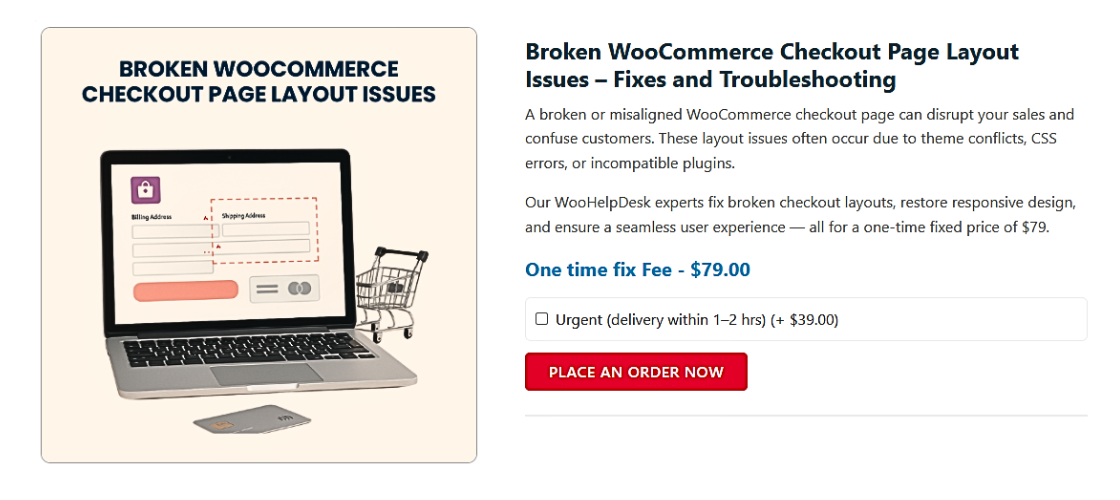
A WooCommerce checkout page layout broken issue occurs when the checkout page does not appear as expected. This can include fields that are misaligned, buttons that do not display properly, or a layout that looks cluttered. Such problems might also involve distorted formatting, making it hard for customers to complete their purchases. In essence, it means that the checkout page’s design is not functioning as intended, causing potential confusion and frustration for users.
How Do Checkout Page Layout Issues Impact Business?
When a checkout page does not display correctly, it can hurt your sales. Customers may abandon their carts if the WooCommerce checkout page format problem makes it too difficult to complete their order. A Checkout layout messed up WooCommerce site can seem unprofessional, reducing trust in your brand. This results in lower conversion rates and missed revenue opportunities. In other words, an unfixed WooCommerce checkout layout error can lead to lost business, making it crucial to address these issues promptly.
Common Causes of Checkout Layout Issues
Understanding why your WooCommerce checkout page layout might be broken is crucial. Let’s explore some common causes:
- Plugin Conflicts
Plugins add functionality to your WooCommerce store. However, not all plugins are compatible with each other. Conflicts can arise when two plugins try to control the same feature. This can lead to a WooCommerce checkout page design issue. For example, a plugin designed for product display might interfere with the checkout process, causing layout problems. TTo identify such conflicts, temporarily deactivate all non-WooCommerce plugins (preferably on a staging site or using a troubleshooting mode). Then enable plugins one by one and test checkout in an incognito window each time. This method helps pinpoint the problematic plugin.
- Theme Compatibility Issues
Your website’s theme controls its overall appearance and layout. If the theme isn’t designed to work with WooCommerce, it can cause a WooCommerce checkout page format problem. Outdated themes may lack necessary styling for the checkout page, leading to misaligned fields or buttons. Switching to a default theme like Storefront can help determine if the theme is the issue. If the problem resolves with the default theme, consider updating or replacing your current theme.
- Outdated WooCommerce Version
Running an outdated version of WooCommerce can lead to various issues, including a WooCommerce checkout style broken scenario. New updates often include fixes and improvements. Not updating can result in compatibility problems with themes and plugins. Regularly updating WooCommerce ensures all components work together smoothly.
- Custom Code Modifications
Adding custom CSS or modifying theme files can enhance your site’s appearance. However, incorrect code can cause a WooCommerce checkout layout error. For instance, a missing semicolon in CSS can disrupt the entire layout. Always back up your site before making changes. If an issue arises after a modification, revert to the backup to restore functionality.
- Caching Issues
Caching improves site speed by storing copies of pages. However, it can cause a WooCommerce checkout page alignment issue if the checkout page is cached. This is because the checkout page is dynamic, changing with each user’s cart. To prevent issues, exclude Checkout, Cart, and My Account from plugin cache, server cache, and CDN cache rules.
- SSL Certificate Problems
An SSL certificate encrypts data between your site and users. If it’s expired or misconfigured, checkout may redirect, show security warnings, or fail to load securely. Browsers may block users from accessing the checkout page, displaying security warnings. Ensure your SSL certificate is valid and properly configured to maintain trust and functionality.
- Server Configuration
Sometimes, the server hosting your website might have settings that conflict with WooCommerce. This can result in a WooCommerce checkout layout bug. For example, limited server resources can cause slow loading times or incomplete page rendering. Consulting with your hosting provider can help identify and resolve such issues.
- JavaScript Errors
JavaScript enhances interactive features on your site. Errors in JavaScript can cause a WooCommerce checkout appearance issue. For instance, a conflicting script might prevent the checkout button from working. Utilizing the developer tools in your browser can assist in pinpointing these mistakes, enabling you to tackle them quickly. Minify/combine features in performance plugins can also break checkout scripts and styling.
- Incorrect Shortcode Usage
WooCommerce uses shortcodes to display content like the checkout page. Incorrect placement or formatting of these shortcodes can lead to a WooCommerce checkout page layout messed up situation. Ensure you’re using the correct shortcode [woocommerce_checkout] on your designated checkout page without additional formatting tags.
- Permalink Settings
Permalinks are the URLs for your site’s pages. Incorrect settings can cause checkout pages to load incorrectly or return 404 errors. For example, if the permalink structure doesn’t match WooCommerce’s requirements, the checkout page might not display correctly. Re-save permalinks by opening Permalinks settings and clicking Save Changes.
- Incorrect Checkout Page Assignment
WooCommerce must point to the correct Checkout page in settings. If the assigned page was deleted, duplicated, or replaced, checkout may render incorrectly. Confirm the Checkout page in WooCommerce settings and ensure it contains the Checkout block or [woocommerce_checkout].
How to fix WooCommerce checkout page layout broken issue
Fixing a broken WooCommerce checkout page layout issue often involves identifying and resolving the underlying causes. Here are a few measures you can implement to tackle the issue.
Check for Plugin Conflicts
Plugins can sometimes conflict with WooCommerce and break the checkout layout. Start by disabling all plugins except WooCommerce. Test the checkout page after each plugin reactivation. If a plugin breaks the layout, keep it disabled and look for an alternative or an update.
Use a Default Theme
Outdated or incompatible themes are a common cause of broken layouts. Temporarily switch to Storefront (or a default theme) and retest the checkout layout. If it does, your current theme may be outdated. Consider updating it or finding a WooCommerce-compatible theme.
Update WooCommerce and Plugins
Running old versions of WooCommerce or plugins can cause layout problems. Make sure all plugins and WooCommerce are updated to the latest versions. Updates often include fixes for known layout issues.

Clear Cache and Disable Caching
Caching plugins can create display problems on the checkout page. Clear both site and browser caches. Exclude Checkout, Cart, and My Account from caching and from HTML minification delivery.
Remove Custom Code or CSS
If you’ve added custom code, it could be causing layout issues. Temporarily remove any custom CSS or PHP code. If the layout improves, review your custom code carefully before re-adding it.
Check Browser Developer Tools
Use your browser’s developer tools to inspect the checkout page. Look for any CSS or JavaScript errors. These tools can show you which styles or scripts might be breaking the layout. Fixing those errors often restores the checkout page.
Restore a Backup
If the checkout layout broke after a recent update, restore a backup. This quickly restores your site to a functioning condition. After restoring, repeat updates one by one to identify the exact change that broke checkout.
Seek Expert Help
If these steps don’t fix the issue, you may need a developer’s help. They can diagnose complex issues and provide long-term solutions. Alternatively, WooHelpDesk offers specialized support for WooCommerce issues. You can reach their support team at +1 888 602 0119 (US & Canada) for guidance and expert assistance.
Preventing Future Checkout Layout Problems
Once a broken layout issue on the WooCommerce checkout page has been fixed, it is crucial to ensure that it does not recur. Ensuring your checkout page is stable and functional gives customers a seamless experience. Following these practices will help keep your checkout page working properly and avoid recurring problems.
Test Updates on a Staging Site
Utilize a staging environment before implementing any changes on your live site. This allows you to test updates without impacting your customers. If something goes wrong, it won’t break your live checkout page. After everything is confirmed to work, update your live site.
Use a Reliable Theme and Plugins
Always choose well-maintained and reputable themes and plugins. Outdated or poorly coded options can cause a WooCommerce checkout page design issue. Stick with trusted sources, and keep everything updated regularly. This helps keep everything compatible and minimizes the chance of layout issues.
Document Any Custom Code Changes
If you add custom CSS or code snippets, make a note of them. If you face a WooCommerce checkout page format problem, having a record of changes makes troubleshooting easier. When an issue arises, you’ll know what to remove or adjust, saving time and effort.
Regularly Back Up Your Site
With a backup, you can swiftly reinstate a functional version of your website. If a WooCommerce checkout layout error occurs, you can revert to a previous backup. This keeps downtime to a minimum and prevents long-lasting problems.
Exclude the Checkout Page from Caching
Caching can sometimes cause a Checkout layout to be messed up in a WooCommerce situation. By excluding the checkout page from caching, you ensure customers always see the latest, most accurate version. This is a minor action that can avert significant troubles.
Check for Compatibility After Updates
After updating WooCommerce or your plugins, verify that the checkout page works. A quick review can identify issues before they impact customers. If you spot a broken WooCommerce checkout style issue early, you can fix it before it impacts sales.
Use a Trusted Hosting Provider
A reliable hosting provider ensures your website loads correctly. Some hosting configurations can cause checkout pages to load partially or break styling. By choosing a reputable host, you reduce the chance of server-related layout problems.
Monitor and Maintain Your Site Regularly
Don’t wait for a WooCommerce checkout page alignment issue to appear. Check your site regularly, update all components, and keep an eye out for small changes. Proactive maintenance helps you catch problems early, preventing more serious WooCommerce checkout layout bug issues.
If the issue started after a theme/plugin update, note the exact update time and revert/test systematically.
Conclusion
A broken WooCommerce checkout page layout can frustrate customers and harm sales. Common causes include plugin conflicts, outdated themes, or caching issues. Fixing these problems involves checking for conflicts, keeping everything updated, and ensuring proper backups. Maintaining a stable checkout page through careful updates, reliable themes, and proactive monitoring helps provide a smooth shopping experience for your customers.