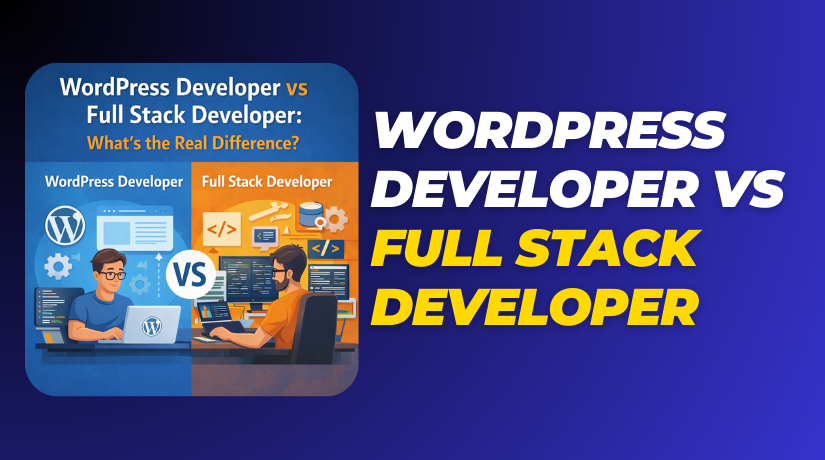
WordPress Developer vs Full Stack Developer: What’s the Real Difference?
Table of Contents
- Introduction
- What Is a WordPress Developer?
- What Is a Full Stack Developer?
- Front-End and Back-End Responsibilities
- Popular Full Stack Tools and Frameworks
- Comparing Full Stack and WordPress Roles
- Skillset and Salary Comparison
- Skill Comparison: WordPress Developer vs Full Stack Developer
- Can a WordPress Developer Become a Full Stack Developer?
- Salary and Job Market Overview
- Choosing and Transitioning Career Paths
- Which Career Path Should You Choose?
- Transitioning from WordPress Developer to Full Stack Developer
- The Real Difference
- Conclusion
Introduction
In the world of web development, job titles often sound confusing. A lot of folks are curious about the difference between a full stack developer and a WordPress developer. These two roles share some skills but serve very different purposes.
A WordPress developer uses the WordPress platform to create websites. They customize designs, install plugins, and improve website performance. Conversely, a full stack developer works on a website or application’s front end as well as back end.
Knowing this difference is important for students, freelancers, and businesses. For instance, a company owner might employ a WordPress developer to create a rapid website. But if the project needs a complex web app, they will likely choose a full stack developer.
This guide will explain both roles clearly. You’ll learn what they do, the tools they use, and how their work impacts the web development process.
Keywords covered: difference between WordPress developer and full stack developer, WordPress developer vs full stack developer
What Is a WordPress Developer?
A professional who uses WordPress to create and administer websites is known as a WordPress developer. More than 40% of all websites nowadays are powered by WordPress, a well-known content management system (CMS).
These developers focus on creating custom themes, plugins, and layouts. They make sure the website works well and looks fantastic. Their work involves front-end design and limited back-end customization.
Common tasks include:
- Setting up new WordPress installations
- Customizing themes and templates
- Developing plugins for extra features
- Maintaining website security and updates
- Optimizing site speed and performance
To do this, they use languages like:
- HTML and CSS for structure and style
- PHP for WordPress logic
- JavaScript for interactivity
While a WordPress developer mainly works inside the CMS, a full stack developer works beyond it. Full stack developers build systems from the ground up, not just customize them.
In simple terms, a WordPress developer manages an existing framework. That framework is created from the ground up by a full stack developer.
Understanding WordPress vs full stack web development helps you see where each role fits. WordPress developers are great for fast, content-focused sites. For complex, data-driven projects, full stack developers are perfect.
Both roles are valuable in the digital world. The decision is based on the requirements, budget, and schedule of your project.
What Is a Full Stack Developer?
A professional that works on both the front-end and back-end of a web application is known as a full stack developer. They handle everything from design to databases and servers. This makes them one of the most versatile roles in web development today.
Unlike a WordPress developer, who mostly works inside the WordPress system, a full stack developer builds applications from scratch. They create custom features and connect different parts of a website to make it work smoothly.
Front-End and Back-End Responsibilities
“Full stack” refers to the developer’s comprehension of the entire technology stack utilized in a project. This includes:
- Front-End Development:
The area of the website where users can view and engage.
Full stack developers use HTML, CSS, and JavaScript to build layouts and interactive designs. They may also use frameworks like React, Angular, or js to create dynamic interfaces. - Back-End Development:
The back-end is the part of the website users don’t see.
It handles data, logic, and server communication. For this layer, full stack developers employ languages like Python, PHP, Ruby, or Node.js.
They also manage databases (like MySQL, MongoDB, or PostgreSQL) and connect APIs that allow software to exchange data.
A full stack developer can create and manage an entire system, from the server architecture to the user interface, by integrating both abilities.
Popular Full Stack Tools and Frameworks
Full stack developers often use ready-made frameworks to speed up development. Some popular stacks include:
- MERN stack: MongoDB, Express.js, React, Node.js
- LAMP stack: Linux, Apache, MySQL, PHP
- MEAN stack: MongoDB, Express.js, Angular, Node.js
These stacks provide everything needed to build modern web applications — from databases to client-side design.
Comparing Full Stack and WordPress Roles
While both roles aim to create functional websites, their work scope differs.
A WordPress developer focuses on customizing websites using pre-built tools.
These tools are created by a full stack developer, who also connects systems in the background.
In short:
- WordPress developers build within a platform.
- Full stack developers build the platform
This key distinction defines the front-end vs back-end vs WordPress developer relationship.
Skillset and Salary Comparison
Understanding the skill difference between a WordPress developer and a full stack developer helps you choose the right path. Both roles need coding knowledge and creativity. However, their skills, tools, and daily tasks are not the same.
Skill Comparison: WordPress Developer vs Full Stack Developer
The primary focus of a WordPress developer is using the WordPress platform to create and manage websites. Their skills center around design, layout, and customization.
WordPress developers frequently possess the following abilities:
- HTML and CSS for structure and styling
- PHP for server-side customization
- JavaScript for adding interactive features
- WordPress themes and plugin development
- Site speed optimization and security maintenance
They often work with tools such as Elementor, WooCommerce, and tailored plugins to extend website features. They work primarily inside the WordPress ecosystem.
In contrast, a full stack developer handles the complete process of creating web applications — from database design to user interface.
The following are essential abilities for full stack developers:
- Front-end technologies: HTML, CSS, JavaScript, React, or Angular
- Back-end technologies: Node.js, Python, PHP, or Ruby
- Database management: MySQL, MongoDB, PostgreSQL
- API development and integration
- Version control tools like Git and GitHub
Full stack developers need a broader range of technical skills. They build projects from scratch and handle every layer of development.
So, when we compare WordPress developer skills vs full stack developer skills, the full stack role demands deeper programming knowledge and a wider tech stack. However, a WordPress developer can gradually learn these skills and grow into a full stack role.
Can a WordPress Developer Become a Full Stack Developer?
Yes, absolutely. A WordPress developer already understands front-end basics and PHP. These abilities serve as the cornerstone of full stack development.
To make the transition, they can start learning:


- JavaScript frameworks like React or Vue.js
- Server-side technologies like Node.js or Express.js
- Database management and API development
This path allows them to expand beyond WordPress and work on larger projects. Over time, they can build complex applications just like a full stack developer.
Salary and Job Market Overview
In the U.S., salary differences depend on skill level and project complexity.
- WordPress developers earn around $55,000 to $85,000 per year.
- Full stack developers earn between $85,000 and $120,000 per year.
Full stack developers usually earn more because they handle both design and logic. However, skilled WordPress developers with plugin or WooCommerce expertise can also earn high income through freelance work.
The professional path depends on your interests and aspirations, however both positions provide fantastic opportunity.
Choosing and Transitioning Career Paths
Choosing between becoming a WordPress developer or a full stack developer can be confusing. Both roles are rewarding and in demand. However, your choice should depend on your interests, learning goals, and long-term career vision.
Which Career Path Should You Choose?
When deciding should I learn WordPress or full stack development, start by understanding your strengths.
If you enjoy designing websites, customizing layouts, and working with easy-to-use tools, WordPress development is a great start. It enables you to swiftly create webpages and observe outcomes. WordPress is ideal for freelancers, small businesses, and digital marketers who need professional sites without deep coding.
Select WordPress development if you’d like:
- A quicker method for creating and launching websites
- Creative control over design and content
- To work with clients and small businesses
- To earn through freelance or agency projects
However, full stack development can be a better fit for you if you appreciate writing code, solving complicated problems, and creating software systems from the scratch. It requires more learning but offers higher flexibility and stronger job opportunities.
Choose full stack development if you want:
- To work on both front-end and back-end systems
- To create apps, databases, and scalable web platforms
- To explore advanced technologies like APIs and cloud systems
- To aim for high-paying software engineering jobs
In short, which is better — WordPress developer or full stack developer — depends on your goals. WordPress suits creative web designers, while full stack suits developers who love technical challenges.
Transitioning from WordPress Developer to Full Stack Developer
Many professionals start as WordPress developers and later expand into full stack development. This shift is very achievable with consistent learning and practice.
A WordPress developer already knows the basics of HTML, CSS, JavaScript, and PHP. These are also used in full stack development. So, you already have a strong foundation.
To move forward, focus on learning new technologies step-by-step:
- Master JavaScript Frameworks
Learn React, Vue.js, or Angular for modern front-end development. These frameworks help you build dynamic interfaces beyond WordPress. - Learn Back-End Languages
Explore Node.js, Python, or Ruby to manage server logic and databases. Understanding how APIs work is also essential. - Work with Databases
Get hands-on experience with MySQL, PostgreSQL, or MongoDB. These tools store and manage website or app data efficiently. - Build Real Projects
Practice by creating small web apps. Build a personal project where you combine front-end, back-end, and databases together. - Keep Learning
Follow online courses, join coding communities, and read documentation regularly. The secret to becoming a full stack developer is to never stop learning.
Transitioning takes time, but it opens many doors. Full stack developers can work in startups, software companies, or even as independent consultants.
Remember, how to become a full stack developer from WordPress developer starts with curiosity and consistent practice. You don’t have to leave WordPress behind — it can remain part of your full stack skillset.
With patience and effort, a WordPress developer can become a full stack developer and build a stronger, future-proof career.
The Real Difference
Both WordPress developers and full stack developers play important roles in web development. The real difference lies in their approach, technical depth, and project scope.
A WordPress developer works mainly within the WordPress framework. They build and customize websites using themes, plugins, and pre-built tools. Their focus is on creating functional, user-friendly sites quickly and efficiently. WordPress developers are ideal for small businesses, content creators, and eCommerce stores using WooCommerce.
In contrast, a full stack developer creates entire systems from the scratch. They handle both front-end and back-end development. Their skills go beyond website design to include coding logic, data management, and server control. They are suited for large-scale web applications and software projects.
In simple terms:
- WordPress developers manage and improve existing frameworks.
- Full stack developers create frameworks and software solutions.
Both careers offer growth and flexibility. The best choice depends on your interest, project goals, and long-term vision.
Conclusion
When comparing the difference between a WordPress developer and a full stack developer, remember that both contribute to the web in different ways.
If you love creativity, design, and fast results, choose WordPress development. It offers steady work, flexibility, and a large client base.
If you enjoy deep coding, solving logic problems, and building scalable systems, full stack development is the right path. It requires more learning but offers higher income and advanced career options.
Both roles can even complement each other. Many successful developers use both WordPress and full stack skills to deliver complete digital solutions.
Whatever path you choose, keep learning, stay curious, and grow your skills.
Need help managing your WordPress projects effectively?
Try WooHelpDesk — an all-in-one support and management tool built for WordPress professionals.
It helps you handle client tickets, track performance, and streamline your workflows — all inside your WordPress dashboard.
With WooHelpDesk, you can focus more on building great websites and less on managing issues.