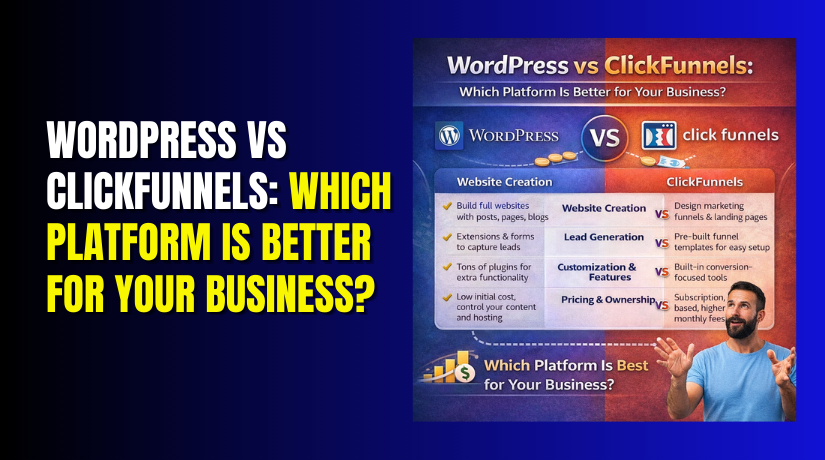
WordPress vs ClickFunnels: Which Platform Is Better for Your Business?
Table of Contents
- Introduction
- Quick Decision Summary
- What Each Platform Is Best At
- Setup, Ease of Use, and Learning Curve
- Design, Flexibility, and Control
- SEO, Blogging, and Long-Term Traffic
- eCommerce and Selling Online
- Cost and Value for Money
- Can One Replace the Other?
- Can WordPress replace ClickFunnels?
- Conclusion
- FAQ
Introduction
Choosing the right platform can change how your business grows online. In this WordPress vs ClickFunnels comparison, the goal is simple. You should know which platform fits your needs best. Both tools can help you sell, collect leads, and publish pages. But they are built for different business goals.
WordPress is a website platform. It is best when you need a full site. You can create service pages, blog posts, and landing pages. You can also build a complete online store using WooCommerce. WordPress gives more control over design, content, and site features.
ClickFunnels is a funnel-building platform. It is built for conversions and fast campaign launches. You create landing pages and connect them into a funnel flow. The funnel guides visitors step by step toward signup or purchase. That is the main difference in ClickFunnels vs WordPress for most business owners.
This guide will help you choose the right option. It will focus on goals, budget, selling style, and growth plans.
Quick Decision Summary
Many business owners ask, ClickFunnels vs WordPress which is better. The answer depends on what you are trying to build. Use these quick checks to decide.
Choose WordPress if you need a complete business website.
- You want strong brand pages and service pages.
- You want long-term traffic from Google search.
- You plan to publish blog posts and support guides.
- You want full control of your site and data.
- You want flexibility as your business grows.
Choose ClickFunnels if you need a fast sales funnel.
- You run ads and need quick landing pages.
- You sell one main offer or a small set.
- You want a guided flow from click to checkout.
- You want upsells, downsells, and order bumps.
- You want fewer setup steps and faster launch.
If you are small business, decide what comes first.
For many owners, ClickFunnels or WordPress for small business depends on priorities. If you need a full website and steady growth, WordPress fits better. If you need fast conversion pages for a single offer, ClickFunnels fits better.
If you are just starting, think about ease of use.
For many users, ClickFunnels vs WordPress for beginners depends on comfort. ClickFunnels can feel easier for funnels and offers. WordPress can feel better for full websites and content.
If you plan to sell many products, compare selling style.
ClickFunnels vs WordPress for ecommerce store is an important question. WordPress with WooCommerce fits a full store with many products. ClickFunnels fits offer-based selling with fewer products.
What Each Platform Is Best At
When WordPress is the better fit
WordPress works best when you need a complete website. It is not only for landing pages. It is built for long-term growth and full control. You can create a strong brand presence with structured pages. You can also publish content that brings traffic over time.
WordPress is a strong choice when your business needs these items:
- A home page, about page, and service pages
- A blog for guides, updates, and support content
- Lead capture pages connected to email marketing
- A full online store with many products and categories
- Room to expand features as your business grows
WordPress also gives you more control over your site setup. You can choose your hosting, theme, and tools. You can improve speed, security, and SEO with the right settings. This matters when you want long-term stability and growth.
In many cases, ClickFunnels vs WordPress becomes a simple decision here. If you need a real website with many pages, WordPress fits better. If you want to build a full store, WordPress is also stronger. That is why many compare ClickFunnels vs WordPress for ecommerce store when selling products. A store needs product pages, categories, and search filters. WordPress with WooCommerce supports that structure better.
When ClickFunnels is the better fit
ClickFunnels works best when your goal is a guided sales flow. It is designed to move a visitor step by step. You build one focused path from entry to checkout. This is helpful when you sell a single offer or one core service.
ClickFunnels is a good choice when you want:
- A fast landing page for an ad campaign
- A simple funnel with a clear next step
- A sales page with a direct checkout flow
- Upsells, downsells, and order bump steps
- A quick way to test offers and copy
ClickFunnels is built for speed and simplicity in funnel building. You do not need to build a full website first. You start with a funnel and publish fast. This is why some business owners ask, is ClickFunnels worth it. If you run offers and paid campaigns often, it can be worth it. The value depends on how much you use funnel features.
So, ClickFunnels vs WordPress which is better depends on your main goal. WordPress is better for full websites and content growth. ClickFunnels is better for offer funnels and faster campaign launches.
Setup, Ease of Use, and Learning Curve
Getting started with WordPress
WordPress setup takes a few steps, but it gives control. You usually start by buying hosting and a domain. Then you install WordPress and pick a theme. After that, you add plugins for needed features. You build pages and set menus for navigation.
A basic WordPress setup often includes:
- Hosting and WordPress installation
- A theme for design and layout
- Core pages like Home, About, and Services
- A contact form and lead capture setup
- SEO and performance basics like caching
WordPress can feel easy after the setup is done. But the first setup can take time. You also need updates for plugins and themes. If you want full control, this trade is worth it.
Getting started with ClickFunnels
ClickFunnels setup is faster for funnels. You sign up and start building inside the platform. You select a funnel template and edit pages. Then you connect your payment and email tools. You publish the funnel and start sending traffic.
A basic ClickFunnels setup usually includes:
- Choose a funnel type and template
- Edit landing page, sales page, and checkout
- Add funnel steps like upsells if needed
- Connect payment and email integrations
- Publish and test the full flow
This is why many users compare ClickFunnels vs WordPress for beginners. ClickFunnels can feel simpler for funnel tasks. WordPress can feel better for full site building. Beginners often choose based on what they need first.
Which one feels easier long term?
For many businesses, the “easy” choice depends on daily work. If you publish content weekly, WordPress feels natural. If you launch offers and funnels often, ClickFunnels feels faster. If you want full control, WordPress wins. If you want fewer moving parts, ClickFunnels feels lighter.
If you are deciding ClickFunnels or WordPress for small business, ask one question. Do you need a full website base first, or a funnel first? If your business needs trust pages, services, and blog content, choose WordPress. If your business runs one offer and wants fast conversions, ClickFunnels fits better.
Design, Flexibility, and Control
Design freedom and layout options
Design matters because it shapes trust and conversions. A clean layout helps users take action faster. Both platforms let you build good-looking pages. But the way you design is very different.
With WordPress, you get wider design freedom. You can build a full website layout with menus and pages. You can also design landing pages for campaigns and ads. If you want a unique brand style, WordPress helps more.
WordPress design strengths usually include:
- Full control of headers, footers, and site navigation
- Custom page layouts for services, blog, and product pages
- Many theme choices for different business styles
- Easy content edits for long pages and content sections
- Ability to grow your site without redesigning everything
ClickFunnels is built for funnel pages, not full websites. It gives you fast templates for sales pages and checkouts. You focus on one page goal at a time. This helps speed and conversion testing. But the design range can feel limited for full branding.
ClickFunnels design strengths usually include:
- Funnel templates built for signups and sales
- Fast edits for offers, copy changes, and sections
- Simple page flow control from step to step
- Consistent layouts for focused conversions
- Less time spent on full site structure planning
This is where WordPress vs ClickFunnels becomes clear. WordPress supports full brand websites with many page types. ClickFunnels supports funnels with fewer pages and fewer choices.
Control, ownership, and long-term flexibility
Control is not only about design. It is also about ownership and future changes. Many business owners face this issue later. They grow fast, then need new features.
With WordPress, you control your site setup. You control hosting, files, and database access. You can move your site to another host if needed. You can also add new features without changing platforms.
WordPress control benefits include:
- More ownership of your site and content
- More freedom to change tools and integrations
- More options for speed and security settings
- Easier expansion into new features and page types
- Better fit for long-term growth and scaling
With ClickFunnels, most of the system stays inside the platform. You get a managed setup that feels simple. But you also depend more on platform rules and limits. That is not always bad. It can reduce tech stress for some teams.
ClickFunnels control trade-offs often include:
- Less control over full site structure and navigation
- More platform dependence for features and page behavior
- Limited flexibility for large content sites
- Best suited for funnel-first selling models
So, ClickFunnels vs WordPress often depends on growth plans. If you want long-term flexibility, WordPress fits better. If you want a simple funnel engine, ClickFunnels fits better.
SEO, Blogging, and Long-Term Traffic
Why SEO matters for steady leads
SEO helps people find your business through search. It brings traffic without paying for every click. It also builds trust over time. A strong content plan can support leads every week.
WordPress is built for content publishing. It supports blogs, guides, and support pages well. That makes it a strong fit for long-term traffic growth. You can organize content using categories and tags. You can also build topic clusters around services and products.
WordPress works well for:
- Blog posts that answer customer questions
- Long guides that rank for problem searches
- Service pages that target local and niche searches
- Support content that reduces customer tickets
- Content updates that keep rankings stable
If your plan depends on Google traffic, WordPress is strong. Many businesses choose WordPress for this reason alone. It is easier to scale content when your site supports it.
Funnel pages vs SEO pages
Funnels and SEO pages have different jobs. A funnel page is built to convert fast. It removes extra links and distractions. It focuses on one offer and one action.
An SEO page is built to match search intent. It answers questions and builds trust. It also uses clear headings, internal links, and supporting content. That structure helps search engines understand the page.
ClickFunnels can rank some pages, but it is not a blog-first tool. It is not designed for large content libraries. It is best for pages connected to campaigns and offers. That is why WordPress is often stronger for organic growth.
This affects how you answer ClickFunnels vs WordPress which is better. If your main plan is content growth, WordPress wins. If your main plan is offer funnels, ClickFunnels wins.
What to choose for traffic growth
If you want a long-term marketing engine, build a content base. That means blog posts, guides, and evergreen pages. WordPress supports that base better. You can still build funnel pages later. You can also connect funnels to WordPress landing pages.


If you depend on ads and fast conversions, funnels matter more. ClickFunnels supports that better. It is made for quick tests, quick launches, and clear funnel tracking.
A simple way to decide is this:
- Choose WordPress when you want steady traffic and content growth.
- Choose ClickFunnels when you want fast offer funnels and sales.
eCommerce and Selling Online
Selling style matters more than the platform name
Selling online can mean two very different setups. One setup is a full store with many products. Another setup is a focused offer with a direct checkout. Your selling style should guide your choice.
If you are comparing ClickFunnels vs WordPress for ecommerce store, start here. Ask what you plan to sell and how buyers shop. Store buyers often browse categories and product pages. Funnel buyers usually follow one path to purchase.
WordPress for a full online store
WordPress becomes an eCommerce platform using WooCommerce. This setup works best for full stores with many products. It supports product pages, categories, and filters. It also supports product variations like size and color.
WordPress with WooCommerce is a strong fit when you need:
- Many products with categories and search
- Product pages with specs, reviews, and images
- Cart and checkout for multiple items
- Shipping rules, tax settings, and coupons
- A store that grows over time with new products
It also supports content-driven selling. You can publish guides and link them to products. This helps buyers who need more information before purchase. It also helps your store get traffic from search.
This is why many see WordPress as a store-first option. You can still build landing pages for campaigns. But the main system stays store-focused.
ClickFunnels for offer-based selling
ClickFunnels is best for selling through a guided flow. It works well when you sell one main offer. It is also strong for a small set of products. The funnel removes distractions and pushes one action.
ClickFunnels is a strong fit when you want:
- A single product offer or a core service
- A sales page with a direct checkout step
- Upsells and downsells after the first purchase
- An order bump option at checkout
- Fast testing of pricing and page copy
This funnel style can work well for digital products too. It can also work for simple physical product offers. But it is not built like a full store. Buyers do not browse in the same way.
So, ClickFunnels vs WordPress depends on the buying journey. WordPress supports browsing and product discovery. ClickFunnels supports one clear path to buy.
Which one helps you sell more?
Both can sell. The difference is how they sell.
Choose WordPress when buyers need choices and comparisons. Choose ClickFunnels when buyers need one clear offer. If you plan to sell many items, WordPress is safer. If you sell one main offer, ClickFunnels feels faster.
This also links to business stage and strategy. Many owners start with one offer and a funnel. Later, they add a full site for trust and content. Others start with a full site and add funnels later.
Cost and Value for Money
How costs work with WordPress
WordPress costs can vary based on your setup. The platform itself is free. But you still pay for hosting and a domain. You may also pay for themes or plugins based on needs.
Typical WordPress cost areas include:
- Domain and hosting plans
- Premium theme or page builder costs
- Paid plugins for advanced features
- Security, backups, and performance tools
- Developer help for custom changes, if needed
The main benefit is control. You can start small and upgrade later. You can also change hosting if your needs change. This flexibility helps businesses control spend over time.
How costs work with ClickFunnels
ClickFunnels costs are usually a monthly subscription. You pay to access the funnel builder and funnel features. This includes templates and funnel flows.
ClickFunnels cost value often comes from:
- Faster funnel setup and launch
- Built-in funnel steps and conversions focus
- Less time spent on site structure decisions
- Easier funnel testing for offers and ads
This is where many ask, is ClickFunnels worth it. It is worth it when funnels are your main sales system. If your business runs campaigns often, the monthly cost can make sense. If you rarely build funnels, the cost can feel high.
What “value for money” really means
Value is not only about price. It is also about results and time. If ClickFunnels helps you launch faster, that can create revenue sooner. If WordPress helps you grow steady traffic, that can lower ad spend later.
Use these checks to judge value:
- How often you launch new campaigns and offers
- How much you depend on search traffic and content
- How many products you sell and how buyers shop
- How important ownership and control are to you
- How much you want to customize in the future
For many owners, the best value is a clear plan. If your plan is a full site and store, WordPress fits. If your plan is offer funnels, ClickFunnels fits. This is why ClickFunnels vs WordPress which is better depends on your business model.
Can One Replace the Other?
Can ClickFunnels replace a website?
Many business owners ask, can ClickFunnels replace a website. The honest answer is, sometimes it can. But it depends on what your business must show online. A funnel can sell, capture leads, and take payments. It can also explain an offer in a clear flow. That works well for simple selling models.
ClickFunnels can replace a traditional website when:
- You sell one main offer or one core service
- You get traffic mostly from ads or direct links
- You do not need many service pages or content
- You only need a few pages for trust and checkout
- Your brand does not need heavy SEO growth
In these cases, a funnel-first setup can work fine. You can run fast tests and launch offers quickly. The platform keeps the flow simple and focused.
But ClickFunnels cannot replace a website in many cases. A full website does more than sell. It builds trust with deeper pages and content. It also supports long-term growth through search traffic.
ClickFunnels may not replace a website when:
- You want long-term traffic from blog content
- You need many pages for services and locations
- You want a full store with many product pages
- You need strong site navigation and content structure
- You want full control of hosting and site features
So, ClickFunnels vs WordPress becomes clear here. WordPress is better for a complete website base. ClickFunnels is better for conversion-first funnels.
Can WordPress replace ClickFunnels?
WordPress can replace many funnel needs, if set up well. You can build landing pages and lead forms. You can connect email tools and payment systems. You can also build a smooth checkout using WooCommerce.
WordPress can replace ClickFunnels when:
- You want a full site plus landing pages
- You want more control over design and features
- You want SEO pages and funnels on one platform
- You want to reduce monthly platform costs
- You have a team to manage plugins and updates
But WordPress may not feel as fast for funnel testing. ClickFunnels is built for funnel steps and quick edits. If you run many funnel tests, ClickFunnels can feel easier. This is why some still ask, is ClickFunnels worth it for their marketing style. It can be worth it when funnels are your main engine.
Conclusion
If you are still deciding, keep it simple. Choose the platform that matches your main plan. WordPress is best for a full website and content growth. ClickFunnels is best for fast funnels and offer selling. For many cases, ClickFunnels vs WordPress which is better depends on this focus.
If you want expert help, WooHelpDesk can support you. We can help you choose the right setup for goals. We can also improve speed, fix issues, and tune performance. This helps your site or funnel convert better.
FAQ
1) Which platform is best for a new business?
If you need a full website, choose WordPress first. If you sell one offer, ClickFunnels can work faster.
2) Which platform is better for long-term traffic growth?
WordPress is stronger for blogs and SEO pages. It supports long content and better site structure.
3) Which one is better for selling products online?
For full stores, WordPress with WooCommerce works better. For offer selling, ClickFunnels can work well.
4) Which one is easier to manage long term?
ClickFunnels feels simpler because it is a managed platform. WordPress needs updates, but gives more control.
5) Do I need both a website and funnels?
Not always. Many use WordPress for the website and ClickFunnels for funnels. It depends on your growth plan.
6) What should I choose if I plan to scale soon?
WordPress scales better for pages, content, and store growth. ClickFunnels scales better for funnel testing and offers.