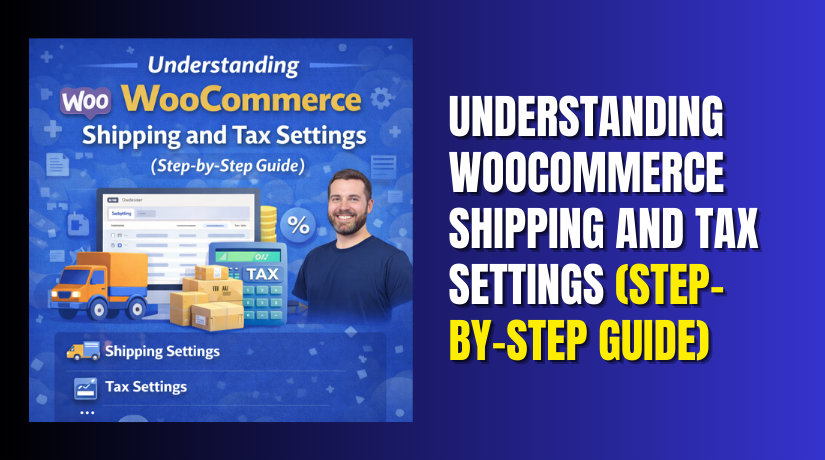
Understanding WooCommerce Shipping and Tax Settings (Step-by-Step Guide)
Table of Contents
- Introduction
- What Is WooCommerce Shipping and How the System Works in Online Stores
- What WooCommerce Tax Is and How It Works in Online Stores
- Differences Between WooCommerce Shipping and WooCommerce Tax
- Why Proper WooCommerce Shipping and Tax Setup Is Important for Your Store
- Conclusion
Introduction
Running an online store requires clear pricing and accurate checkout totals. WooCommerce shipping and tax play a major role in this process. They directly affect what customers pay at checkout. If configured incorrectly, they can cause confusion and cart abandonment.
Many store owners struggle with WooCommerce shipping settings and WooCommerce tax settings. Some are unsure how shipping charges apply. Others do not understand how taxes are calculated automatically.
This guide explains WooCommerce shipping and tax in simple terms. You will learn how shipping works. You will also understand how tax calculation works. By the end, you will feel confident managing both systems.
What Is WooCommerce Shipping and How the System Works in Online Stores
WooCommerce shipping allows you to charge customers for product delivery. It controls how products move from your store to buyers. The WooCommerce shipping setup starts with defining shipping locations. These locations are managed using WooCommerce shipping zones. A shipping zone is a specific region like a country or state. Each zone can have its own WooCommerce shipping methods. This helps you charge different rates for different areas. You can also control WooCommerce shipping cost based on rules. For example, you may charge more for distant locations. Proper WooCommerce shipping settings ensure customers see accurate delivery charges.
Understanding How WooCommerce Shipping Zones Control Delivery Rules
WooCommerce shipping zones define where you ship products. Each zone represents a geographic area. It can be a country, state, or ZIP code range. You can assign multiple WooCommerce shipping methods to one zone. This gives flexibility in delivery options. For example, you may offer a flat rate in one zone. Another zone may offer free shipping only. WooCommerce shipping setup becomes simple when zones are organized clearly. Well-defined WooCommerce shipping zones prevent checkout errors. They also ensure correct WooCommerce shipping cost calculation for each customer location
What WooCommerce Tax Is and How It Works in Online Stores
WooCommerce tax is the system that calculates product taxes automatically. It applies government rules to each customer order. WooCommerce tax settings control how tax appears at checkout. You must enable tax inside general store settings first. After enabling WooCommerce tax configuration options become visible. These settings allow you to define WooCommerce tax rates. Taxes may depend on customer billing or shipping location. Proper WooCommerce sales tax setup ensures accurate totals. Incorrect tax settings may cause legal or financial issues. Clear WooCommerce tax configuration keeps your store compliant and reliable.
Exploring WooCommerce Tax Rates and Tax Classes for Accurate Calculations
WooCommerce tax rates determine how much tax customers pay. You can create standard, reduced, or zero tax classes. Each product can be assigned a specific tax class. WooCommerce tax settings allow multiple tax rate entries. These rates can vary by country or state. WooCommerce tax configuration also supports city-level tax rules. You can define percentage-based or fixed tax amounts. Correct WooCommerce tax rates ensure proper billing accuracy. Organized WooCommerce sales tax setup prevents wrong calculations during checkout. Always review tax rules based on your business location.
Differences Between WooCommerce Shipping and WooCommerce Tax
WooCommerce shipping and tax both impact the final checkout total. However, they are different in purpose, control, and calculation logic. Below is a clearly defined comparison, starting with shipping differences first.
WooCommerce Shipping
- WooCommerce shipping is the cost of delivering physical products to customers.
- It is controlled through WooCommerce shipping settings inside the store dashboard.
- WooCommerce shipping zones define where products can be delivered.
- Shipping cost can vary based on distance, region, or ZIP code.
- WooCommerce shipping methods decide how items are delivered to customers.
- Shipping charges may depend on product weight, size, or quantity.
- WooCommerce shipping setup allows flat rate, free shipping, or local pickup.
- Shipping fees can be discounted using coupons or minimum order rules.
- WooCommerce shipping costs can change from one order to another.
- Shipping does not apply to digital or virtual products.
Now let us clearly define tax differences.
WooCommerce Tax
- WooCommerce tax is a mandatory government-imposed charge on sales.
- It is managed through WooCommerce tax settings in the store configuration.
- WooCommerce tax rates are defined according to legal tax laws.
- Tax calculation depends mainly on customer billing or shipping address.
- WooCommerce tax configuration must follow local and international tax rules.
- Tax cannot usually be removed or waived by store owners.
- WooCommerce sales tax setup applies only to taxable products.
- Tax rates may differ by country, state, or even city.
- WooCommerce tax settings allow inclusive or exclusive tax display.
- Tax remains consistent based on fixed legal percentages, not delivery choices.
Shipping focuses on product delivery expenses. Tax focuses on legal financial obligations. Proper WooCommerce shipping and tax management ensures accurate pricing, legal compliance, and smooth checkout performance.
Why Proper WooCommerce Shipping and Tax Setup Is Important for Your Store
Prevent Incorrect Order Totals and Billing Errors


Proper WooCommerce shipping and tax setup ensures accurate checkout totals. Incorrect WooCommerce shipping cost can mislead customers. Wrong WooCommerce tax rates may create billing mistakes. These errors often lead to refund requests. Clear WooCommerce shipping settings and WooCommerce tax settings prevent confusion. Accurate totals improve customer satisfaction and trust. Always verify your WooCommerce tax configuration before going live.
Reduce Cart Abandonment During Checkout
Unexpected charges are a major reason for cart abandonment. Incorrect WooCommerce shipping costs can surprise customers. Improper WooCommerce sales tax setup may increase totals suddenly. Customers prefer transparency in pricing. Proper WooCommerce shipping zones and tax rules display accurate amounts early. Clear pricing builds confidence during checkout. This improves your store conversion rate significantly.
Stay Legally Compliant With Tax Regulations
WooCommerce tax configuration must follow local tax laws. Incorrect WooCommerce tax rates may result in penalties. Government rules often change over time. Proper WooCommerce tax settings help maintain compliance. Accurate WooCommerce sales tax setup protects your business legally. Compliance avoids legal disputes and financial risks.
Improve Customer Trust and Transparency
Customers expect clear breakdowns of shipping and tax. Proper WooCommerce shipping setup shows delivery charges clearly. Accurate WooCommerce tax settings display tax correctly. Transparent pricing increases store credibility. Customers feel confident when totals are correct. Trust leads to repeat purchases and positive reviews.
Avoid Shipping and Delivery Conflicts
Improper WooCommerce shipping zones may block delivery options. Incorrect WooCommerce shipping methods can cause confusion. Customers may not see the correct shipping choices. Proper WooCommerce shipping settings ensure smooth order processing. Accurate WooCommerce shipping setup reduces complaints. This improves overall store performance.
Ensure Smooth Accounting and Financial Reporting
Correct WooCommerce tax configuration simplifies accounting records. Proper WooCommerce sales tax setup helps track collected taxes. Accurate WooCommerce shipping cost reporting improves revenue tracking. Organized WooCommerce tax rates prevent calculation errors in reports. Clear financial data helps during audits. Good setup supports long-term business growth.
Conclusion
WooCommerce shipping and tax are essential store components. They directly affect pricing and customer experience. A correct WooCommerce shipping setup ensures fair delivery charges. Proper WooCommerce tax configuration ensures accurate tax calculation. Together, they create smooth and reliable checkout totals.
If you are unsure about WooCommerce shipping settings or WooCommerce tax settings, expert help can save time and prevent errors. At WooHelpDesk, our team helps configure WooCommerce shipping and tax professionally. Contact WooHelpDesk today to ensure your store runs smoothly and accurately.