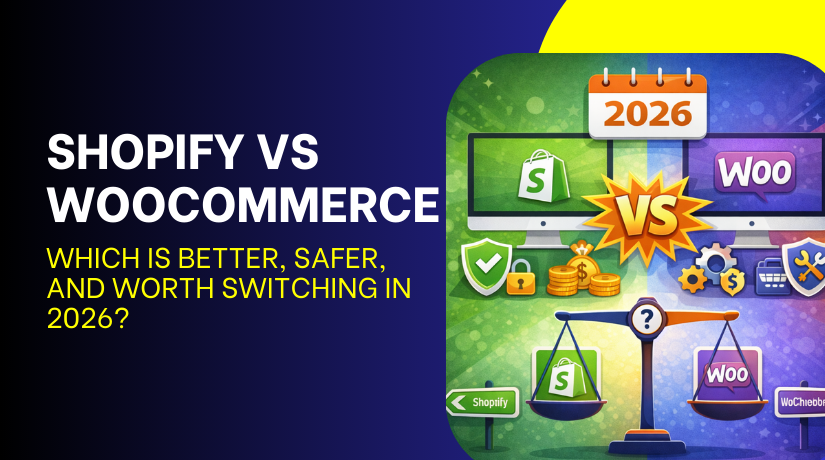
Shopify vs WooCommerce: Which Is Better, Safer, and Worth Switching in 2026?
Table of Contents
- What is WooCommerce?
- What is Shopify?
- What’s the Difference Between Shopify and WooCommerce?
- Why Choose WooCommerce Instead of Shopify
- Should I Move from WooCommerce to Shopify?
- Conclusion
What is WooCommerce?
WooCommerce is a WordPress plugin that adds full ecommerce features. It turns your WordPress site into a fast online store. You can sell products, services, and even digital downloads easily. You can control your store design, pages, and user experience fully. You also control your hosting, speed tools, and database access. This control helps when you want deep edits and custom flows. WooCommerce works best when WordPress is your main platform.
It fits brands that publish blogs, landing pages, and guides often. It also fits stores with custom product rules and pricing. In many Shopify vs WooCommerce talks, this control matters most. Your setup can be simple, but you must manage it well. You update WordPress, themes, and plugins on a schedule. You also handle backups, security steps, and performance tuning. This is why WooCommerce vs Shopify feels different daily.
What is Shopify?
Shopify is a hosted ecommerce platform built for online selling. It gives you one dashboard for products, orders, and payments. Shopify runs the hosting, server setup, and core store system. You focus more on selling and less on site upkeep. You pick a theme, add products, and launch quickly online. You can extend features using apps from the Shopify store. This model suits owners who want fewer tech tasks daily.
It also helps teams that want predictable steps and support. In a Shopify vs WooCommerce comparison, Shopify feels more guided. The tradeoff is less control over core system choices. You work within Shopify rules, themes, and app limits. Many brands like this for speed and steady operations. Others need more freedom than Shopify can provide.
This guide helps you choose Shopify or WooCommerce with confidence. It explains each platform first, without mixing details too early. You will learn how each choice affects cost and workload. You will see how control and flexibility change long term growth. You will also learn what “managed” really means in practice. Many owners ask, Shopify or WooCommerce, which is better for me. The answer depends on your skills, budget style, and goals. Some stores stay on WooCommerce for content and SEO power. Some stores move for simpler upkeep and faster scaling. If you plan a WooCommerce to Shopify migration later, planning matters. Good planning reduces risk and protects sales and rankings. By the end, you will know your best next step.
What’s the Difference Between Shopify and WooCommerce?
WooCommerce
- WooCommerce runs on WordPress. It works as a plugin inside your WordPress website. This means your store and content stay in one place. It helps when you want a blog and store together. This is a key factor in WooCommerce vs Shopify decisions.
- You manage hosting and performance. You choose your hosting provider and server plan yourself. You can upgrade hosting when traffic grows. Speed depends on your host, theme, and plugins. You also manage caching and image optimization tools.
- You get more customization freedom. You can change product pages, cart, and checkout deeply. You can add features using plugins or custom code. This is helpful for unique pricing and custom product rules. It is why many prefer WooCommerce in Shopify vs WooCommerce comparison.
- You handle updates and maintenance. You update WordPress, WooCommerce, themes, and plugins regularly. You also fix plugin conflicts when they happen. You need backups, security steps, and monitoring in place. This work is manageable with a good process.
- Costs can vary based on your setup. WooCommerce is free to start, but hosting costs apply. Premium themes and plugins can add to cost. Your total cost depends on your tools and support needs.
Shopify


- Shopify is a hosted ecommerce platform. Shopify provides hosting and the store system in one package. You log in and manage everything from one dashboard. This makes Shopify or WooCommerce choices easier for beginners.
- Shopify reduces technical workload. Shopify manages server setup, uptime, and many security tasks. You do not manage WordPress updates or hosting tuning. This saves time for many store owners.
- Customization is theme and app based. You change design using themes and built-in settings. You add features using Shopify apps when needed. Advanced changes may need apps or developer work. This is common in Shopify vs WooCommerce comparison.
- Monthly costs are more predictable. Shopify uses monthly plans and paid apps may add cost. This gives a clearer monthly expense pattern. It can help with budgeting for new stores.
- Store operations feel more guided. Shopify gives a structured setup and store management flow. Many users find it easier for daily work and team training.
WooCommerce gives more control and flexibility, but needs upkeep. Shopify gives easier management with less maintenance, but less control. If you want full freedom, WooCommerce fits better. If you want simple operations, Shopify fits better. If you plan a WooCommerce to Shopify migration later, note what limits you today.
Why Choose WooCommerce Instead of Shopify
- More control over your store setup. You choose hosting, theme, and key plugins easily. This control helps in long term store growth planning. It also makes the WooCommerce vs Shopify choice clearer.
- Better fit for content and SEO work. WordPress helps you publish blogs, guides, and landing pages fast. This supports organic traffic and helps build trust with buyers. This matters in any Shopify vs WooCommerce comparison.
- Easier to build custom store features. You can add custom checkout fields and pricing rules. You can also add special product options and workflows. This flexibility supports unique store needs that Shopify may limit.
- Freedom to choose tools and services. You can pick any payment gateway, email tool, and shipping plugin. You can also connect CRMs and marketing tools with plugins. This helps if you want a custom tech stack.
- More ownership over data and platform choices. Your store runs on your hosting and your WordPress setup. You can change hosts and tools whenever needed. This is a key reason many pick WooCommerce vs Shopify.
Should I Move from WooCommerce to Shopify?
Reasons to Switch to Shopify
- You want less maintenance work every week. Shopify handles hosting and core updates for you. You spend more time selling and improving products. This is a common Shopify vs WooCommerce decision trigger.
- You face repeated plugin conflicts and site breaks. WooCommerce stores can break after updates sometimes. Shopify reduces these conflicts with a controlled ecosystem. This makes a Shopify vs WooCommerce comparison feel simpler.
- You want faster setup for new stores or launches. Shopify setup is guided and quick for many owners. WooCommerce needs hosting, WordPress, and more setup steps. This affects Shopify or WooCommerce choices for beginners.
- You prefer predictable monthly platform costs. Shopify plans give a clear monthly base cost. WooCommerce costs can change with hosting and plugins. This shapes the WooCommerce vs Shopify budget style.
- You need stronger platform support and clear processes. Shopify support and guides help many store owners. WooCommerce support depends on hosting and plugin vendors.
Reasons to Stay on WooCommerce
- You rely on blogs and SEO content for traffic. WordPress is built for content and ranking pages well. WooCommerce fits this content-first growth model strongly.
- You need deep customization for products and checkout. WooCommerce allows more flexible checkout and product logic. Shopify may need apps for many custom changes.
- You want full control over hosting and performance tools. You can upgrade hosting and tune caching as needed. Shopify manages hosting, so deep tuning is limited.
- You use many WordPress plugins across your website. WooCommerce works best when WordPress is your main base. Switching can mean replacing several site features too.
- You want more freedom over tools and integrations. WooCommerce supports wide plugin and API choices easily. This matters for advanced workflows and custom needs.
Conclusion
WooCommerce is best for control, flexibility, and content-led growth. Shopify is best for managed operations and simpler upkeep. Your best choice depends on workload and customization needs. Use this Shopify vs WooCommerce comparison as a practical guide. If you want freedom and deep edits, choose WooCommerce. If you want ease and steady operations, choose Shopify. If you plan a WooCommerce to Shopify migration, plan it early. Audit your store, map URLs, and test checkout before launch. When in doubt, list your pain points for thirty days. Then decide Shopify or WooCommerce based on real data.