How to Become a WooCommerce Developer: Tips, and Skills You Need to Succeed?
Table of Contents
- Introduction
- Who is a WooCommerce Developer?
- What are the Key Features of a WooCommerce Developer?
- What are the Benefits of Becoming a WooCommerce Developer?
- Why to Become a WooCommerce Developer?
- Tips on How to Become a WooCommerce Developer?
- Final Verdict
Introduction
If you’re looking to start a career in e-commerce, becoming a WooCommerce developer is a great choice. WooCommerce is one of the most popular platforms for creating online stores, known for its flexibility and scalability.
With over 28% of online stores powered by WooCommerce, there is a growing demand for WooCommerce developers. As a WooCommerce developer, you’ll help businesses create custom, user-friendly online shops tailored to their needs.
Career opportunities for WooCommerce developers range from freelancing to working with agencies or starting your own development business.
This guide will walk you through the essential steps to becoming a WooCommerce developer, providing a clear roadmap for a rewarding career in WooCommerce development.
Who is a WooCommerce Developer?
A WooCommerce developer specializes in building and optimizing WooCommerce stores. They have in-depth knowledge of WooCommerce and WordPress. Their tasks include customizations, plugins, integrations, and themes.
WooCommerce developers create custom themes and develop new features. They ensure compatibility with third-party plugins and optimize website performance. Their role involves creating functional, user-friendly, high-performing e-commerce sites tailored to clients.
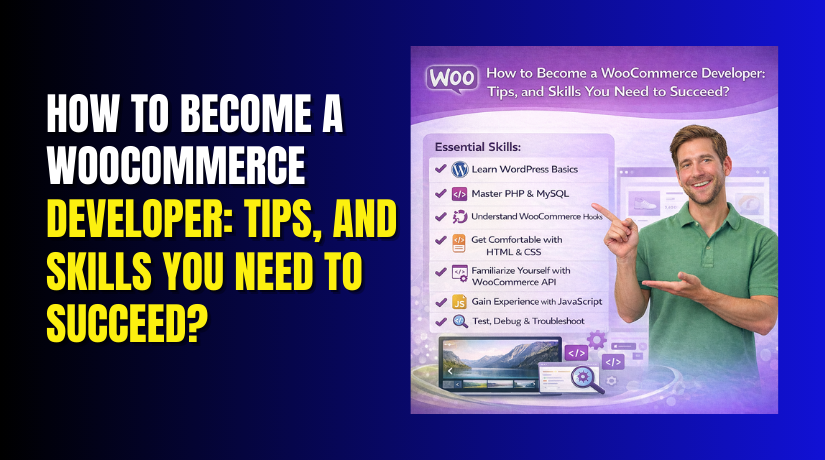
WooCommerce developers need to have strong skills in web development technologies, including:
- PHP: The primary language used to develop WooCommerce plugins and themes.
- HTML, CSS, and JavaScript: Essential for designing and styling WooCommerce websites.
- MySQL: Knowledge of MySQL databases to handle store data efficiently.
- WordPress: A deep understanding of WordPress as WooCommerce runs on WordPress.
By mastering these technologies, a WooCommerce developer can create highly functional, scalable, and user-friendly e-commerce websites.
What are the Key Features of a WooCommerce Developer?
Here are the top skills that define a WooCommerce developer:


1. Expertise in WordPress
- Proficiency in WordPress core concepts, including themes, plugins, and settings.
- Ability to create and manage custom post types and taxonomies.
- Knowledge of WordPress theme development and customization.
- Understanding of the WordPress template hierarchy for efficient page building.
- Familiarity with WordPress hooks (actions and filters) to extend functionality.
2. PHP Proficiency
- Expertise in PHP, the core language of WooCommerce and WordPress.
- Ability to create custom plugins and extend WooCommerce functionality.
- Understanding of object-oriented programming (OOP) in PHP for scalability.
- Knowledge of working with hooks, filters, and custom functions in PHP.
- Familiarity with debugging PHP issues and improving site performance.
3. Front-End Development
- Strong grasp of HTML for structuring WooCommerce pages.
- Expertise in CSS for designing attractive and responsive WooCommerce stores.
- JavaScript skills to create dynamic and interactive features (e.g., AJAX add-to-cart).
- Knowledge of front-end libraries like jQuery to enhance user experience.
- Experience in creating mobile-friendly, responsive WooCommerce designs.
4. WooCommerce Knowledge
- Familiarity with WooCommerce product types, variations, and attributes.
- Understanding of WooCommerce hooks, actions, and filters for deep customization.
- Ability to configure WooCommerce settings, payment gateways, and shipping methods.
- Proficiency in customizing WooCommerce templates and checkout processes.
- Knowledge of WooCommerce extensions and how to integrate them with custom solutions.
5. API Integrations
- Experience with WooCommerce REST API to manage orders, customers, and products programmatically.
- Knowledge of integrating third-party APIs for payment gateways, shipping, and inventory management.
- Familiarity with creating and consuming external APIs for WooCommerce.
- Ability to handle API authentication methods such as OAuth and API keys.
- Experience troubleshooting and maintaining API integrations for performance and reliability.
6. Database Management
- Proficiency in MySQL to manage WooCommerce data (products, orders, customers).
- Understanding of WooCommerce database structure for optimization and custom queries.
- Ability to create custom database tables for storing specific WooCommerce data.
- Experience with optimizing database queries for faster site performance.
- Familiarity with database security practices to ensure the integrity and protection of data.
7. Security
- Knowledge of best practices for securing WooCommerce stores (e.g., HTTPS, SSL).
- Understanding of user role management and access controls to protect sensitive data.
- Ability to implement secure coding practices to avoid vulnerabilities like SQL injection.
- Experience in integrating security plugins for added protection (e.g., Wordfence).
- Knowledge of WooCommerce-specific security issues like PCI compliance for payment processing.
What are the Benefits of Becoming a WooCommerce Developer?
Here are some of the key benefits of becoming a WooCommerce developer:
1. High Demand
- WooCommerce powers over 28% of online stores globally.
- The demand for WooCommerce developers is rapidly increasing.
- More businesses are moving online, driving WooCommerce demand.
- WooCommerce developers have a wide variety of project opportunities.
- Businesses worldwide are using WooCommerce for their e-commerce stores.
2. Lucrative Career
- WooCommerce developers can earn competitive salaries, especially with experience.
- Freelance WooCommerce developers can set their own rates.
- WooCommerce development offers long-term career stability and growth.
- As a developer, you can specialize and increase your earning potential.
- Expertise in WooCommerce is highly valued in the web development industry.
3. Flexible Work Options
- WooCommerce developers can work as freelancers or in full-time roles.
- You can work remotely, giving you flexibility in location and hours.
- Developers can run their own WooCommerce development agencies.
- You can choose part-time or full-time opportunities based on preferences.
- WooCommerce development allows for project-based, contract, and freelance work.
4. Creative Freedom
- WooCommerce development provides opportunities to solve creative challenges.
- You can design unique, customized e-commerce solutions for clients.
- Developers have control over the design and functionality of stores.
- WooCommerce development allows room for experimenting with new ideas.
- You get satisfaction from seeing your creative ideas come to life.
5. Growing Community
- WooCommerce has a large, supportive community of developers and users.
- The community provides many resources, including forums, tutorials, and support.
- Developers can contribute to open-source WooCommerce projects.
- Networking opportunities in the WooCommerce community can lead to new jobs.
- You can collaborate with others to learn and grow as a developer.
Why to Become a WooCommerce Developer?
Here are some reasons why you might consider becoming a WooCommerce developer:
1. E-commerce Growth
- The e-commerce sector is rapidly expanding, offering huge career opportunities.
- WooCommerce powers a large portion of online stores, ensuring high demand.
- More businesses are moving online, increasing the need for WooCommerce developers.
- WooCommerce’s popularity ensures that developers can work on high-traffic projects.
- The continuous growth of e-commerce guarantees lasting job security for developers.
2. Work-Life Balance
- WooCommerce development allows for flexible hours, especially for freelancers.
- Freelance WooCommerce developers can choose when and where they work.
- Remote work opportunities make it easier to balance work with personal life.
- Developers can work on projects from anywhere, giving them freedom.
- Setting your own rates as a freelancer adds financial and personal flexibility.
3. Diverse Clientele
- WooCommerce developers work with businesses of all sizes and industries.
- Working with diverse clients helps build a broad and varied portfolio.
- Each project offers new challenges, keeping work fresh and interesting.
- Developers have the chance to work with global brands and startups.
- The wide variety of clients opens doors to numerous networking opportunities.
4. Continual Learning
- WooCommerce and WordPress are constantly evolving with new features.
- Developers must stay updated with the latest trends and tools in technology.
- Learning new skills keeps the job interesting and aids professional growth.
- The WooCommerce community provides endless resources for learning and growth.
- Developers need to adapt to new technologies to stay competitive in the field.
5. Satisfaction
- There’s great satisfaction in helping clients launch successful online stores.
- Developing custom solutions for businesses can be a highly rewarding experience.
- Seeing your work come to life and make a real impact is fulfilling.
- Creative problem-solving in WooCommerce development brings personal job satisfaction.
- The ability to directly impact a client’s business growth adds immense value.
Tips on How to Become a WooCommerce Developer?
Here are the tips to help you get started:
1. Learn the Basics of WordPress
- WordPress is the foundation for WooCommerce, so start with it.
- Familiarize yourself with WordPress themes, plugins, and settings.
- Learn how to create, manage, and customize WordPress websites.
- Understand WordPress template hierarchy and structure.
- Get comfortable with the WordPress dashboard and settings.
2. Master PHP
- WooCommerce development relies heavily on PHP, so it’s essential to learn.
- Understand the basics of object-oriented programming (OOP) in PHP.
- Learn how to interact with databases and work with MySQL.
- Focus on writing custom functions and extending WordPress features.
- Practice debugging PHP issues to improve site performance.
3. Learn HTML, CSS, and JavaScript
- HTML is necessary for structuring the front end of your websites.
- CSS is needed for styling and ensuring responsive designs.
- JavaScript helps create interactive elements, like dynamic shopping carts.
- Learn how to integrate JavaScript with WooCommerce for enhanced functionality.
- Familiarize yourself with popular front-end frameworks like jQuery.
4. Get Familiar with WooCommerce
- WooCommerce is a WordPress plugin, so learn its setup and configuration.
- Understand the different product types, orders, and variations in WooCommerce.
- Learn about WooCommerce hooks, filters, and actions for customization.
- Practice customizing WooCommerce templates for the product page and checkout.
- Experiment with WooCommerce plugins and extensions to extend functionality.
5. Gain Knowledge of WooCommerce APIs
- Learn how to work with WooCommerce REST APIs for creating custom solutions.
- Use APIs to integrate third-party services like payment gateways and shipping.
- Familiarize yourself with WooCommerce’s webhooks for real-time updates.
- Practice creating custom API endpoints to interact with WooCommerce data.
- Learn to authenticate APIs using OAuth or API keys for secure integration.
6. Work on Real Projects
- Start by working on personal or mock projects to apply your knowledge.
- Take on small client projects or contribute to open-source WooCommerce plugins.
- Gain hands-on experience with custom WooCommerce theme and plugin development.
- Practice troubleshooting common WooCommerce issues to build problem-solving skills.
- Build a portfolio of WooCommerce projects to showcase your work.
7. Stay Updated and Continue Learning
- WooCommerce and WordPress are constantly evolving, so stay up-to-date.
- Participate in online communities and forums to learn from other developers.
- Attend WordPress and WooCommerce events or conferences to network.
- Follow blogs, YouTube channels, and tutorials to keep improving your skills.
- Contribute to WooCommerce and WordPress projects to gain more experience.
8. Learn to Troubleshoot and Debug
- Being able to troubleshoot is key for a WooCommerce developer.
- Understand common WooCommerce errors like cart issues, payment failures, or slow loading times.
- Learn how to use browser developer tools to inspect elements and identify issues.
- Familiarize yourself with debugging tools like Query Monitor for WordPress.
- Learn how to troubleshoot plugin and theme conflicts within WooCommerce.
9. Focus on Security Best Practices
- WooCommerce stores handle sensitive customer data, so security is crucial.
- Learn how to implement SSL (HTTPS) for secure transactions.
- Familiarize yourself with security plugins like Wordfence or iThemes Security.
- Learn how to protect against SQL injection, XSS attacks, and cross-site scripting.
- Stay updated on WooCommerce security patches and best practices.
10. Optimize Performance and Speed
- Speed is crucial for e-commerce sites, so optimization is key.
- Learn how to optimize images, CSS, and JavaScript to speed up WooCommerce stores.
- Use caching plugins like WP Rocket or W3 Total Cache to improve site performance.
- Implement lazy loading for images and videos to improve loading times.
- Optimize database queries to ensure fast product and order management.
11. Understand WooCommerce Payments and Shipping
- Learn how to integrate WooCommerce with various payment gateways like PayPal, Stripe, and Authorize.Net.
- Set up and customize shipping methods like flat rate, free shipping, or real-time shipping rates.
- Understand tax calculation and management within WooCommerce, especially for global stores.
- Learn how to manage refunds, order cancellations, and customer invoicing.
- Familiarize yourself with WooCommerce’s multi-currency and multi-language features.
12. Get Comfortable with WooCommerce Extensions
- WooCommerce extensions add features like subscriptions, bookings, and memberships.
- Learn how to install and configure popular extensions to extend store functionality.
- Understand how to customize and integrate third-party plugins seamlessly.
- Keep an eye on new extensions released to stay ahead in the market.
- Learn to create your own custom extensions to meet specific client needs.
13. Build a Strong Portfolio
- A strong portfolio is essential for attracting clients and employers.
- Start by working on real client projects or contributing to open-source WooCommerce plugins.
- Showcase your best projects that highlight your skills in theme and plugin customization.
- Include case studies in your portfolio, explaining how you solved specific WooCommerce problems.
- Make your portfolio visually appealing and easy to navigate.
14. Network and Connect with Other Developers
- Networking can open doors to new job opportunities and collaborations.
- Join WordPress and WooCommerce communities, both online and offline.
- Participate in local meetups or WordPress events to connect with potential clients.
- Use platforms like GitHub to contribute to WooCommerce open-source projects.
- Follow industry leaders on social media to stay informed and get advice.
15. Specialize in a Niche
- WooCommerce development can be vast, so focusing on a niche helps.
- Specialize in specific industries like fashion, electronics, or digital products.
- Focus on specific features like subscription models, memberships, or booking systems.
- Tailoring your services to a niche market can make you more appealing to potential clients.
- Specializing helps you become an expert in a particular area, making you stand out.
16. Offer Ongoing Maintenance and Support
- Many clients need long-term maintenance for their WooCommerce stores.
- Offering ongoing support and maintenance services can provide stable income.
- Keep stores updated with the latest WooCommerce, WordPress, and plugin versions.
- Monitor store performance and provide troubleshooting when issues arise.
- Offer backup services, security monitoring, and updates to ensure store stability.
17. Market Yourself as a WooCommerce Developer
- Marketing is key to getting clients as a WooCommerce developer.
- Create an online presence through a professional website and portfolio.
- Use SEO techniques to rank for terms like “WooCommerce development” or “custom WooCommerce stores.”
- Network with other professionals to get referrals and word-of-mouth clients.
- Engage on social media platforms like LinkedIn, Twitter, and Instagram to showcase your expertise.
18. Stay Current with WooCommerce and WordPress Updates
- WooCommerce and WordPress are constantly updating, so staying informed is vital.
- Follow official blogs and newsletters to receive the latest news.
- Test updates on staging sites before deploying them to live stores.
- Keep track of plugin and theme compatibility to avoid breaking functionality.
- Regularly check for security vulnerabilities and apply fixes to client stores.
19. Build a Brand and Reputation
- Establishing a strong personal or business brand is important for long-term success.
- Deliver high-quality work that exceeds client expectations to build a good reputation.
- Collect testimonials and reviews from clients to enhance your credibility.
- Consistently produce excellent results to maintain client trust and loyalty.
- Engage in the WooCommerce community by answering questions and offering solutions.
20. Plan for Scaling Your WooCommerce Development Business
- Once you have a solid client base, consider scaling your business.
- Hire additional developers or outsource work to handle more projects.
- Build a team of designers, marketers, and support staff to offer comprehensive services.
- Expand your services to include digital marketing, SEO, and e-commerce consulting.
- Automate workflows and use tools to improve efficiency as your business grows.
21. Seek Certifications and Professional Development
- While not mandatory, certifications can boost your credibility as a developer.
- Consider getting certified in WordPress, PHP, or other relevant technologies.
- Look into official WooCommerce or WordPress certifications to enhance your qualifications.
- Attend workshops, webinars, and online courses to continually improve your skills.
- Being certified shows clients that you are dedicated and knowledgeable in your field.
22. Build Relationships with Clients
- Building strong relationships with clients can lead to repeat business and referrals.
- Be transparent and clear in your communication throughout the project.
- Set clear expectations regarding project timelines, costs, and deliverables.
- Be responsive to client feedback and offer solutions to issues they face.
- After completing a project, stay in touch and offer ongoing support.
23. Focus on Client Education
- Many clients don’t know how to maintain their WooCommerce stores.
- Educate your clients on how to use the store and manage products.
- Provide easy-to-follow tutorials or training sessions for clients after completing a project.
- Offering training services can help you stand out and build stronger client relationships.
- Create a knowledge base or documentation for clients to refer to when needed.
24. Diversify Your Skills
- As a WooCommerce developer, consider learning other relevant technologies.
- Expand your knowledge of web design, mobile app development, or digital marketing.
- Learn JavaScript frameworks like React or Vue.js to enhance front-end development.
- Explore SEO and digital marketing to offer a full suite of services to clients.
- Being a multi-skilled developer allows you to offer complete e-commerce solutions.
25. Keep Improving and Innovating
- The tech industry is constantly evolving, and staying ahead of trends is essential.
- Keep learning about new features and advancements in WooCommerce.
- Experiment with new tools, themes, and plugins to enhance your workflow.
- Stay curious and open to new ideas and practices to push the boundaries of your skills.
- Continuously improving your craft will help you remain competitive in the market.
Final Verdict
Becoming a WooCommerce developer is a rewarding and promising career choice. With the rise of e-commerce, WooCommerce offers numerous opportunities for growth and success. By mastering the essential skills, specializing in a niche, and consistently improving, you can become a sought-after WooCommerce developer.
Whether you’re looking for flexibility, creative freedom, or a lucrative career, WooCommerce development provides the platform to achieve all of these. Keep learning, stay connected with the community, and focus on building a strong reputation, and you’ll be well on your way to becoming a successful WooCommerce developer.
Have questions before starting with WooCommerce & WordPress? Get support here at WooHelpDesk.