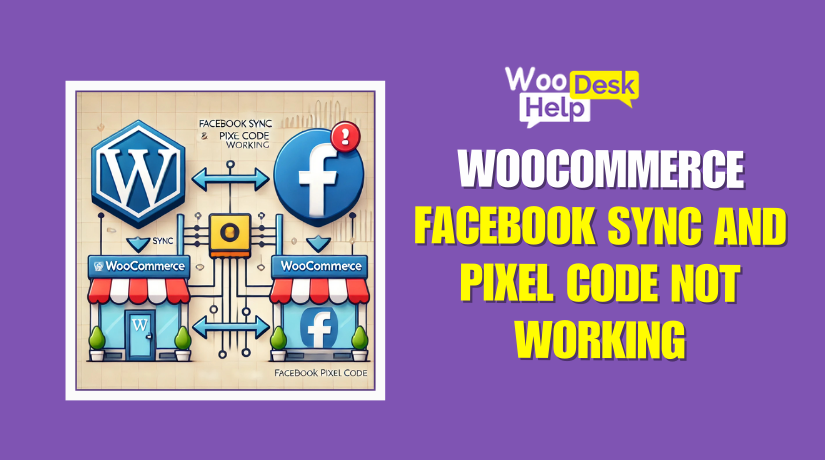
Fixing WooCommerce Facebook Sync and Pixel Code Not Working Issues
Table of Contents
-
- Introduction and Overview
- Why Facebook Pixel is Important on a Website
- Why Should You Use a Facebook WooCommerce Store?
- Understanding Facebook Pixel and WooCommerce Sync
- How Can You Use Facebook Pixel Data?
- Benefits of Using Facebook Pixel in WooCommerce
- How to Sync Facebook with WooCommerce
- Common Issues of Facebook Sync and Pixel Code Not Working
- How to Fix Facebook Sync and Pixel Code Not Working Issue
- Best Practices to Prevent Future Facebook Sync and Pixel Issues
- Conclusion
Introduction and Overview
Overview of WooCommerce and Facebook Integration
WooCommerce provides the foundation for many online stores. It is a reliable platform for managing products, processing orders, and handling customer interactions. On the other hand, Facebook offers a huge audience of potential customers. By integrating WooCommerce with Facebook, you can bridge the gap between your store and social media platforms. This connection allows you to display products to millions of Facebook users, making it easier to reach new customers. You can share your products directly on Facebook and Instagram, increasing visibility and driving more traffic to your store. 🎯
Why Facebook Pixel is Important on a Website
The Facebook Pixel is a snippet of code you add to your website. It works behind the scenes, tracking visitor actions such as page views, product clicks, and purchases. With this data, you gain a clearer understanding of how users engage with your store. For example, if the Facebook Pixel not tracking WooCommerce purchases, it can be challenging to know which ads are effective. Fixing the WooCommerce Facebook Pixel code problem ensures you capture all important data. When your pixel is firing correctly, you can optimize ads, target interested users, and measure performance accurately. This is why resolving Facebook Pixel issues WooCommerce should be a priority. Without proper tracking, your marketing campaigns may not deliver the results you expect. 📊
Why Should You Use a Facebook WooCommerce Store?
Integrating WooCommerce with Facebook simplifies the way you manage product listings and advertising. When your store’s inventory syncs with Facebook, it automatically updates product prices, availability, and details. This prevents mismatches and ensures shoppers see accurate information. If WooCommerce Facebook sync not updating properly, you may end up showing outdated or incorrect prices, leading to customer frustration. Solving these issues, including WooCommerce Facebook catalog sync problem, helps maintain trust and improve sales.
A well-functioning Facebook WooCommerce store also gives you access to Facebook’s powerful ad features. For instance, dynamic ads allow you to show customers the exact products they viewed or left in their cart. This helps re-engage potential buyers and increases conversions. However, if the Facebook Pixel not firing WooCommerce events correctly, these ads may not perform as intended. Ensuring that your pixel tracks every step of the customer journey is crucial for optimizing campaigns and improving return on ad spend. 💡
The Connection Between Facebook and WooCommerce
When everything is set up correctly, the integration between Facebook and WooCommerce becomes seamless. Your store’s products are available on both platforms, reducing the need for manual updates. This integration also improves reporting. You can view ad performance directly in Facebook Ads Manager and see how it translates into actual sales. When there are WooCommerce Facebook event tracking issues, it disrupts this process, making it harder to measure success. Resolving problems like WooCommerce Facebook conversion tracking error allows you to maintain a consistent and efficient workflow.
By addressing these common challenges, including Facebook Pixel not showing WooCommerce events, you ensure that your store runs smoothly. Customers see the right products, the pixel tracks their actions, and your ads reach the right audience. This makes your overall operation more effective and helps you grow your business. 🔧
Understanding Facebook Pixel and WooCommerce Sync
What is the Facebook Pixel?
The Facebook Pixel is a small piece of code you place on your website. Its main function is to gather data on user actions, such as page visits, product views, or purchases. This data helps you understand how customers interact with your store. For example, if Facebook Pixel not showing WooCommerce events, it can be hard to track how many people added products to their cart. Fixing WooCommerce Facebook Pixel code problems ensures that you have accurate, actionable insights. Without a functioning Pixel, you lose out on opportunities to refine your marketing strategy. 📊
How Does Facebook Pixel Work?
Once installed, the Pixel sends information back to Facebook every time a visitor interacts with your site. If the Facebook Pixel not firing WooCommerce events, these interactions go untracked. You won’t know which ads drive traffic, which products get clicks, or which actions lead to conversions. When everything is set up correctly, the Pixel captures all of this data, giving you the ability to target the right customers and improve campaign performance. Fixing any Facebook Pixel issues WooCommerce ensures that your store’s data flow remains consistent and reliable.
How to Create a Meta (Facebook) Pixel
The Meta (Facebook) Pixel is an essential tool for anyone running Facebook ads. It’s a piece of code that lets you track website activity and gather valuable data for ad optimization. Below, we’ll take a detailed look at how to set up a Pixel, verify its installation, and use it effectively.
Step 1: Accessing Facebook Events Manager
To begin, you need a Facebook Business account. Once you’ve logged in, navigate to the Events Manager under the Business Tools menu. This is your hub for managing Pixels, custom conversions, and event tracking.
Step 2: Creating a Pixel
- Click “Connect Data Sources” and choose “Web.”
- Select “Facebook Pixel” from the available options.
- Give your Pixel a unique name. Ideally, this should reflect the business or website it’s associated with, so it’s easy to identify later.
- Enter your website URL. Although this step is optional, it can help Facebook provide tailored setup instructions.
- Hit “Create” to generate your Pixel.
Step 3: Adding the Pixel Code to Your Website
Once you’ve created the Pixel, Facebook will provide you with a snippet of JavaScript code. This code needs to be placed in the header section of your website. The header ensures that the Pixel loads on every page, allowing it to track all user interactions.
You have several options to add the code:
- Manual Installation:
-
-
- Copy the code snippet from the Events Manager.
- Open your website’s HTML or theme editor.
-
- Paste the code right before the closing </head> tag.
-
-
- Save and publish your changes.
-
- Integration via a CMS or Plugin:
If you’re using a platform like WordPress, you can install a plugin (such as the Facebook for WooCommerce plugin) that simplifies Pixel setup. With these plugins, you often only need to enter your Pixel ID, and the plugin will handle the rest.
Step 4: Verifying Pixel Installation
Before you start running ads, it’s important to ensure that the Pixel is functioning properly. Facebook offers a Pixel Helper tool, which is a browser extension available for Chrome. Here’s how you use it:
- Install the Pixel Helper extension from the Chrome Web Store.
- Visit your website.
- The Pixel Helper will display a green icon if it detects a working Pixel. It will also show details on the events being tracked and alert you to any errors.
Step 5: Configuring Events and Custom Conversions
After verifying installation, you’ll want to start defining which actions to track. In the Events Manager, you can add Standard Events such as:
- PageView: Triggers every time a visitor lands on a page.
- AddToCart: Fires when a product is added to the shopping cart.
- Purchase: Tracks completed transactions.
For more advanced tracking, you can set up Custom Events to measure unique interactions specific to your business. For example, if you run a subscription service, you might create a custom event for when users sign up for a free trial.
Step 6: Testing and Troubleshooting
It’s not uncommon to encounter some issues when first implementing a Pixel. If the Pixel isn’t firing events, or if data isn’t appearing in the Events Manager, you’ll need to double-check a few things:
- Ensure the Pixel code is in the correct location: It must be in the header section of your website’s code.
- Check for duplicate Pixels: If you have multiple Pixels installed on the same site, it can cause tracking errors.
- Confirm that events are firing properly: Use the Test Events section in the Events Manager to see real-time data as you navigate your site.
Step 7: Leveraging Pixel Data
Once your Pixel is set up and verified, it will start collecting valuable data. This information can be used to create Custom Audiences and Lookalike Audiences. With a Lookalike Audience, for instance, Facebook finds users similar to your existing customers, making your ad targeting more precise. You can also track conversion rates, ad performance, and return on ad spend more effectively, leading to better-informed marketing decisions.
How Can You Use Facebook Pixel Data
The Facebook Pixel collects valuable data about the actions people take on your website. Once you’ve set it up, the Pixel tracks events like page views, product views, cart additions, and purchases. With this data in hand, you can improve your marketing strategy and ad performance in several ways:
- Optimize Ad Campaigns
The Pixel helps you see which ads lead to conversions. For example, if you run a campaign and notice that one particular ad drives more purchases, you can allocate more of your budget to that ad. By focusing on the best-performing ads, you’ll get a higher return on investment. - Retarget Website Visitors
Not everyone who visits your website makes a purchase right away. The Pixel data allows you to retarget these visitors with follow-up ads. If someone looked at a product but didn’t buy it, you can show them a reminder ad. This increases the chances of turning browsers into buyers. - Create Lookalike Audiences
Using Pixel data, you can identify your best customers and then find people similar to them. Facebook’s Lookalike Audiences tool lets you reach new users who share interests, behaviors, and demographics with your existing customers. This means your ads are shown to people more likely to engage and convert. - Track Conversions Across Devices
The Pixel provides a full picture of how users interact with your store, whether they start on their phone, continue on a tablet, and finish the purchase on a desktop. This cross-device tracking helps you understand the complete customer journey and optimize for seamless experiences. - Improve Your Product Catalog Ads
If you’re running dynamic ads, the Pixel data allows you to show personalized product recommendations. For instance, if a customer viewed a particular item, your ad can highlight that exact product, along with similar ones. This level of personalization increases relevance and drives more sales. - Measure and Adjust Ad Spend
The Pixel data gives you insight into the true cost per conversion. If you know how much you’re spending to acquire a customer, you can adjust your budget accordingly. This helps you maximize profitability by reducing wasteful ad spend and focusing on high-performing campaigns.
Benefits of Using Facebook Pixel in WooCommerce
The Facebook Pixel is an invaluable tool for any WooCommerce store owner. When you integrate it with your WooCommerce site, you gain access to powerful data and tracking capabilities that can transform the way you approach advertising and sales. Here are some key benefits:
- Accurate Conversion Tracking
By installing the Pixel, you can see exactly how many sales or other valuable actions result from your Facebook ads. This means no more guessing about what’s working. With precise data, you can focus on what drives actual results. - Audience Retargeting
Not all visitors buy on their first visit. The Pixel helps you identify users who looked at products but didn’t complete the checkout. Using this information, you can create retargeting ads that remind those shoppers about the items they viewed. This encourages them to return and make a purchase, boosting your sales without needing to attract entirely new customers. - Creating Lookalike Audiences
One of the most powerful features of the Facebook Pixel is its ability to help you create Lookalike Audiences. By analyzing the behavior of your current customers, the Pixel enables Facebook to find people with similar characteristics. This allows you to reach a broader, highly relevant audience—people who are more likely to be interested in what you offer. - Improved Ad Optimization
The Pixel’s tracking data helps Facebook’s algorithm understand which types of users are converting. Over time, this improves the way your ads are delivered. Instead of showing ads to random users, Facebook can show them to individuals most likely to click, add products to their cart, or complete a purchase. This makes your advertising campaigns more efficient and cost-effective. - Enhanced Product Catalog Ads
If you have a WooCommerce store with multiple products, the Pixel works seamlessly with dynamic ads. These ads automatically show people items they’ve viewed, similar products, or bestsellers. By integrating the Pixel, you can personalize the shopping experience, resulting in higher engagement and conversion rates. - Insights for Future Campaigns
The data collected by the Facebook Pixel isn’t just for your current ad campaigns. It’s also a learning tool for future efforts. By understanding user behavior—such as which products are popular, where customers drop off in the funnel, and what motivates them to return—you can plan more effective marketing strategies down the road. - Cost Efficiency and Better ROI
With accurate data and optimized targeting, you can spend your ad budget more wisely. Instead of pouring money into campaigns that might not deliver results, you can focus on the tactics and audiences that actually generate sales. Over time, this reduces your cost per acquisition and increases your return on investment.
How to Sync Facebook with WooCommerce
Integrating Facebook with WooCommerce is an essential step for online store owners who want to expand their reach, increase sales, and streamline product management. By syncing WooCommerce with Facebook, your store’s product catalog is linked to Facebook and Instagram, making it easier to promote products, run effective ads, and keep everything updated automatically. Below, we’ll break down each step in detail to help you successfully connect these two platforms.
Step 1: Set Up a Facebook Business Manager Account
Before you can sync your WooCommerce store with Facebook, you need a Facebook Business Manager account. This account serves as the hub for managing your Facebook page, Instagram account, product catalog, and Pixel.
- Go to business.facebook.com and sign in with your personal Facebook account.
- Create a Business Manager account if you don’t already have one. This account lets you handle all your business-related Facebook and Instagram activities in one place.
- Set up a Facebook page and a product catalog. If you already have a Facebook page, ensure it’s linked to your Business Manager. If not, create a new page that represents your store.
Step 2: Install the Official Facebook for WooCommerce Plugin
To sync WooCommerce with Facebook, you’ll need a dedicated integration tool. The official Facebook for WooCommerce plugin simplifies the entire process. You can find this plugin in the WordPress plugin repository.
- Log in to your WordPress dashboard.
- Go to Plugins > Add New and search for “Facebook for WooCommerce.”
- Install and activate the plugin. Once activated, a new Facebook tab will appear in the WooCommerce settings.
This plugin acts as the bridge between your WooCommerce store and Facebook. It allows you to connect your store, sync your products, and manage your catalog seamlessly.
Step 3: Connect Your WooCommerce Store to Facebook
Once the plugin is installed, the next step is to link your WooCommerce store with Facebook. This involves granting the necessary permissions so the two platforms can share data.


- Navigate to WooCommerce > Settings > Facebook.
- Click on “Get Started” to launch the setup wizard.
- Log in to your Facebook account and select the Business Manager account you want to use.
- Choose the Facebook page and Instagram account (if applicable) that will display your products.
- Select your product catalog. If you don’t have one yet, create a new catalog during this step.
After completing these steps, your WooCommerce store is officially connected to Facebook. The plugin now has access to your products, allowing them to appear on Facebook and Instagram.
Step 4: Configure Product Sync Settings
Now that the platforms are linked, you’ll need to determine which products to sync and how they appear on Facebook. This step ensures that only relevant products are displayed and that their information is always accurate.
- Full catalog sync vs. partial sync: You can choose to sync your entire product catalog or only specific categories. If you have a large inventory, consider syncing only the bestsellers or featured items.
- Product availability: You can exclude out-of-stock items from appearing on Facebook. This prevents customers from clicking on unavailable products and ensures a better shopping experience.
- Product variations: Make sure all variations (sizes, colors, etc.) are included. Facebook supports product variations, so customers can select the exact version they want.
By carefully configuring these settings, you’ll maintain a clean, up-to-date product catalog on Facebook.
Step 5: Enable Automatic Product Updates
One of the biggest advantages of syncing WooCommerce with Facebook is automation. Once the initial sync is complete, the plugin will handle future updates automatically. For example:
- If you change a product price in WooCommerce, it will automatically update on Facebook.
- If you add a new product, it will appear on Facebook without any additional steps.
- If you remove a product, it will no longer be visible on Facebook.
Automatic syncing saves you time and ensures that customers always see accurate product information. You won’t need to manually update listings on both platforms.
Step 6: Verify the Sync and Test
After setting everything up, it’s crucial to verify that the sync is working as expected.
- Check your Facebook shop: Go to your Facebook page and open the “Shop” tab. Confirm that your products are displayed correctly, including images, prices, and descriptions.
- Review your Instagram shop (if applicable): If you linked your Instagram account, ensure that your products are available for tagging in posts and stories.
- Use the Facebook Events Manager: This tool helps you see if your product catalog is updating in real-time. It also highlights any errors or discrepancies that might need fixing.
Step 7: Troubleshoot Common Issues
Sometimes, problems may arise during the sync process. Some common issues include:
- WooCommerce Facebook sync not updating: Ensure that your plugin is up-to-date and that the correct Business Manager account is selected.
- WooCommerce Facebook catalog sync problem: Double-check that product fields like SKU, images, and descriptions are properly filled out in WooCommerce. Missing data can cause products to fail during sync.
- WooCommerce Facebook integration not working: If you experience connection errors, try disconnecting the plugin and reconnecting it. Also, verify that you have the necessary permissions in Business Manager.
- Facebook Pixel not tracking WooCommerce purchases: Confirm that the Pixel ID is correctly entered in the plugin settings. The Pixel helps track customer behavior, so it must be set up and firing correctly.
Step 8: Utilize the Benefits of Syncing
Once the sync is successful, you’ll enjoy several benefits:
- Dynamic ads: Facebook can show personalized ads featuring products your customers viewed on your website.
- Consistent product information: Prices, availability, and descriptions are always up-to-date.
- Streamlined management: You’ll no longer need to manually update product details on both WooCommerce and Facebook.
- Improved analytics: With the Pixel in place, you’ll have a clear view of how your Facebook ads drive sales and website traffic.
Common Issues of Facebook Sync and Pixel Code Not Working
When integrating Facebook with WooCommerce, it’s critical that the data flow between your store, the Pixel, and Facebook’s servers remains seamless. However, there are a number of technical factors that can interrupt this synchronization or cause the Pixel to fail. These problems can stem from incorrect code placement, plugin conflicts, API misconfigurations, or changes in your website’s structure. Below, we’ll dive deeper into the most frequent technical challenges and their root causes.
- Pixel Not Firing or Tracking Events
If the Facebook Pixel not firing WooCommerce events, it typically indicates a problem at the code or configuration level. Common technical causes include:
- ncorrect Code Placement:
The Pixel’s base code must be placed inside the <head> section of your site. Placing it in the <body> or relying on plugins that don’t inject it properly can prevent it from firing. For example, if the theme’s header.php file is missing the Pixel code, no events will trigger when users interact with your site.
- Conflicting JavaScript:
WooCommerce extensions or third-party analytics scripts can interfere with the Pixel. For instance, if multiple tracking scripts are loaded in the same event handlers, the Pixel may never run its intended functions. This often happens when you use multiple plugins that handle “Add to Cart” or “Checkout” tracking.
- Outdated or Modified Pixel Code:
The Pixel code must be current. Older Pixel versions or custom modifications—such as hard-coding custom parameters—can cause tracking failures. Always use the exact code snippet provided by Facebook Events Manager and verify that it hasn’t been altered.
- Network and Browser-Level Blocking:
Ad blockers and privacy-focused browser features, such as ITP (Intelligent Tracking Prevention) in Safari, can prevent the Pixel from firing. While this isn’t directly a code issue, it’s important to ensure that your Pixel’s server-side and client-side implementations can still collect meaningful data. Implementing Conversions API (CAPI) alongside the client-side Pixel can help bypass browser restrictions.
- Product Sync Failures
If WooCommerce Facebook sync not updating or products don’t appear on Facebook as expected, the issue often lies in how the product catalog is structured or transmitted. Consider these technical factors:
- Data Attribute Mismatches:
Facebook’s catalog requires certain fields—like product IDs, titles, descriptions, images, and prices—to be formatted and present. If your WooCommerce products lack a unique SKU or if variations aren’t properly defined, the catalog sync can fail. For example, a product missing a main image or having non-standard characters in its title can cause errors during the sync process.
- API Authentication Issues:
The WooCommerce Facebook plugin uses API calls to push product data to Facebook’s servers. If the API token or Business Manager permissions are invalid or have expired, the sync won’t complete. This often happens after making changes to your Facebook Business settings without re-authenticating the WooCommerce plugin.
- Schema or Feed Formatting Problems:
WooCommerce products are converted into a format that Facebook’s Commerce Manager can read. If there are inconsistencies—such as unexpected characters in the feed’s XML or JSON output—Facebook may reject certain entries. This typically results in incomplete product listings or items not appearing at all.
- Event Tracking and Custom Conversion Errors
WooCommerce Facebook event tracking issues frequently occur when custom events aren’t properly defined or when the standard events aren’t triggered as expected. Technical points to examine include:
- Incorrect Event Parameters:
When implementing events like “AddToCart” or “Purchase,” you need to specify parameters such as value, currency, and content_ids. If these parameters are missing or misconfigured, Facebook may still fire the event but won’t track the data correctly. For example, leaving out content_type or using an invalid content_id format can prevent the event from being recorded.
- Unmapped or Unrecognized Actions:
If you have custom buttons or dynamic elements that aren’t properly mapped to Facebook events, those interactions won’t register. For instance, if your “Buy Now” button is generated by JavaScript and doesn’t trigger the expected DOM events, the Pixel won’t detect it. You may need to use Facebook’s Event Setup Tool or manually add event listeners to ensure these actions are tracked.
- Double-Firing Events:
Sometimes, duplicate Pixel installations or redundant event handlers cause the same event to fire multiple times. This can distort your data and create inconsistencies in conversion reporting. Ensuring only one instance of the Pixel is installed and verifying that your code doesn’t call fbq(‘track’, …) more than once per action helps maintain accurate data.
- Catalog and Pixel Synchronization Problems
Even if the Pixel is firing, ensuring it matches with the product catalog on Facebook can be challenging. Common technical causes of a WooCommerce Facebook catalog sync problem include:
- Version Conflicts Between Plugin and Facebook APIs:
If the WooCommerce Facebook plugin is out-of-date or no longer fully compatible with Facebook’s API version, the catalog sync may fail. Keeping both WooCommerce and the plugin updated ensures that API calls function as intended.
- Missing or Invalid Product Variations:
If a product has multiple variations (like color or size), but these variations aren’t properly formatted or included in the feed, the catalog can reject the entry. Ensuring that all variations have unique SKUs and proper attributes is critical.
- Mapping Issues for Custom Fields:
Stores that use custom product fields or third-party WooCommerce extensions may need to map these fields correctly. If the field for a product’s price is renamed or stored in a non-standard location, Facebook won’t receive the correct data. Custom mapping in the plugin settings often resolves this issue.
How to Fix Facebook Sync and Pixel Code Not Working Issue
When Facebook integration with WooCommerce fails—whether it’s the Pixel not firing or the product catalog not syncing—it often comes down to technical misconfigurations or software conflicts. Resolving these issues requires a structured troubleshooting process, addressing the underlying causes at each step. Below, we’ll explore the most effective methods to restore proper functionality.
Step 1: Confirm Proper Pixel Installation
A correctly implemented Pixel is essential for tracking events and sending data to Facebook. If the Pixel code is missing or incorrectly placed, it will fail to function.
- Check the Code Placement:
The Pixel base code must be inserted inside the <head> section of your website’s HTML. This ensures the Pixel loads before other scripts and fires consistently.
- If you’re using a theme that dynamically loads the header or has a custom template, ensure the Pixel code is added directly to header.php.
-
-
- If you rely on a plugin, confirm that it injects the Pixel code into the correct location.
-
- Verify the Pixel ID:
Confirm that the Pixel ID in the code matches the one in your Facebook Events Manager.
-
-
- A mismatch will prevent events from registering correctly.
- Check your plugin’s settings or manually compare the ID in the Pixel snippet to the one displayed in Events Manager.
-
- Use Current Pixel Code:
Facebook periodically updates its Pixel code. Older versions or manually edited snippets might not support new events or tracking methods.
-
- Retrieve the latest Pixel code directly from Events Manager and replace any outdated code.
- Ensure that no modifications (like extra parameters or inline comments) have been made to the snippet.
Step 2: Utilize Facebook Debugging Tools
Facebook provides several tools designed to identify Pixel issues and catalog synchronization errors.
- Facebook Pixel Helper Extension:
This browser extension can help pinpoint why the Pixel isn’t firing.
-
-
- Install the Pixel Helper, then visit your website’s pages.
- Look for errors or warnings, such as a missing Pixel ID, events that fail to load, or blocked scripts.
- Note the specific error messages and use them to adjust your code or settings.
-
- Events Manager Diagnostics:
In Facebook Events Manager, go to the Diagnostics section.
-
- Facebook often flags common problems, such as parameters missing from events or duplicate events firing.
- Address each flagged issue by adding the correct parameters, fixing any duplicate Pixel installations, or ensuring your product IDs match what Facebook expects.
Step 3: Address Product Catalog Sync Issues
If your WooCommerce products aren’t appearing on Facebook, the problem is often related to how the data is structured or transmitted.
- Review Product Attributes:
Facebook requires specific fields—product title, description, image, price, and unique ID—to be present.
-
-
- Missing fields or incorrect formatting will cause products to fail during sync.
- Make sure each product in WooCommerce has a SKU, a main image, and a complete description. Variations (like sizes or colors) should have their own SKUs and attributes.
-
- Update the WooCommerce Facebook Plugin:
Older plugin versions may no longer be compatible with Facebook’s APIs.
-
-
- Ensure you have the latest version of the Facebook for WooCommerce plugin.
- Check the plugin’s changelog or release notes to see if it addresses known sync issues.
-
- Clear Caches and Refresh Feeds:
Server caching or CDN caches can prevent the most recent product changes from syncing.
-
- Clear any caching plugins and temporarily disable caching to test if new products sync correctly.
- In the WooCommerce Facebook plugin, trigger a manual catalog sync and verify the results.
Step 4: Configure and Test Events Correctly
Even when the Pixel fires, it may not properly record certain events. For instance, the “AddToCart” or “Purchase” events might fail due to parameter issues or changes in page structure.
- Check Event Parameters:
Events need specific parameters—like value, currency, and content_ids—to function properly.
-
-
- Ensure that each event you’re tracking uses the exact parameters Facebook expects.
- If you’re using custom events, verify that you’ve defined them in the Events Manager and that they include all required fields.
-
- Use Facebook’s Event Setup Tool:
For standard actions like “Add to Cart” or “Complete Purchase,” the Event Setup Tool in Events Manager can automatically detect buttons and fields.
-
-
- Visit Events Manager, open the Event Setup Tool, and navigate through your site.
- Confirm that each button or link triggers the corresponding event.
-
- Test in Multiple Environments:
Sometimes, events work in one environment (e.g., staging) but fail in production.
-
- Test the Pixel and events on both environments to see if server configurations or content delivery methods differ.
- Check for differences in JavaScript libraries, plugin settings, or headers.
Step 5: Resolve Integration and API Issues
The Facebook for WooCommerce plugin relies on a stable API connection to keep products and events synced. If the connection breaks, the sync will fail.
- Reauthenticate the Plugin:
If you’ve recently changed Facebook Business Manager settings or updated your site’s credentials, the plugin may need to be reconnected.
-
-
- Open the WooCommerce > Facebook settings and click “Reconnect.”
- Follow the prompts to reauthorize the plugin and reestablish the connection.
-
- Check API Permissions and Tokens:
Verify that the access token in the plugin settings is valid.
-
-
- If the token has expired or been revoked, request a new one.
-
- Ensure that the Business Manager account and Facebook page have the correct permissions set.
Step 6: Leverage Server-Side Tracking
Browser-based tracking is increasingly affected by privacy features and ad blockers. Implementing server-side tracking via the Conversions API (CAPI) can help ensure data is still collected.
- Enable Conversions API (CAPI):
Many WooCommerce Facebook plugins now support CAPI.
-
-
- Turn on CAPI in the plugin settings.
- Test events to ensure both browser and server-side tracking are capturing user actions.
-
- Combine Pixel and CAPI Data:
Using both client-side (Pixel) and server-side (CAPI) tracking provides a more comprehensive data set. If browser tracking fails, server-side events will still be sent to Facebook, ensuring continuity in your data reporting.
Best Practices to Prevent Future Facebook Sync and Pixel Issues
Avoiding problems with your WooCommerce Facebook integration is easier when you follow a few simple guidelines. By keeping your setup clean and updated, you’ll reduce the chance of running into sync errors, missing events, or catalog mismatches.
- Keep Your Software Updated
Always update WooCommerce, your theme, and the Facebook for WooCommerce plugin regularly. New updates often fix bugs and improve compatibility. Outdated software is a common reason for sync problems. Checking for updates at least once a month helps keep everything running smoothly. - Place the Pixel Code in the Right Spot
Make sure the Pixel code is in the <head> section of your website. This ensures it loads on every page and tracks user actions consistently. If you rely on a plugin, confirm that it adds the Pixel in the correct location. When in doubt, test your site after making changes to ensure the Pixel is still firing.
- Complete Your Product Data
Ensure every product has a title, description, price, image, and unique SKU. Missing product details often cause catalog sync issues. If you sell variations like different sizes or colors, give each one a unique SKU so they sync without errors. - Test Your Events Regularly
Use Facebook’s Pixel Helper or the Events Manager to test your events. Make sure key actions—like AddToCart and Purchase—are firing properly. Testing every few weeks helps catch small issues before they grow into bigger problems. - Check Permissions and Connections
Sometimes, a broken connection or incorrect permissions can stop the sync. Make sure your Facebook account is properly connected, and that you have admin rights for the page and product catalog. Reconnect the plugin if necessary to ensure everything stays linked. - Monitor Diagnostics and Fix Warnings
Facebook’s Diagnostics in Events Manager can show you if events are missing parameters or if something’s firing twice. Fixing these warnings quickly prevents data errors from building up over time. - Use Server-Side Tracking
Add the Conversions API (CAPI) to send data directly from your server. CAPI acts as a backup if the Pixel is blocked by browsers or ad blockers. Using both the Pixel and CAPI ensures you still capture important customer actions. - Avoid Plugin Conflicts
Don’t overload your site with too many plugins that handle tracking. Too many scripts can interfere with the Pixel. Stick to well-known, updated plugins and test any new ones before going live. - Keep Records of Changes
When you make changes—like adding a new plugin, changing your theme, or modifying your product data—write it down. This way, if something breaks, you can quickly identify what changed and fix it.
- Schedule Regular Maintenance
Set a reminder to review your Facebook sync and Pixel setup every month. Regular checks help you catch and fix small issues before they turn into bigger problems.
Conclusion
In today’s competitive online marketplace, seamlessly integrating WooCommerce with Facebook is more than just a convenience—it’s a necessity. By ensuring your Facebook Pixel is properly installed and regularly tested, you can gain valuable insights into customer behavior and maximize your advertising efforts. Maintaining accurate product data, staying up to date with plugin versions, and leveraging tools like Facebook’s Pixel Helper or Conversions API will help ensure that your syncs and event tracking run smoothly. With a consistent process for troubleshooting, monitoring, and optimizing, you’ll be better equipped to prevent common issues before they arise, maintain accurate reporting, and ultimately create more successful ad campaigns. The goal is clear: by following these proven strategies, you can keep your integration solid, your data reliable, and your business growing.