How to Set Up a Google Merchant Center Account (Step-by-Step Guide)
Table of Contents
- Introduction
- What Is Google Merchant Center?
- How Google Merchant Center Works
- How Google Merchant Center Helps Online Sellers
- Who Should Use Google Merchant Center
- Google Merchant Center Login & Access
- Benefits of Google Merchant Center
- Prerequisites Before Setting Up
- Step-by-Step: How to Create a Google Merchant Center Account
- Uploading Product Feed to Merchant Center
- Tips to Keep Your Account Compliant
- Connecting Google Merchant Center to Google Ads
- Google Merchant Center for WooCommerce Users
- Troubleshooting Common Issues in Google Merchant Center
- Conclusion
Introduction
If you run an online store, showing your products on Google is a must. Google Merchant Center helps you do that. It allows your products to appear in Google Shopping and search results. This boosts visibility and can bring more traffic and sales.
Many online stores, especially in the USA, use Google Merchant Center. It’s free to use and connects directly with your website or eCommerce platform like WooCommerce.
But setting up your Google Merchant Center account for the first time can be tricky. You need to follow specific steps. Missing one step can cause delays or account issues. That’s why this guide walks you through everything, step by step.
By the end, you’ll have everything in place to start showing your products on Google.
Whether you’re a new store owner or a marketing pro, this guide helps you get started the right way.
What Is Google Merchant Center?
Google Merchant Center is a free tool from Google. It allows online store owners to upload and manage product data. This data is then used in Google Shopping, search results, YouTube ads, and more.
When you search for a product on Google, you often see image-based listings at the top. These are known as Shopping ads or free product listings. They are powered by Google Merchant Center. To show your products there, you must first create a Google Merchant Center account.
This tool is not just for large brands. Small businesses, dropshippers, and local sellers can use it too. If you have an eCommerce store — especially in the USA — using this tool can increase your product visibility.
How Google Merchant Center Works
Google Merchant Center acts like a product database. You upload your products in the form of a “product feed.” Each feed contains details like:
- Product name
- Price
- Description
- Image URL
- Availability
- Brand or category
Google uses this data to show your items when people search online. The better your data, the more likely your products will show up.
You can use this data for:
- Free listings in Google Shopping
- Paid ads via Google Ads
- Dynamic remarketing campaigns
- YouTube product ads
This connection gives your products more reach across Google platforms.
How Google Merchant Center Helps Online Sellers
Google Merchant Center is more than just a place to upload products. It plays a big role in helping online sellers grow their business. Whether you are a beginner or run a large store, using this tool can make a big difference in how people find your products online.
Here are the main ways it helps:
- Increases Product Visibility on Google
Once your products are in Google Merchant Center, they can appear in:
- Google Shopping results
- Google Search (under the Shopping tab)
- YouTube product ads
- Google Images
- Gmail ads (for Smart Shopping)
This means your products can show up when people are actively searching. They see your product image, price, store name, and even reviews — before visiting your site.
More visibility means more chances for sales.
- Access to Free Listings and Paid Ads
Google now offers free product listings for eligible merchants. That means your products can be shown even if you don’t run ads.
But if you do want to invest in advertising, Merchant Center connects easily with Google Ads. This allows you to run:
- Shopping campaigns
- Smart Shopping campaigns
- Performance Max campaigns
All these ad types use the data from your Merchant Center account.
- Control Over Product Information
Google Merchant Center gives you full control over how your products appear. You can:
- Add or update product titles and descriptions
- Adjust pricing, availability, and shipping info
- Set custom labels for different ad strategies
This makes it easier to test and optimize what works best for your target audience.
- Improved Search Targeting and Accuracy
When your product data is clean and detailed, Google can match it better with user searches. That means:
- More relevant clicks
- Better-qualified traffic
- Higher conversion rates
You avoid showing your product to the wrong audience, which saves money if you run ads.
- Product Feed Sync with Your Website
If you use WooCommerce or another platform, you can connect your store directly. This allows your product feed to update automatically whenever:
- A price changes
- An item goes out of stock
- You add new products
This keeps your product listings fresh and accurate without manual work. 6. Better Reporting and Insights
Google Merchant Center provides reporting tools to track:
- Product approvals and disapprovals
- Click performance for free listings
- Feed errors and suggestions
- Data issues that could affect visibility
You can fix problems early and keep your listings in good standing.
- Increased Trust and Professional Appearance
Products listed through Google Merchant Center often appear with:
- Store ratings
- Shipping details
- Product reviews
This helps build trust with buyers even before they land on your website. A well-set-up feed looks more professional and improves click-through rates.
Who Should Use Google Merchant Center
Anyone selling products online can benefit from it. This includes:
- WooCommerce store owners
- Shopify and BigCommerce users
- Amazon sellers building a standalone site
- Small local businesses
- Digital marketers managing product ads
If you sell physical products and want more traffic, Merchant Center is for you.
Google Merchant Center Login & Access
To access the platform, go to merchants.google.com. Sign in using your Google Account. This login gives you access to the dashboard, where all setup and product management takes place.
You’ll use this same Google Merchant Center login to:
- Add product feeds
- Connect to Google Ads
- Monitor feed status
- Fix product errors
Benefits of Google Merchant Center
Google Merchant Center offers powerful benefits for online sellers. It helps your products get in front of more people. It also makes managing and promoting your products easier. Whether you sell one item or thousands, this tool can support your growth.
Let’s explore the key benefits in more detail.
- Free Listings on Google
One of the biggest advantages is free exposure. Google allows your products to appear in free listings. These listings can show up in:
- Google Shopping tab
- Google Search (under Shopping results)
- Google Images
You don’t need to run ads to appear in these areas. It’s a great way to get traffic without spending money.
- Paid Advertising Options
Once your Merchant Center is connected to Google Ads, you can start paid campaigns. These include:
- Standard Shopping Ads
- Smart Shopping Campaigns
- Performance Max Campaigns
All ads use the product data you submit. This makes your ads more targeted and relevant to searchers.
- Stronger Product Visibility
Your products will show with:
- Images
- Prices
- Store name
- Ratings (if available)
This makes listings more eye-catching and trustworthy. Buyers get a preview before clicking. That leads to higher click-through rates.
- Centralized Product Management
Merchant Center acts as your product control panel. You can:
- Update product information
- Monitor feed status
- Fix issues and disapprovals
Everything is in one place, which saves time and effort.
- Better Tracking and Performance Data
Google gives detailed reports in the Merchant Center dashboard. You can track:
- Product clicks
- Feed errors
- Performance by product
This helps you optimize listings and fix problems quickly.
- Easy Integration with eCommerce Platforms
If you use WooCommerce, Shopify, or BigCommerce, setup is even easier. Plugins and apps can sync your store with Merchant Center. This keeps your feed updated automatically.
Using Google Merchant Center gives your business a competitive edge. It’s a must-have for any serious online seller.
Prerequisites Before Setting Up
Before you begin the Google Merchant Center setup, there are a few things you need to have ready. Preparing these in advance will help you complete the setup smoothly and avoid errors. Many account issues happen because of missing or incorrect information. Let’s go through the key requirements one by one.
- A Google Account
You must have a Google Account to use Google Merchant Center. You can use an existing Gmail address or create a new one. Make sure the account is linked to your business, not personal use. This account will be used to access the Google Merchant Center login page.
- A Business Website
You need a live website that represents your store or brand. Google will ask you to verify and claim this website during the setup. Your site must have clear product pages, a secure checkout, and working links. It should also include important pages like About Us, Contact, and Privacy Policy.
- HTTPS and SSL Certificate
Your website must be secure. Google requires an SSL certificate. This means your URL should start with https://. A secure site protects customer data and builds trust. Most hosting providers offer SSL for free or as an add-on.
- Product Data Ready
Before creating your product feed, gather all product information. This includes:
- Product titles and descriptions
- Prices and availability
- Images
- Brand and category
- Unique identifiers like GTIN or MPN
Organizing this data in advance saves time during feed setup.
- Shipping and Return Policy
Google checks your site for clear shipping and return details. You must display this information where customers can easily find it. This helps improve your approval chances and user trust.
- Business Information
Prepare your business name, address, and contact details. These must match across your Google account, website, and merchant profile. Consistency helps avoid policy violations.
Once these basics are ready, you can move ahead with the Google Merchant Center account setup. In the next section, we’ll go step-by-step through the entire setup process.
Step-by-Step: How to Create a Google Merchant Center Account
Now that you have everything prepared, it’s time to create your Google Merchant Center account. The setup process is simple, but each step must be completed correctly. Missing or incorrect details can lead to product disapprovals or account issues. Follow this detailed guide to complete the setup smoothly and efficiently.
Step 1: Go to the Google Merchant Center Website
Visit the official Google Merchant Center website at merchants.google.com. Click on the “Get Started” button. You’ll be asked to sign in using your Google Account. If you’re already signed in, it will take you to the setup dashboard.
Step 2: Use the Right Google Account
Make sure you are using a Google Account connected to your business. If you manage multiple stores, consider creating a new business Gmail account. This keeps your Merchant Center organized and separate from your personal email. This account will also be used for all future Google Merchant Center login activities.
Step 3: Enter Your Business Information
Google will now ask for some basic business details. These include:
- Business name
- Country where your business operates
- Time zone
Enter the exact name of your store as it appears on your website. Don’t use nicknames or short versions. The country and time zone will be used for product display and reporting.
Step 4: Choose Where You Want Your Products to Appear
Next, select how you want your products to be shown. You can choose:
- Free listings on Google
- Paid ads via Google Ads
- Both options
Most sellers choose both for maximum reach. You can always change this later in settings.
Step 5: Accept Terms and Conditions
Google will show its terms and policies. Read them carefully. Check the box to accept and proceed. Following these policies helps you stay compliant and avoid account suspension.
Step 6: Verify and Claim Your Website
Now it’s time to connect your website. This step confirms that you own the site. You will see several verification methods:
- Add HTML tag to your website header
- Upload an HTML file to your root directory
- Use Google Analytics or Google Tag Manager
If you use WordPress or WooCommerce, many SEO plugins allow you to add the HTML tag easily. Once verification is complete, click “Claim URL.” Claiming gives you full control over your product data linked to that domain.
Step 7: Add Your Business Details
Google will prompt you to add your business address, phone number, and customer support details. These must match what’s on your website. This step increases trust and transparency with Google and potential customers.
Step 8: Set Up Tax and Shipping Settings
For U.S.-based sellers, Google requires you to define tax and shipping rules. In the Merchant Center dashboard, go to:
- Tools & Settings > Shipping and Returns
Here, you can add shipping services such as: - Standard delivery
- Expedited shipping
- Free shipping
Enter delivery times and costs based on your actual offerings. You can also link real-time shipping rates if you use certain carriers. For taxes, you can set state-based rules or let Google estimate taxes based on your location.
Step 9: Link Google Ads Account (Optional but Recommended)
If you plan to run paid ads, you’ll need to link your Google Ads account. In the Merchant Center dashboard, go to:
- Settings > Linked Accounts > Google Ads
Click “Link” and enter your Google Ads Customer ID. Accept the link request in Google Ads to complete the process. This connection allows you to run Shopping Ads using your product feed.
Step 10: Set Up Your Product Feed
Your account is now ready, but it won’t show products until you upload your product feed. The product feed is a file or data source that lists all your items. You can add a feed by going to:
- Products > Feeds > Add Primary Feed
Choose your language and country. Then select how you want to upload your feed: - Google Sheets (manual option)
- Scheduled fetch from your website
- Content API for developers
- Upload using WooCommerce or third-party plugins
Name your feed and follow the prompts to upload your product data. Make sure your feed includes required attributes such as: - ID
- Title
- Description
- Price
- Availability
- Image link
Once submitted, Google will review your feed. This process may take a few hours to a few days. Check your Diagnostics tab for any issues or disapproved products.
Step 11: Review Your Merchant Center Dashboard
After setup, your dashboard becomes your control center. From here, you can:
- Monitor feed health
- Check product approvals
- Fix errors
- Track ad performance if connected to Google Ads
You should log in regularly using your Google Merchant Center login to review data and stay updated.
Setting up your account correctly from the beginning ensures better results. It reduces the chance of disapprovals or delays. Once you complete this setup, your products are ready to be shown across Google’s network.
Uploading Product Feed to Merchant Center
After creating your Google Merchant Center account, the next step is uploading your product feed. The product feed is a file that contains all the details about your products. Google uses this information to show your items in search results and shopping ads. A well-prepared feed ensures your products get approved faster and shown to the right audience. Let’s go through the process step by step.


Step 1: Understand What a Product Feed Is
A product feed is a file or data source that lists your products. It contains attributes such as:
- Product title
- Description
- Price
- Availability
- Product category
- Brand and identifiers like GTIN or MPN
This feed must match Google’s format and policies. The better your feed quality, the better your product visibility.
Step 2: Choose Your Feed Upload Method
Google offers several ways to upload your product feed. You can select the one that fits your store setup:
- Google Sheets – Good for small product catalogs and manual uploads.
- Scheduled Fetch – Google pulls the feed from a hosted file (XML or TXT).
- Content API – Ideal for developers or advanced users.
- eCommerce Plugins – WooCommerce and Shopify offer plugins for auto-sync.
If you run a WooCommerce store, it’s best to use a plugin like: - Google Listings & Ads
- Product Feed PRO for WooCommerce
These tools generate a feed automatically and keep it synced with your inventory.
Step 3: Add a New Feed in Merchant Center
Log into your Merchant Center account. In the left-hand menu, go to:
- Products > Feeds > Add Primary Feed
Choose the target country and language. Then select your feed upload method. Give your feed a clear name so you can find it later.
Step 4: Format the Feed Correctly
Your feed must include required attributes. These vary by product type, but the most common ones are:
- id – A unique identifier for each product.
- title – Clear and descriptive product name.
- description – Short but informative details about the product.
- price – Accurate and formatted with currency.
- availability – In stock, out of stock, or preorder.
- link – URL of the product page.
- image_link – Link to the main product image.
- brand – The brand name or manufacturer.
- gtin or mpn – Global Trade Item Number or Manufacturer Part Number.
Make sure all values are clean, accurate, and free from spelling errors.
Step 5: Optimize Product Titles and Descriptions
To improve your product visibility, optimize your product titles. Include important details like brand, type, color, size, and model. For example:
- Bad: “Shoes”
- Good: “Nike Men’s Running Shoes – Size 10 – Black”
Do the same with descriptions. Keep them clear and relevant. Avoid keyword stuffing. Make sure the content matches what users see on your website.
Step 6: Submit the Feed
After formatting, upload your feed or allow Google to fetch it. If you chose:
- Google Sheets, click upload and select the sheet.
- Scheduled Fetch, enter the file URL and set a fetch time.
- Plugin, make sure it’s configured and syncing correctly.
Once submitted, Google will review the feed. This usually takes a few hours but may take up to 3 days.
Step 7: Monitor Feed Status
After submitting your feed, go to:
- Products > Diagnostics
Here you’ll see: - Approved products
- Pending products
- Disapproved products
Review any disapprovals carefully. Click on the error to learn more. Common issues include: - Missing required attributes
- Image or pricing mismatches
- Policy violations
Fix the issues in your feed and re-submit if needed.
Step 8: Set Feed Rules (Optional)
Google lets you set feed rules inside Merchant Center. This allows you to:
- Edit attribute values without changing your main feed
- Set default values for missing fields
- Format data automatically
This is useful for adjusting large feeds quickly or fixing repeated errors.
Step 9: Schedule Regular Updates
Product data should always be up to date. If you change prices or stock often, use scheduled fetch or plugins. You can set updates to run:
- Daily
- Weekly
- Hourly (with some plugins)
Fresh feeds reduce disapprovals and improve accuracy in Google listings.
Uploading your product feed properly is one of the most important parts of the Google Merchant Center setup. It ensures your products are listed correctly and are eligible for both free listings and paid ads. In the next section, we’ll look at how to keep your account compliant and avoid common issues that lead to suspensions.
Tips to Keep Your Account Compliant
Setting up your Google Merchant Center account is just the beginning. To keep your account active and products visible, you must follow Google’s policies. Many sellers get suspended due to small mistakes. These tips will help you stay compliant and avoid common issues. Follow these steps carefully to keep your account healthy.
Step 1: Keep Product Data Accurate
Always make sure your product feed matches your website. If your feed says a product is “in stock,” but your website shows “out of stock,” Google may disapprove the item. Use automation tools to keep feed data updated. This includes price, availability, and shipping details. Mismatches are one of the most common reasons for product disapproval.
Step 2: Avoid Policy Violations
Google has strict guidelines for sellers. Do not include misleading information in your product titles or descriptions. Avoid fake promotions, false availability, or dishonest claims. Make sure your product images are clean and do not have watermarks or promotional text. Products that violate Google’s advertising policies will be disapproved or suspended.
Step 3: Display Clear Return and Shipping Policies
Your website must show clear return and shipping policies. These should be easy to find, usually in the footer or on dedicated pages. Include estimated delivery times, return periods, and refund terms. Google checks for this during account reviews. Missing or unclear policies can lead to account warnings or disapprovals.
Step 4: Fix Feed Errors Promptly
Check your Merchant Center dashboard regularly. Go to the Diagnostics tab to review errors. If you see any product disapprovals, fix them right away. Google gives details for each issue. Use those to correct problems and re-submit the feed. The faster you fix errors, the sooner your products will show again.
Step 5: Use HTTPS and Maintain Website Quality
Google requires all websites to be secure. Your URL must begin with “https://” and have a valid SSL certificate. Your site should also load quickly and work on all devices. Make sure your pages are mobile-friendly and free from broken links or missing information. A poor website experience can lead to disapprovals or account suspension.
Staying compliant with Google’s rules helps your products stay live and visible. A healthy account also builds trust and boosts your performance across all Google Shopping platforms.
Connecting Google Merchant Center to Google Ads
If you want to run shopping ads, you must connect your Merchant Center account to Google Ads. This connection allows you to promote your products directly in search results, YouTube, and other Google services. It also unlocks smart campaigns and tracking tools. Follow these steps to link your accounts the right way.
Step 1: Make Sure You Have a Google Ads Account
Before linking, you must already have a Google Ads account. If you don’t, visit ads.google.com and create one. Use the same Google Account that manages your Merchant Center. This makes the linking process simple and secure.
Step 2: Open Your Merchant Center Dashboard
Go to your Google Merchant Center account. On the left-hand side menu, click on the “Settings” gear icon. Then select “Linked accounts.” This is where you manage connections with Google Ads and other platforms.
Step 3: Link Google Ads to Merchant Center
Under the “Google Ads” section, click the blue “Link Account” button. You’ll be asked to enter your Google Ads Customer ID. You can find this ID in the top-right corner of your Google Ads dashboard. Enter the number and click “Send Link Request.”
Step 4: Approve the Link Request in Google Ads
Now open your Google Ads account. In the notifications or “Tools & Settings” area, you’ll see a request to link with Merchant Center. Click “Approve” to confirm the connection. Once approved, the two accounts will be linked.
Step 5: Start a Shopping Campaign
Once the accounts are connected, you can launch your first Shopping campaign. In Google Ads, go to:
- Campaigns > New Campaign
- Choose a goal (Sales or Leads)
- Select “Shopping” as the campaign type
- Choose your Merchant Center account
- Set up budget, bidding, and targeting settings
This campaign will use your product data from Merchant Center to display ads across Google.
Step 6: Use Performance Max (Optional)
You can also choose Performance Max instead of standard shopping. This campaign type shows your products on Google Search, YouTube, Discover, and more. It uses automation to improve ad reach and performance. Performance Max also pulls products from your feed, so no manual ad creation is needed.
Connecting Google Merchant Center with Google Ads is key to driving paid traffic. It allows you to promote your listings, track conversions, and grow your store with targeted campaigns
Google Merchant Center for WooCommerce Users
If you run a WooCommerce store, connecting to Google Merchant Center is much easier. You don’t need to build product feeds manually. WooCommerce offers plugins that sync your product data directly with Google. This helps automate feed updates, avoid errors, and save time. Let’s go through the steps to set it up properly.
Step 1: Install a Google Merchant Center Plugin
First, you need a plugin that links WooCommerce to Google. The most popular free option is:
- Google Listings & Ads by WooCommerce
You can also use third-party plugins like: - Product Feed PRO for WooCommerce
- CTX Feed
These tools help generate product feeds in the correct format for Google.
Step 2: Connect Your Google Account
After installing the plugin, follow the setup wizard. It will ask you to log into your Google Account. Use the same account linked to your Google Merchant Center. This step allows the plugin to manage feeds and ad connections on your behalf.
Step 3: Link Your WooCommerce Store to Merchant Center
The plugin will ask for permission to access your Merchant Center. Once approved, it will link your store URL with your Google account. If your website isn’t verified yet, the plugin can handle the verification for you. This skips the need to add HTML tags manually.
Step 4: Generate and Submit the Product Feed
Once connected, the plugin will pull all your product data from WooCommerce. You can select which products to include or exclude. The plugin will create a feed file and send it to Google Merchant Center. Feed updates can be scheduled to run automatically.
Step 5: Review Feed Data and Fix Errors
Log in to Google Merchant Center and check your product status. Go to the Diagnostics section to see if any items are disapproved. Most plugins also show feed errors directly inside your WooCommerce dashboard. Fix them as needed and re-sync the feed.
Step 6: Monitor and Optimize
Once everything is working, check your performance regularly. Use Google Ads to run Shopping campaigns. Monitor clicks, impressions, and conversions. WooCommerce plugins often display ad performance stats right inside WordPress, making it easy to manage everything from one place.
Using WooCommerce with Google Merchant Center simplifies the process. It reduces manual work and helps you focus more on growing your business.
Troubleshooting Common Issues in Google Merchant Center
Running into issues in Google Merchant Center is common, even after setup. But don’t worry — most problems are easy to fix if you know what to look for. Below is a step-by-step approach to solve the most common errors and keep your account running smoothly.
Step 1: Fix Website Verification Problems
One of the first issues users face is website verification failure. This means Google can’t confirm that you own the site. It usually happens when the verification tag or file is missing.
Here’s how to fix it:
- Double-check that the HTML tag is placed in your site’s <head> section
- Make sure your site is live and accessible during the process
- If using WordPress or WooCommerce, use SEO plugins like Rank Math or Yoast to insert the tag
Once verified, don’t remove the tag — Google checks it regularly to confirm ownership.
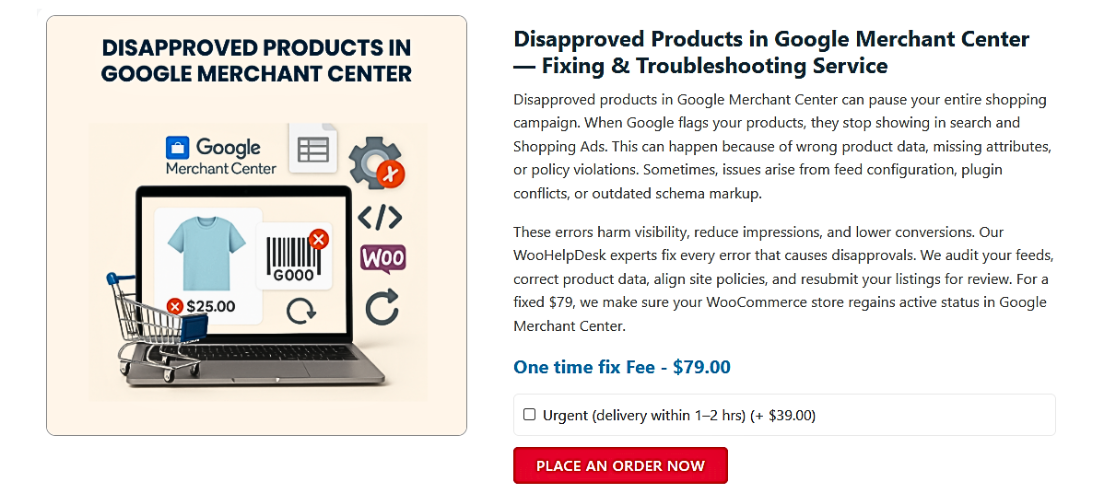
Step 2: Handle Product Disapprovals
Seeing products marked “Disapproved” can be frustrating. But the reasons are usually clear if you check the Diagnostics tab.
Common issues include:
- Missing GTIN or MPN
- Price mismatch between your site and feed
- Invalid product category
- Image quality problems
Click the issue to see which products are affected. Then, update your feed or website with correct data. After making changes, resubmit the product feed for review.
Step 3: Solve Feed Upload Failures
If your feed fails to upload, check the file format and connection. For Google Sheets or manual files, ensure the column headers follow Google’s required format. If using Scheduled Fetch, test the feed URL in your browser — it should open cleanly. Also, confirm the feed is hosted on a public server and updated regularly.
Step 4: Resolve Image and Link Issues
Image problems are very common. Google may disapprove images that:
- Have promotional text or watermarks
- Are too small or blurry
- Don’t match the product page
Use clean, high-resolution images without overlays. Also, check that your product links go to valid, working pages — not 404 errors or redirects.
Step 5: Prevent Account Suspension
If too many errors build up or policies are ignored, your account could be suspended. The best way to avoid this is to stay proactive.
Do the following:
- Keep your product data accurate and synced
- Display clear return and shipping policies on your website
- Fix disapprovals promptly
- Read Google’s policy update emails carefully
Logging in at least once a week to check for alerts can save your account from bigger problems.
Conclusion
Getting your products in front of the right customers on Google takes more than just uploading a feed. It requires strategy, consistency, and attention to detail. A well-optimized Merchant Center account can drive meaningful results for your store. If you’re looking to make the most of it without the trial and error, WooHelpDesk.com is here to help. From seamless feed management to ad integration, our team is ready to support your growth. Visit WooHelpDesk.com and let us help you simplify Google Merchant Center, so you can focus on running your business.