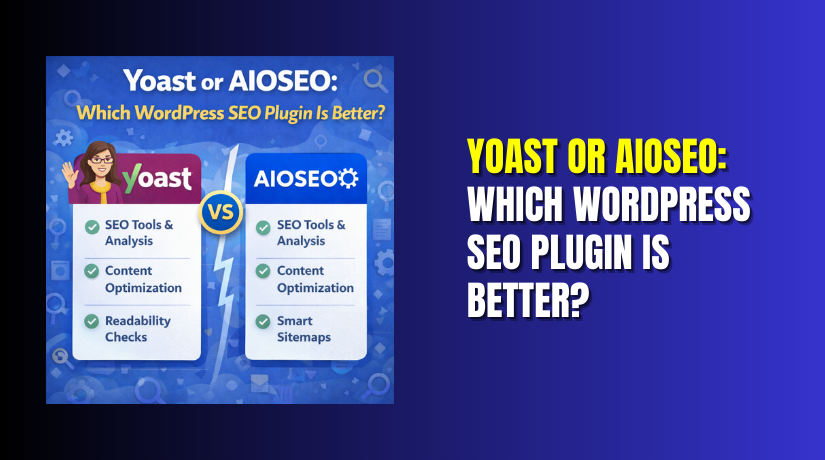
Yoast or AIOSEO: Which WordPress SEO Plugin Is Better?
Table of Contents
- Introduction
- Quick overview of both plugins
- Setup and first-time configuration experience
- On-page SEO workflow for posts and pages
- Technical SEO features that matter for most sites
- Performance, compatibility, and site management
- WooCommerce SEO capabilities
- Pricing and value comparison
- Which plugin should you choose? (Decision guide)
- Conclusion
Introduction
Choosing an SEO plugin can feel confusing for many website owners. Both tools promise better rankings, but results depend on setup. In this guide, we compare Yoast vs AIOSEO in a practical way. You will see what matters for real WordPress sites. We will also look at AIOSEO vs Yoast for daily publishing.
This comparison is written for real-world WordPress needs and habits. It fits sites that want stable traffic and steady growth. It also fits people who want clear tools, not complex steps.
This post is useful for these common WordPress site types:
- Blogs that publish helpful posts and want more search traffic
- Business sites that want calls, leads, and contact form visits
- Online stores that need strong pages for products and categories
You do not need deep technical skills to follow this guide. I will keep the language simple and the steps clear. You will learn what each plugin does best for your goals. You will also learn what features are “nice to have” only. That makes your decision faster and more confident.
Quick overview of both plugins
Yoast SEO is a widely used WordPress SEO plugin today. It focuses on content checks and core SEO settings. You can manage titles, meta descriptions, and index controls. Many users like its familiar post editor workflow.
All in One SEO is also widely used across WordPress sites. It focuses on guided setup and flexible site-wide controls. It helps you manage sitemaps, schema basics, and metadata settings. Many users like its clear labels and organized screens.
When you compare Yoast vs all in one SEO, focus on workflow. Ask which one feels easier for your daily writing process. When you compare all in one SEO vs Yoast, focus on control. Ask which one matches your site size and SEO needs.
Both plugins can support strong SEO with correct configuration. The better choice depends on your site type and routine.
Setup and first-time configuration experience
Most site owners want quick progress after installing an SEO plugin. The first setup matters because it sets your SEO baseline. Both plugins offer a setup wizard to guide key options. The wizard helps you avoid wrong indexing settings early.
AIOSEO’s onboarding usually feels more guided for new users. It asks simple questions and explains why each choice matters. You can set your site type, homepage SEO defaults, and sitemap. You can also enable features without digging into many menus.
Yoast also includes setup steps, but the flow feels more SEO-centric. Some screens assume you understand SEO terms already. You can still finish setup quickly with basic choices. But beginners may need extra time to feel confident.
If your main question is Yoast or AIOSEO for beginners, focus on comfort. Choose the plugin that feels clear during the first hour. You will open these settings again later, so clarity matters.
After finishing the wizard, double-check these items:
- Search visibility is enabled for public pages and posts.
- XML sitemap is on and includes important content types.
- Taxonomy pages are not creating thin or repeated content.
- Author archives match your multi-author publishing needs.
- Media attachment pages are handled in a clean way.
If you want the best SEO plugin for beginners Yoast or AIOSEO, pick one you can manage weekly. A plugin you understand will help you publish faster.
On-page SEO workflow for posts and pages
On-page SEO is the work you do inside each post or page. This includes titles, meta descriptions, and how your content reads. Both plugins add an editor panel where you manage these items. That panel becomes your daily SEO workspace.
Yoast leans heavily on content and readability checks. It gives feedback while you write and edit your draft. It encourages better structure using small improvement signals. Many writers like the checklist approach during publishing.
AIOSEO keeps the workflow focused on essential field edits. It makes title and description updates feel clean and fast. It also supports templates for consistent metadata across many pages. That helps when your site grows and needs standard patterns.
Compare both plugins using these daily tasks:
- Writing a clear SEO title that matches the page goal.
- Creating a meta description that drives clicks from search.
- Setting index rules for pages you do not want ranked.
- Reusing templates for posts, pages, and archive screens.
- Reviewing quick guidance without slowing your writing process.
Technical SEO features that matter for most sites
Technical SEO is the backend side of SEO that keeps your site clean. It helps search engines crawl your pages correctly and rank them. Both plugins handle core technical SEO needs, but they differ in how they present controls. This is where many users decide which plugin feels easier long-term.
XML sitemaps are one of the first items to check after setup. A sitemap helps search engines find your pages faster and understand your site structure. Both plugins can generate sitemaps without extra tools. You can include posts, pages, categories, and custom post types. You can also exclude pages that should not appear in search.
Schema markup is another key feature for modern SEO. Schema helps Google understand what your content represents. It can support rich results, like breadcrumbs, FAQ blocks, and product details. AIOSEO often makes schema setup feel more guided and clear. Yoast also adds schema automatically, but manual control can feel limited. This difference becomes important as your content grows.
Canonical URLs and noindex rules protect you from duplicate content issues. WordPress can create many extra pages through tags, archives, and filters. If those pages are weak, they can dilute your SEO value. Both plugins allow indexing controls for categories, tags, archives, and other pages. This helps you keep only the best pages visible in search.
Redirects and 404 handling are important when you update URLs. If you delete or change a page, users can hit a 404 error. Redirects help keep traffic and rankings from dropping. Depending on the version you use, redirects may be built-in or require upgrades. Still, this feature matters if you often edit older content.
If you are wondering which is better Yoast or AIOSEO, focus on control and clarity. The best plugin is the one you can manage without confusion. Technical settings work best when you can review them quickly.
Performance, compatibility, and site management
A good SEO plugin should not slow down your website. Site speed matters for user experience and search performance. Most slowdowns happen when too many features run together. So the best practice is simple: enable only what you need.


Both plugins work well with most modern WordPress themes. They also work with common page builders and caching plugins. Still, conflicts can happen after updates, especially on large sites. That is why testing after updates is important.
Use these habits to keep your SEO system stable:
- Update WordPress, theme, and plugins on a regular schedule.
- Take a backup before major updates or SEO setting changes.
- Check important pages after updates for missing metadata.
- Confirm sitemaps still load and include key content types.
- Review schema output if you use rich result features.
For team websites, workflow and access control also matter. Writers should not change global indexing settings by mistake. Keep those settings limited to admins or senior editors. This reduces risk and keeps your SEO structure consistent.
WooCommerce SEO capabilities
WooCommerce SEO needs more than basic blog post optimization. Product pages have different goals, different schema, and more duplicates. Your SEO plugin should help you control these areas clearly. That is why Yoast vs AIOSEO for woocommerce is an important comparison.
Product page SEO fields and templates
Both plugins let you edit SEO titles and meta descriptions for products. You can also control product category and tag metadata. This matters because category pages often rank well in search. AIOSEO usually makes templates easier to manage for stores. You can set global patterns for products and collections quickly. Yoast also supports templates, but store owners may need more clicks.
Key store pages to optimize with clean templates:
- Product pages (title, meta description, social preview)
- Product categories (strong titles for collection keywords)
- Product tags (often better as noindex to avoid thin pages)
- Shop page and featured product landing pages
Product schema and rich results support
Products benefit from structured data more than blog posts. Good schema helps Google understand prices, availability, and product details. Many stores also want breadcrumbs for better navigation signals. AIOSEO typically offers more visible schema controls for store pages. Yoast adds schema automatically, but store-specific control can feel tighter.
Duplicate content and thin page control
WooCommerce can create many similar pages without planning. Filter URLs, tag archives, and attachment pages can create duplicates. Both plugins help you apply noindex rules to low-value pages. This keeps your best product and category pages stronger. It also helps Google crawl fewer “junk” pages.
Common WooCommerce pages you may noindex or control:
- Product tag archives with little unique content
- Filtered URLs created by layered navigation plugins
- Search result pages and internal sort parameter pages
- Attachment pages if they add no real SEO value
When you compare the two for WooCommerce, focus on control. You want faster edits and fewer missed settings. That helps when you manage hundreds of products.
Pricing and value comparison
Pricing matters when you need advanced SEO features at scale. This is where AIOSEO vs Yoast pricing becomes a real factor. Many sites start with free versions and upgrade later. The right upgrade depends on what you actually use.
In most cases, upgrading makes sense when you need:
- Strong redirect tools for page updates and migrations
- Advanced schema options for rich results and product pages
- Better automation for SEO titles and meta descriptions
- Site-wide controls that save time on large websites
If you run a store, value is often about time savings. If you publish often, value is about workflow speed.
Which plugin should you choose? (Decision guide)
At this stage, you know what each plugin offers. Now you need a clear choice. Many users search which is better Yoast or AIOSEO because both look strong. The best option depends on your site type and workflow.
Choose Yoast if you want this style of SEO work
Yoast fits users who like guided content checks while writing. It works well for bloggers and content teams that publish often. It can also fit sites that want strong basics without many settings.
Choose Yoast if these points match your needs:
- You want strong writing and readability feedback in-editor.
- You prefer a familiar SEO checklist for every post.
- You publish mostly blog posts, pages, and basic landing pages.
- You want a simple SEO routine for your content team.
Choose AIOSEO if you want more control and faster setup
AIOSEO fits users who want clearer settings and faster site-wide control. It is often easier to manage when your site grows over time. It also fits people who want guided schema and template control.
Choose AIOSEO if these points match your needs:
- You want a simple setup wizard with clear site controls.
- You prefer faster templates for titles and descriptions.
- You want visible schema options without extra confusion.
- You manage many pages, categories, and structured content.
If you run WooCommerce
Store SEO needs strong control for products and collections. You also need duplicate page control and stable schema output. If you are comparing Yoast vs AIOSEO for woocommerce, pick the one that saves time. You will edit product SEO fields often as your store grows. Many store owners prefer the plugin with clearer templates and schema controls.
If you are a beginner
Beginners need a tool that feels easy from day one. You should not feel lost in SEO settings and terms. If your question is Yoast or AIOSEO for beginners, choose the one you understand faster. If you want the best SEO plugin for beginners Yoast or AIOSEO, choose the plugin you will use weekly. Consistent use beats advanced features you never open.
Conclusion
If you are still stuck between Yoast vs AIOSEO, decide by routine. If you write content weekly and want strong writing guidance, Yoast can fit well. If you want faster setup and clearer site-wide controls, AIOSEO can be the better fit. If your focus is store SEO, compare templates and schema support carefully. When you compare AIOSEO vs Yoast, choose the one that reduces mistakes. That is what keeps your SEO stable long-term.
Next steps you can follow today:
- Install one plugin and complete the setup wizard once.
- Set SEO titles and meta templates for posts and pages.
- Review index settings for tags, archives, and thin pages.
- Enable sitemaps and confirm they load without errors.
- Optimize your top pages first, then improve old content.
Need help choosing or configuring the plugin the right way? WooHelpDesk can help you set up SEO settings, fix plugin conflicts, and improve site structure for better rankings.