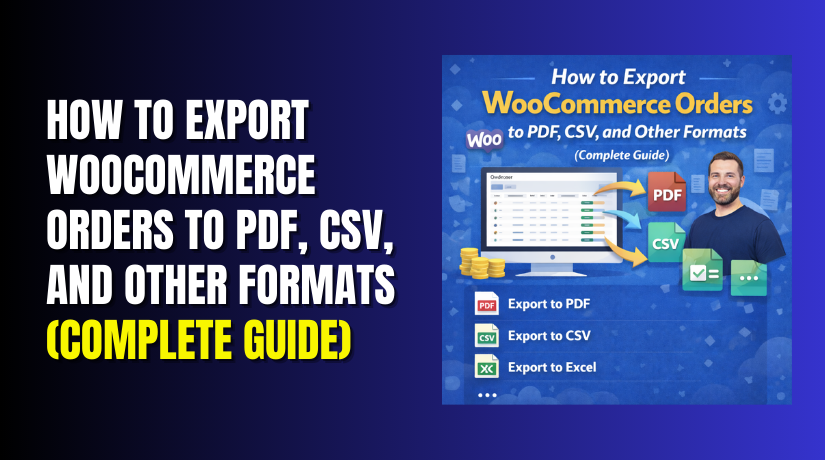
How to Export WooCommerce Orders to PDF, CSV, and Other Formats (Complete Guide)
Table of Contents
- Introduction
- What You Can Export in WooCommerce Orders Without Missing Key Data
- Export Formats Explained for Better Reporting and Daily Use
- Method 1: Export Orders Using WooCommerce Built-In Tools in Easy Steps
- Method 2: Export WooCommerce Orders to CSV Using Plugins
- Method 3: Export WooCommerce Orders to Other Formats
- Choosing the Right WooCommerce Order Export Plugin for Your Store
- Best Practices Before You Export WooCommerce Orders Safely
- Common Problems While Exporting Orders and How to Fix Them
- Conclusion
Introduction
Running a WooCommerce store means handling orders every single day. You may need order data for accounts, taxes, and reports. You may also need order files for shipping teams and vendors. That is why exporting WooCommerce orders becomes an important task. A good WooCommerce order export saves time and reduces manual work. It also helps you keep clean records for future needs. Many store owners want a quick way to download WooCommerce orders anytime.
Some need exports daily, while others need them weekly. When your store grows, exports become part of your workflow. You can also share exports with your team without giving admin access. You can track refunds, coupons, and shipping costs in one place. You can even build better business reports from export data. A reliable WooCommerce order report export keeps your store operations smooth.
This guide helps you choose the right format and method. It also helps you understand what data you can export.
What You Can Export in WooCommerce Orders Without Missing Key Data
Before you export, you should know what is available. Most exports include order number and order date. They also include order status and payment method details. You can export totals, taxes, and shipping charges too. Customer name and email are also common fields. Billing address and shipping address can be included easily.
Many stores also export phone numbers for courier calls. Product name, quantity, and item price are important fields. SKU and variation details help in inventory tracking. Coupon codes and discounts are useful for sales tracking. Order notes help support teams understand special requests.
Refund details can be included based on your export tool. Some stores also export fees and custom checkout fields. For advanced needs, order meta becomes very helpful. A strong WooCommerce order export plugin can export custom meta too. This makes your exports more complete and useful.
Export Formats Explained for Better Reporting and Daily Use
Choosing the right format depends on your goal. Some formats are best for reports and analysis. Other formats are better for printing and sharing. A smart WooCommerce order export starts with the right file type.
PDF Export Format for Invoices and Clean Sharing
PDF exports are best for printing and simple sharing. Many stores use PDFs for invoices and packing slips. This method fits shipping desks and offline records. You can export WooCommerce orders to PDF for single orders. You can also export PDFs in bulk using tools. PDF files look clean and professional for customers. They work well for audits and file storage too. This is helpful when you need signed delivery proofs. If you want printable records, PDF is a strong choice.
CSV Export Format for Reports, Accounting, and Bulk Work
CSV is the most common format for store reports. It opens easily in Excel and Google Sheets tools. Many owners of WooCommerce export orders to CSV for accounting. This supports quick sorting and filtering of order data. You can filter by date, status, or payment method. You can also build weekly sales charts from CSV files. A good WooCommerce CSV export includes line items too. This helps you track product sales and stock needs. CSV also supports importing into accounting software tools. If you want strong reporting, CSV works best.
Excel Export Format for Better Viewing and Easy Formatting
Excel exports are similar to CSV, but more readable. They support tables, filters, and clean formatting quickly. Many teams prefer Excel for internal reporting. It helps when staff members are not technical users. You can still use it for order totals and tax review. Excel files also support multiple sheets in one file. This is helpful for large stores and long reports.
XML or JSON Export Format for Advanced Tools and Integrations
XML and JSON exports are best for system integrations. They work well with ERP, CRM, and custom dashboards. Developers use these formats for structured data transfer. If you use API workflows, these formats are ideal. They are not best for manual viewing by staff. But they are great for automation and syncing jobs.
Google Sheets Export Format for Live Reports and Team Access
Google Sheets exports work well for shared reporting. Teams can access the file from any device. It is useful for remote staff and live tracking. You can keep one sheet updated with weekly exports. Some tools can sync orders to Sheets automatically. This makes Download WooCommerce orders easier for teams. It also reduces repeated manual export steps. For shared work, Sheets are a great option.
Method 1: Export Orders Using WooCommerce Built-In Tools in Easy Steps
WooCommerce gives some basic ways to export order data. These tools are useful for simple reporting needs. They work well when you do not need custom fields. They also help when you need quick store summaries. But they do not fully replace a strong WooCommerce order export plugin. Still, you can start here for basic WooCommerce order export tasks. Follow these steps carefully to Export WooCommerce orders using built-in options.
Step 1: Check Your User Role and Store Access First
- Log in to your WordPress admin dashboard.
- Make sure you have Admin or Shop Manager access. Without proper access, export options may not appear.
- This avoids confusion before you start exporting. It also keeps your store data secure and controlled.
Step 2: Go to WooCommerce Analytics for Order Data
- In your dashboard, open WooCommerce from the left menu.
- Click Analytics and then open Orders. You will see your order stats and charts here.
- This section is helpful for a quick WooCommerce order report export.
- It is also useful for tracking daily and monthly sales.
Step 3: Set a Clear Date Range for Your Export
- At the top, choose a date range filter.
- Select Today, Last 7 Days, Last Month, or Custom. Always use a custom range for exact reporting.
- This keeps the exported data clean and accurate. It also helps you avoid missing important orders.
Step 4: Apply Filters to Narrow Down the Order Results
- Use filters like order status, product, and customer type.
- You can filter by Completed, Processing, or Refunded orders.
- Filtering helps when you want specific records only.
- It also makes your WooCommerce order export file easier.
Step 5: Use the Download Option to Export the Report
- Look for the download icon near the report section.
- WooCommerce usually exports analytics reports as CSV files.
- This gives you a basic WooCommerce CSV export for review. You can open the file in Excel or Sheets easily.
- This is the simplest built-in way to Download WooCommerce orders data.
Step 6: Open the CSV File and Confirm the Exported Fields
- Open the downloaded CSV file on your computer.
- Check if it includes the data you actually need.
- Many exports include totals, tax, and order counts. But they may not include full line items and meta.
- This check helps you confirm what WooCommerce provides.
Step 7: Export Orders Using the WooCommerce Orders Screen Carefully
- Now go to WooCommerce and click Orders in the admin.
- This screen shows all individual orders in one list.
- WooCommerce does not offer a full export button here. You can still use screen filters for quick viewing.
- But you cannot export WooCommerce orders to CSV directly here. This is where most users start needing a plugin.
Step 8: Understand the Built-In Export Limits Before Moving Ahead
- Built-in exports are limited to summary style reports. They do not export invoices or packing slips as PDFs. You cannot export WooCommerce orders to PDF using core tools. They also do not support custom fields and advanced filters. Large stores may face reporting gaps using built-in exports. That is why a WooCommerce order export plugin becomes important.
Step 9: Decide When You Should Use a Plugin Instead
- Use built-in tools when you need simple sales reports. Use a plugin when you need full order details. Plugins help when you need line items and product SKUs. They also help when you need bulk exports often. If you need automation, plugins are the right choice. This makes your WooCommerce order export process reliable.
Method 2: Export WooCommerce Orders to CSV Using Plugins
Built-in tools are fine for simple order summaries and totals. But most stores need full order details for real work. You may need customer fields, product SKUs, and line items. You may also need custom fields added by plugins or checkout edits. That is where a WooCommerce order export plugin becomes important. It gives more control, better filters, and cleaner files. It also makes it easier to Export WooCommerce orders in the exact format. Most store owners use plugins for WooCommerce export orders to CSV. This method is also best for a clean WooCommerce CSV export. Follow these steps to complete a reliable WooCommerce order export.
Step 1: Pick a Plugin That Supports Orders Export Properly
- Go to Plugins and click Add New in WordPress admin.
- Search for an order export plugin with good reviews.
- Make sure it supports order exports, not only products.
- Check if it supports custom fields and line items.
- Also check if it supports large exports without timeouts. This selection step saves time later during exports.
Step 2: Install and Activate the WooCommerce Order Export Plugin
- Click Install Now for your selected plugin from the list.
- After install, click Activate to enable it.
- The plugin will add a new menu under WooCommerce or Tools.
- Open that menu and confirm it loads without errors. This ensures the plugin is ready for use.
Step 3: Open the Export Tool and Choose the Export Type
- In the plugin screen, choose what you want to export.
- Select Orders as the export type, not Customers or Products.
- This is important for correct WooCommerce order export data.
- Some tools also ask you to select file format. Choose CSV for a standard WooCommerce CSV export.
Step 4: Set a Date Range to Control the Export Size
- Choose a date range for the export file.
- Select a custom date range for accurate reporting.
- Exporting all orders can be heavy for many stores.
- A smaller range reduces server load and avoids failures. This step helps you Download WooCommerce orders safely.
Step 5: Filter Orders by Status to Get Clean Results
- Now select the order statuses you want to export.
- Common statuses are Processing, Completed, and Refunded.
- Exporting all statuses can mix failed and test orders.
- Status filters create a cleaner file for accounting teams.
- This also improves your WooCommerce order report export accuracy.
Step 6: Choose the Exact Columns You Want in the CSV
- Most plugins let you pick export columns.
- Choose order ID, date, status, and totals first.
- Add customer name, email, and billing fields next.
- Add shipping fields if you use courier labels from exports. Include payment method, shipping method, and coupon code too.
- Add taxes and fees if you need full financial tracking. This step is the key to a useful WooCommerce order export.
Step 7: Include Product Line Items for Full Order Details
- Look for an option like “Export line items” or “Products in order”.
- Enable it so each order shows product details. Include product name, SKU, quantity, and item total.
- This is important for inventory tracking and sales reports.
- Without line items, your CSV may feel incomplete.
- A proper WooCommerce export order to CSV should include these.
Step 8: Export by Product or SKU When You Need Specific Data
- Some plugins let you filter orders by product. Use this when you want a report for one item.
- You can export orders containing a specific product SKU.
- This helps when vendors ask for sales reports.
- It also helps when you run product-based promotions. This is a smart way to Export WooCommerce orders by product.
Step 9: Export by Customer When You Need Account History
- Many stores need customer order history exports.
- Choose a customer filter if the plugin supports it.
- Export orders for one email or one user account.
- This helps for support cases and B2B reporting needs.
- It also supports credit checks and account reviews. This makes Download WooCommerce orders data more targeted.
Step 10: Add Custom Fields and Order Meta When Needed
- Some stores use custom checkout fields for GST, VAT, or delivery notes. These fields are usually saved as order meta.
- A strong WooCommerce order export plugin can include these.
- Open the plugin field mapper or meta selector options.
- Add the meta keys you need in the export file. This keeps your exports complete and useful.
Step 11: Run a Small Test Export Before Exporting Everything
- Always export a small set of orders first.
- Choose a short date range, like the last two days.
- Download the CSV and open it in Excel or Sheets.
- Check if columns match your selected fields.
- Confirm that line items and totals look correct. This test prevents mistakes in large exports.
Step 12: Export and Download the Final CSV File Safely


- Now run the full export using your selected filters.
- Click Export or Generate File in the plugin screen.
- After processing, click download to save the CSV.
- This completes your WooCommerce CSV export task. You can now share this file with your team or accountant.
- You can also store it for audits and backups. This is the easiest way to Download WooCommerce orders in bulk.
Method 3: Export WooCommerce Orders to Other Formats
CSV is popular, but sometimes you need other formats. Your workflow may require Excel, XML, JSON, or Google Sheets. Many export plugins support these formats too. Some formats are better for integrations and automation. Follow these steps based on the format you need.
Step 1: Export Orders to Excel for Better Viewing
- Open your export plugin settings and choose Excel format.
- It may show as XLS or XLSX in the format list.
- Select the same columns you use in CSV exports.
- Generate the file and download it to your system.
- Excel files are easier for teams to read and format. This method also helps when you need clean tables fast.
Step 2: Export Orders to XML or JSON for Integrations
- Choose XML or JSON format in the export settings.
- Use this when sending data to ERP or CRM systems.
- Select structured fields like order ID, totals, and line items.
- Avoid too many extra fields unless required.
- Generate the file and share it with your developer team. This method is great for automated data syncing.
Step 3: Export Orders to Google Sheets for Sharing
- Some plugins offer Google Sheets export or syncing. If supported, connect your Google account in plugin settings.
- Choose the sheet name and folder location in Drive.
- Run a test export to confirm the connection works.
- Once set, export orders to the sheet regularly.
- This creates a live style WooCommerce order report export.
- It also helps teams view reports without file downloads.
Step 4: Use Scheduled Exports If Your Plugin Supports It
- Many export plugins support scheduled exports and automation.
- Choose a schedule like daily, weekly, or monthly exports.
- Set filters, columns, and file format for the schedule.
- Choose where to send the export, like email or storage.
- This reduces manual work and saves time every week.
- It also keeps your WooCommerce order export process consistent.
Choosing the Right WooCommerce Order Export Plugin for Your Store
Not all plugins offer the same features. Some focus on CSV while others focus on PDF. Choose one based on your real store needs. A good WooCommerce order export plugin saves time daily. It should support both WooCommerce export orders to CSV and PDF.
Look for Flexible Filtering Options
The plugin should filter by date and status. It should also filter by product and customer. Filters help create clean WooCommerce order report export files. This reduces editing work after export.
Check Support for Custom Fields and Meta
Many stores use custom checkout fields today. The plugin should support exporting order meta. This keeps your WooCommerce order export complete. Without meta, some reports may feel incomplete.
Confirm Support for Scheduled Exports
Automation reduces manual export tasks weekly. Choose a plugin that supports scheduled exports. You can send files by email automatically. This keeps reports consistent and timely.
Ensure Compatibility with HPOS and Updates
WooCommerce now supports High-Performance Order Storage. Your plugin should support this feature fully. It should also work with the latest WooCommerce version. Compatibility avoids future export errors.
Check Performance for Large Stores
Large stores may export thousands of orders. The plugin should handle large data safely. It should avoid timeouts and memory errors. Performance matters for serious WooCommerce order export tasks.
Best Practices Before You Export WooCommerce Orders Safely
Exporting data needs care and planning. Follow these simple best practices first. They help prevent data loss and mistakes.
Always Test with a Small Export First
Export a small date range before full export. Check if all fields are correct. Confirm totals and line items match orders. Testing prevents serious reporting errors later.
Keep WooCommerce and Plugins Updated
Outdated plugins may break export features. Update WooCommerce before major exports. Also update your WooCommerce order export plugin. Updates fix bugs and improve stability.
Store Exported Files Securely
Order files contain customer information and billing data. Save them in secure folders with access control. Do not share files openly without protection. Data privacy is very important for stores.
Use Clear File Naming for Easy Tracking
Name files with date and report type clearly. For example, use “Orders_Jan_2026.csv”. This helps you find reports later easily. It also supports audit and review tasks.
Common Problems While Exporting Orders and How to Fix Them
Even good setups can face export issues. Here are common problems and simple fixes.
Export Stuck or Timeout Error
Large exports may hit server limits. Try exporting smaller date ranges first. Increase PHP memory limit if possible. Disable heavy plugins during export tests.
Missing Fields in CSV or PDF
Check if fields were selected before export. Confirm meta keys are mapped correctly. Review plugin settings for hidden columns. This ensures complete WooCommerce CSV export files.
Incorrect Date or Time Format
Check your WordPress timezone settings first. Also review date format inside plugin settings. This avoids confusion in accounting reports.
Special Characters Breaking CSV Files
Some characters may break CSV structure. Open files using UTF-8 encoding in Excel. Many plugins offer encoding options too. Enable proper encoding before export.
Plugin Conflicts Causing Export Errors
Deactivate other plugins one by one carefully. Test the export after each change. If export works, you found the conflict. Always keep backups before major testing.
Conclusion
Exporting orders is part of daily store management. You may need CSV for accounting reports. You may need PDF for invoices and shipping. The right WooCommerce order export method depends on your goal. Use built-in tools for simple summaries only. Use a trusted WooCommerce order export plugin for advanced needs.
This makes it easier to Export WooCommerce orders without errors. It also helps you Download WooCommerce orders safely and quickly. If you need expert setup or automation help, contact WooHelpDesk for professional support.