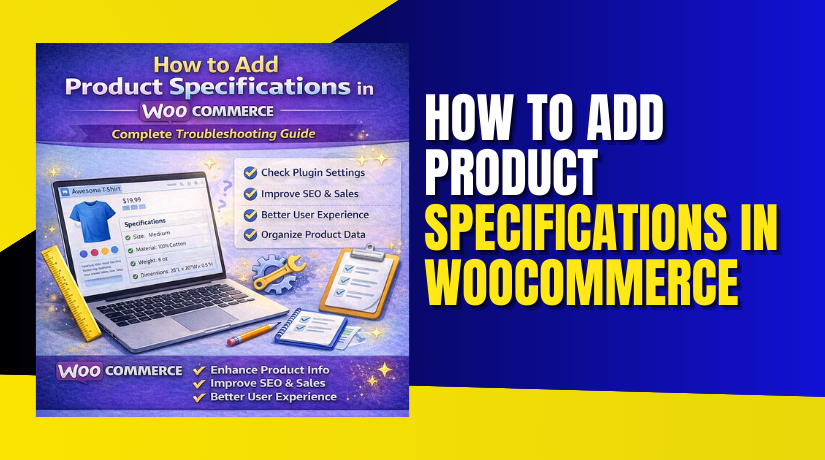
How to Add Product Specifications in WooCommerce (Guide for Better Conversions)
Table of Contents
- Introduction
- What Are Product Specifications in WooCommerce and How They Differ from Descriptions?
- Features and Benefits of Adding Product Specifications in WooCommerce
- How to Add Product Specifications in WooCommerce (Step-by-Step Methods)
- Which Method Should You Choose for Adding Product Specifications in WooCommerce?
- Common Mistakes to Avoid When Adding Product Specifications in WooCommerce
- Best Practices for Adding Product Specifications in WooCommerce
- Conclusion
Introduction
When customers visit your store, they want clear product information. Strong specifications help them make faster buying decisions. Many store owners focus only on design and pricing. However, product clarity plays a bigger role in conversions. When you add product specifications in WooCommerce, you reduce confusion.
Clear specifications answer common buyer questions immediately. This improves trust and builds confidence in your products. Structured information also improves your WooCommerce product details page layout. Customers can quickly scan important product information. This reduces bounce rate and increases engagement.
It also improves overall store professionalism. Proper formatting supports better search visibility. Well-organized specifications help search engines understand product content clearly. In this guide, you will learn how to structure product data correctly. You will also understand how specifications improve user experience and SEO performance.
What Are Product Specifications in WooCommerce and How They Differ from Descriptions?
Product specifications are structured technical details of a product. They provide exact information in a clear format. Specifications are different from product descriptions. A description explains benefits and features in paragraph form. Specifications list measurable details like size and weight. They often appear in a table format.
In WooCommerce, specifications are usually managed using WooCommerce product attributes. These attributes store structured data for products. Examples include dimensions, material, color, and capacity. These details appear on the WooCommerce product details page. By default, they show inside the Additional Information tab. You can also manage them using WooCommerce product description settings.
Some store owners also add custom product fields to WooCommerce for advanced needs. When structured properly, specifications improve clarity and consistency. They help customers compare products easily. They also support better filtering and sorting options in large catalogs.
Features and Benefits of Adding Product Specifications in WooCommerce
Organized Product Information Layout Improves Clarity
When you add product specifications in WooCommerce, information becomes structured and easy to scan. Customers do not need to read long paragraphs to find key details. Specifications appear clearly on the WooCommerce product details page. This improves readability and makes the layout look professional. A clean structure also reduces confusion and improves the overall shopping experience.
Better Product Comparison for Customers
Structured specifications help customers compare similar products quickly. When you use WooCommerce product attributes, values remain consistent across products. This allows buyers to check size, material, and dimensions easily. Clear comparison increases confidence in purchasing decisions. It also reduces hesitation during checkout.
Improved User Experience on Product Pages
A well-structured specification section improves navigation on the product page. Customers can quickly move between description and technical details. With proper WooCommerce product tabs customization, information appears organized and accessible. A smooth browsing experience keeps visitors engaged longer and improves conversion potential.
Reduced Customer Queries and Return Rates
Clear specifications answer common product questions immediately. When buyers understand size, weight, and compatibility clearly, mistakes decrease. This reduces refund requests and product returns. Properly formatted details create transparency and improve post-purchase satisfaction.
Mobile-Friendly and Easy-to-Scan Structure
Most users shop using mobile devices today. Structured specifications load cleanly on small screens. Tables and attributes are easier to read than long text blocks. A clear layout ensures the WooCommerce product details page remains user-friendly on all devices.
Supports Advanced Filtering and Navigation
WooCommerce product attributes power many filter systems. When specifications are added properly, customers can filter products by size, color, or material. This improves product discovery in large catalogs. It also makes navigation faster and more efficient.
Better SEO and Search Visibility
Structured product data helps search engines understand your content. When you add product specifications in WooCommerce, search engines can index product details more accurately. Proper formatting improves relevance for long-tail search queries. This can increase organic traffic to your store.
Flexible Customization Using Fields and Tabs
If default attributes are not enough, you can add custom product fields to WooCommerce for advanced specifications. You can also control layout using WooCommerce product tabs customization. This flexibility allows you to design a clean and professional specification section based on your store needs.
How to Add Product Specifications in WooCommerce (Step-by-Step Methods)
There are multiple ways to add product specifications in WooCommerce. The best method depends on your store size. It also depends on product complexity and layout needs. Some stores only need basic structured fields. Others require advanced tables and flexible layouts. WooCommerce provides built-in options for simple setups. You can also extend features using plugins.
Method 1: Using Product Attributes (Default WooCommerce Method)
Using WooCommerce product attributes is the simplest way to add structured specifications. This method works for most stores without extra plugins. Follow the steps below carefully.
Step 1: Create Global Product Attributes in WooCommerce
- First, log in to your WordPress dashboard.
- Go to Products and click Attributes. You will see a form to create a new attribute.
- Enter a name like Size, Material, or Weight.
- Leave the default settings unless customization is needed.
- Click the Add attribute button to save it. This creates a reusable specification field.
Step 2: Add Attribute Terms for Each Specification
- After creating the attribute, click the Configure terms link.
- Now add values under that attribute. For example, add Small, Medium, and Large for Size. For Material, you may add Cotton or Leather.
- Click Add new term after each entry. These terms define your product specification values.
Step 3: Assign Attributes to a Product
- Now open any product from Products → All Products.
- Scroll down to the Product Data section.
- Click on the Attributes tab.
- Select your created attribute from the dropdown list.
- Click Add to attach it to the product.
- Choose the relevant terms for that product.
Step 4: Enable Visibility on the Product Details Page
- After selecting terms, check the box labeled “Visible on product page”.
- This ensures specifications appear publicly. Without this step, the attribute will not display.
- Save or update the product after enabling visibility.
Step 5: View Specifications on the WooCommerce Product Details Page
- Visit the product page on the front end.
- Scroll to the Additional Information tab. Your specifications will appear automatically in table format.
- This becomes part of the structured WooCommerce product details page layout.
Step 6: Customize Product Tabs If Needed
- If you want layout changes, use WooCommerce product tabs customization options.
- Some themes allow design control without coding.
- You can also move specifications above the description if required.
This method keeps your product data organized and scalable. It improves filtering, comparison, and search functionality. It is the recommended method for most WooCommerce stores.


Method 2: Using a Product Specifications Plugin (Detailed Guide)
Sometimes default WooCommerce product attributes are not enough. Large catalogs need better layout and flexibility. Technical products often require detailed specification tables. In such cases, a product specifications plugin helps. This method gives more control over design and structure. Follow the steps below carefully.
Step 1: Choose and Install a Product Specifications Plugin
- First, go to your WordPress dashboard.
- Navigate to Plugins and click Add New.
- Search for a product specifications plugin.
- Choose one with good reviews and updates.
- Click Install Now and then Activate. The plugin will add new settings options.
Step 2: Configure Global Specification Settings
- After activation, open the plugin settings page.
- Create a new specification group or template.
- Add fields like Dimensions, Capacity, Power, or Model Number. You can also add custom product fields to WooCommerce using these plugins.
- Save your configuration after adding fields.
Step 3: Assign Specifications to Individual Products
- Now open a product from Products → All Products.
- Scroll to the new specification section added by the plugin.
- Enter the required product values carefully.
- Many plugins allow drag-and-drop field arrangement.
- Save or update the product after entering details.
Step 4: Display Specifications in a Table Format
- Most plugins show data in clean table layouts.
- This improves readability on the WooCommerce product details page.
- Tables make scanning easier for customers.
- Structured tables also look more professional. Some plugins allow custom icons or styling.
Step 5: Customize Specification Tabs and Layout
- Plugins often support advanced WooCommerce product tabs customization. You can rename the specification tab if needed.
- Some plugins allow moving specifications above the description.
- This helps highlight technical details first. You can also control font size and spacing.
Step 6: Manage Specifications in Bulk for Large Stores
- If you run a large catalog, bulk editing is helpful.
- Many plugins allow copying specifications between products.
- This saves time and keeps formatting consistent. It also reduces manual entry errors.
This method works best for technical and industrial products. It gives more layout control than default attributes. It is ideal when structured tables are important. If you need flexibility and scalability, this method is recommended.
Which Method Should You Choose for Adding Product Specifications in WooCommerce?
Choosing the right method depends on your store needs. Not every store requires advanced tools. Some stores work perfectly with built-in features. Others need more control and flexibility. Let us break this down clearly.
Choose WooCommerce Product Attributes If You Have a Small or Medium Store
If your products share common specifications, use WooCommerce product attributes. This method is simple and built into WooCommerce. It requires no extra plugins or setup cost. It works well for clothing, accessories, and basic electronics. It keeps your WooCommerce product details page clean and structured. It also supports filters and layered navigation. For most stores, this method is enough.
Choose a Product Specifications Plugin If You Have Technical Products
If your products require detailed technical data, choose a plugin. Plugins allow better table layouts and custom structure. You can easily add custom product fields to WooCommerce with flexibility. This is useful for industrial equipment or complex electronics. It also improves design control and formatting options.
Consider Store Size and Scalability
Large catalogs need scalable solutions. If you manage hundreds of products, plugins save time. Bulk editing and reusable templates help maintain consistency. For smaller catalogs, default attributes are easier to manage.
Consider Design and Layout Requirements
If you want a simple tab-based display, use default attributes. If you need advanced WooCommerce product tabs customization, a plugin works better. Some themes also provide design controls for specification sections.
Common Mistakes to Avoid When Adding Product Specifications in WooCommerce
Many store owners make simple but costly mistakes. These mistakes reduce clarity and lower conversions. Avoid these errors when you add product specifications in WooCommerce.
One common mistake is adding specifications inside descriptions only. Long paragraphs make details hard to scan. Structured data works better than plain text. Another mistake is ignoring WooCommerce product attributes. Attributes help create organized and reusable fields. Without them, filtering and comparison become difficult.
Some store owners forget to enable visibility settings. If “Visible on product page” is unchecked, details will not show. This affects the WooCommerce product details page layout. Inconsistent formatting is another common issue. Different formats confuse customers and look unprofessional.
Overloading the page with too much data also creates problems. Only show necessary and helpful details. Avoid repeating the same information in multiple tabs. Finally, ignoring mobile layout can hurt user experience. Always test how specifications appear on smaller screens.
Best Practices for Adding Product Specifications in WooCommerce
Follow best practices to keep your store professional. Use a clean table format whenever possible. Structured tables improve scanning and readability. Keep formatting consistent across all products. This builds brand trust and visual balance.
Use WooCommerce product attributes for standard specifications. This supports filtering and better catalog organization. If needed, add custom product fields WooCommerce for advanced requirements. Keep specification names clear and short. Avoid technical words that customers may not understand.
Separate description and technical data properly. Use WooCommerce product description settings wisely. Description should explain benefits clearly. Specifications should list measurable facts only. You can also improve layout using WooCommerce product tabs customization. Highlight key technical details when needed.
Always test specifications on the live product page. Make sure everything loads correctly and displays clearly. Keep your WooCommerce product details page clean and structured. A simple layout improves user confidence and conversion rates.
Conclusion
Adding structured specifications improves your store performance. Clear technical details reduce confusion and build trust. You can use default attributes for most stores. For advanced needs, specification plugins offer more control. Choose the method based on product complexity and catalog size.
When you properly add product specifications in WooCommerce, you improve user experience and SEO. Clean formatting and structured data increase conversions.
If you need expert help setting up product specifications correctly, the team at WooHelpDesk can assist you. We help optimize layouts, improve structure, and enhance your WooCommerce store performance. Visit 👉 Woohelpdesk and let our experts support your store growth.