Does WordPress Offer Cloud or VPS Hosting? WordPress.com vs WordPress.org
Table of Contents
- Introduction: Why Hosting Confuses Most WordPress Users
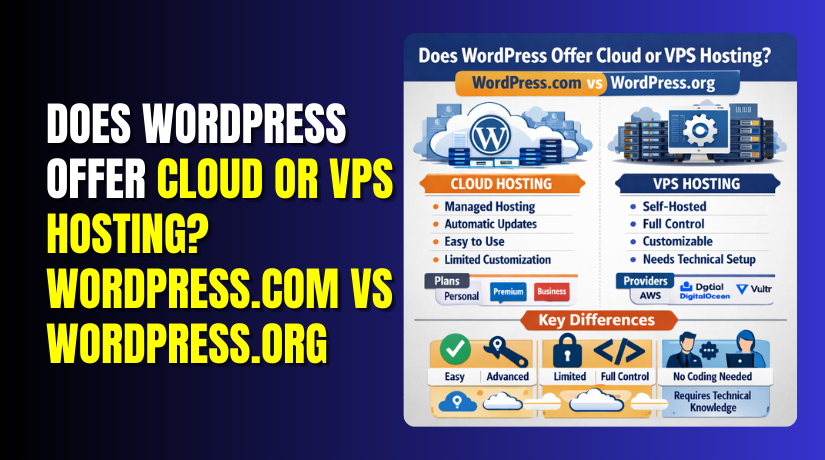
- WordPress.com vs WordPress.org: The Real Difference
- Cloud Hosting vs VPS Hosting: Simple Meanings Without the Buzzwords
- Does WordPress Offer Cloud Hosting Directly? What’s True and What’s Not
- Does WordPress Offer VPS Hosting Directly? Where VPS Fits in the WordPress World
- WordPress.com Hosting vs VPS: The Practical Comparison That Matters
- Which Option Is Best for USA Users? Real Use Cases
- How to Choose the Right Hosting Path
- Step-by-step decision and setup plan
- FAQ
- Conclusion
Introduction: Why Hosting Confuses Most WordPress Users
Many people think WordPress includes hosting by default. That is the main reason for confusion. You search online and see many hosting plans everywhere. Then you ask, does WordPress offer cloud hosting or not. You may also wonder, does WordPress offer VPS hosting for better speed. These are fair questions for new site owners. Hosting decides where your website files live online. It also decides how fast your pages load. It affects security, uptime, and future growth too. WordPress is a platform that helps you build a site. Hosting is the service that runs that site online. Both work together, but they are not same.
This topic matters a lot for USA users today. Many businesses need stable performance and strong support. Blogs want fast pages for better search ranking. Online stores need smooth checkout and fewer errors. So you must choose the right WordPress path early. If you choose the wrong path, changes become harder later. The good news is this is easy to understand. You just need the right comparison and clear steps.
In this guide, you will learn what WordPress really offers. You will also learn what WordPress does not offer. You will see how WordPress.com and WordPress.org differ. After that, you can decide what fits your needs best.
WordPress.com vs WordPress.org: The Real Difference
The biggest confusion comes from these two names. They sound similar, but they work differently. Once you know the difference, hosting becomes clear. WordPress.com is a hosted platform. WordPress.org is the WordPress software for self-hosting. This one difference changes everything about hosting choices.
What WordPress.com really is
WordPress.com gives you an all-in-one hosted solution. You create an account and start building right away. You do not buy hosting separately in most cases. The platform handles many technical tasks for you. That includes updates, basic security, and server setup. You focus more on writing and publishing content. This feels easier for beginners and small sites. It can also fit simple business websites well.
But you get fewer advanced controls in many plans. You may have limits with plugins and custom setups. You also do not control the server settings directly. So your hosting choice is mostly locked to WordPress.com plans. If you want a fully custom server setup, this matters.
What WordPress.org really is
WordPress.org is where you download WordPress software. You install it on a hosting provider you choose. This is called self-hosted WordPress. It gives you full control over your site. You can use any theme and any plugin you want. You can also choose the hosting type you prefer. That includes shared, managed, cloud, or VPS plans.
This option fits users who want flexibility and growth. It also fits WooCommerce stores and custom projects. But it needs more responsibility from your side. You must manage updates, backups, and security tasks. Or you can pay a host to manage them for you.
Quick comparison that makes it easy
Here is a simple way to remember the difference:
- com is a hosted platform with built-in hosting.
- org is software that needs separate hosting.
- com gives convenience with fewer advanced controls.
- org gives full control with more setup work.
- Hosting choices are limited on WordPress.com plans.
- Hosting choices are wide open with WordPress.org sites.
This is why people ask cloud and VPS questions. They want better speed and more control. Those needs often point toward WordPress.org setups. But WordPress.com can still work for many sites. The best choice depends on your goals and workload.
Cloud Hosting vs VPS Hosting: Simple Meanings Without the Buzzwords
Before choosing a plan, know what these terms mean. Many hosting pages use fancy words. That makes the decision harder for site owners. Here is the simple truth in plain language. Cloud hosting uses a group of servers working together. VPS hosting uses one server split into virtual parts. Both can run WordPress sites very well. The best option depends on your needs and budget.
What cloud hosting means for WordPress websites
WordPress cloud hosting means your site runs on cloud servers. These servers can share resources when needed. If traffic jumps, the system can handle more load. This helps during sales, viral posts, or ads campaigns. Cloud hosting often focuses on stability and scaling. Many cloud plans also include built-in backups and security tools. You usually get better uptime with strong infrastructure.
Cloud hosting can also help with faster page delivery. Many providers add caching and CDN support. That improves performance for USA visitors across states. It is useful when your audience is spread widely. Cloud hosting can fit growing blogs and business sites. It is also popular for WooCommerce stores with changing traffic.
Cloud hosting is a good match when you need:
- Sudden traffic handling without site downtime
- Better uptime and stable performance during peak times
- Faster delivery for visitors across the USA
- A plan that can grow without major migration
What VPS hosting means for WordPress websites
WordPress VPS hosting means your site runs on a virtual server. That virtual server has dedicated resources reserved for you. You get a fixed amount of CPU, RAM, and storage. That makes performance more predictable than shared hosting. VPS hosting also gives more control over server settings. Many developers like VPS for custom setups. You can tune PHP, database settings, and caching layers.
VPS can perform great for medium to high traffic sites. It can also work well for membership sites and stores. But it needs more management than simple hosting plans. Some VPS plans are unmanaged. That means you handle security and updates yourself. Managed VPS plans reduce this workload. But they cost more than unmanaged plans.
VPS hosting is a good match when you need:
- More control and custom server settings
- Predictable performance with reserved resources
- Better handling for heavy plugins and custom tools
- A strong base for long-term scaling plans
Cloud vs VPS in one easy view
Cloud hosting focuses on scaling and reliability. VPS hosting focuses on control and dedicated resources. Both can be fast when configured well. Both can be secure with the right setup. Your final choice depends on your comfort with technical work. It also depends on how fast you expect growth.
Does WordPress Offer Cloud Hosting Directly? What’s True and What’s Not
Now let’s answer the main question clearly. Many users ask, does WordPress offer cloud hosting directly. The answer depends on what “WordPress” you mean. People often mix WordPress.com and WordPress.org together. But they are not the same product.
WordPress.org does not sell hosting plans
WordPress.org is a software project, not a hosting company. It gives you WordPress to download and install. It does not sell hosting plans under WordPress.org. So WordPress.org does not offer cloud hosting directly. But it supports cloud hosting perfectly with many providers. You can install WordPress on cloud servers easily. This gives you flexible hosting choices and full control.
So the clear answer is this. WordPress.org does not “offer” cloud hosting itself. It “works with” cloud hosting from many providers. That is why many users choose WordPress.org for growth. They can start small and upgrade later.
WordPress.com includes hosting as part of the platform
WordPress.com is a hosted platform that includes hosting. You do not need to buy hosting separately. You pick a plan and publish your site. The platform manages the hosting environment for you. It often runs on strong infrastructure behind the scenes. Many users consider it a form of managed cloud setup. But you do not get typical cloud controls. You cannot choose server regions or scaling rules yourself. You also cannot fully control server-level settings.
So WordPress.com gives hosted convenience, not cloud freedom. You get a managed experience with fewer moving parts. That can be great for simple sites and busy owners. But it may not fit advanced needs or custom builds.
The best way to remember this answer
Here is the simplest truth for quick decisions:
- org does not sell hosting, including cloud plans.
- org works great on cloud hosting providers.
- com includes hosting inside its plans.
- com is managed, but you control less overall.
If you want true WordPress cloud hosting choices, go self-hosted. That means using WordPress.org with a cloud provider. If you want ease and fewer technical tasks, WordPress.com may fit. Your final choice should match your site goals and team skills.
Does WordPress Offer VPS Hosting Directly? Where VPS Fits in the WordPress World
Many site owners want more speed and better control. That is why they ask, does WordPress offer VPS hosting. The answer again depends on which WordPress you mean. WordPress.org is software, not a hosting provider. WordPress.com is a hosted platform with fixed plan options. VPS works differently from those hosted plans.
WordPress.org does not provide VPS, but supports it fully
WordPress.org does not sell hosting plans of any kind. So it does not sell VPS plans directly. But it works perfectly on VPS hosting environments. You can install WordPress on a VPS like any website app. This gives you strong control and better resource limits. Many growing websites use this setup for stability. Many developers also prefer it for custom performance tuning.
With WordPress VPS hosting, you control the server space. You choose the PHP version and memory limits. You can tune the database for better query speed. You can also add advanced caching for faster pages. This flexibility helps busy sites and WooCommerce stores. But this also brings more responsibility for maintenance. If the VPS is unmanaged, you handle most tasks. If it is managed, your host handles many tasks.
Here is what a VPS setup usually needs:
- Server updates and security patches on a schedule
- A firewall setup and basic hardening steps
- Backups, restore testing, and storage monitoring
- Performance tuning for PHP, MySQL, and caching
- Uptime checks and alerting for quick response
If you do not want this workload, choose managed hosting. Many WordPress hosts provide managed VPS plans today. That gives VPS power without full server stress.
WordPress.com does not offer typical VPS plans
WordPress.com includes hosting inside its subscription plans. But it is not sold as a VPS package. You cannot log into a VPS server and manage settings. You do not get root access or custom stack control. You also cannot change server-level limits freely. WordPress.com is a managed platform by design.
This is not bad for most users. It is built for simplicity and stability. But it is not the same as VPS hosting. If your goal is full server control, WordPress.com is not ideal. If your goal is easy publishing and low maintenance, it can work well. So WordPress.com does not offer VPS in a traditional sense.
Clear answer in one line
If you want the straight answer, here it is. WordPress does not sell VPS plans as WordPress.org software. WordPress.com does not provide VPS access like a VPS host. So the practical answer is no, WordPress does not offer VPS hosting directly. But WordPress works great on VPS from many providers.
WordPress.com Hosting vs VPS: The Practical Comparison That Matters
Now let’s compare real-world differences in simple terms. This is where most people make the final choice. WordPress.com hosting vs VPS is not about which one is “better”. It is about what you need today and later. The best match depends on control, workload, and budget.
Setup and time to launch
WordPress.com is quick to start for beginners. You sign up and build right away. You do not install WordPress or manage databases. This saves time and avoids setup mistakes.
VPS hosting takes more setup time in most cases. You must install WordPress and configure the server. You may also need SSL, caching, and backups. Managed VPS reduces this effort, but not fully.
Control and customization options
WordPress.com gives limited server control by design. You work within the platform rules and plans. That means fewer advanced custom options in many cases.
With VPS, you control almost everything on the server. This is the biggest advantage of WordPress VPS hosting. You can install custom tools and change settings. You can run special plugins and performance stacks too. This is helpful for advanced WooCommerce stores.
Performance and resource stability
WordPress.com hosting can be stable for normal websites. It is managed and optimized for WordPress sites. You often get good speed without manual tuning. But scaling options depend on plan limits.
VPS gives reserved resources for your site. That often means consistent performance under load. You can also tune settings for better speed. But performance depends on how well you manage the server. Poor VPS setup can run slower than managed hosting.
Maintenance and security responsibility
WordPress.com handles most technical maintenance for you. They manage core updates and key hosting tasks. That lowers risk for busy owners.
VPS needs active maintenance, especially if unmanaged. You must handle updates, security patches, and monitoring. Managed VPS can handle some of this, but not always all. So VPS is powerful, but needs a plan for upkeep.
Scaling and handling traffic spikes


WordPress.com can handle normal traffic for many websites. It is built as a managed platform for stability. But your scaling depends on the plan you buy. If your traffic grows, you upgrade your plan. This is simple, but it may cost more later.
A VPS can handle more load with the right setup. You also get dedicated resources that do not change often. If you need more power, you upgrade your VPS size. Some VPS hosts also offer quick scaling options. But scaling a VPS may need technical work. You may need to adjust caching or server settings too.
If your traffic changes often, cloud may fit better. WordPress cloud hosting can scale smoother for sudden spikes. VPS is still strong, but cloud is often easier for burst traffic.
Backups, staging, and recovery options
Backups are not optional for business websites today. One bad update can break the whole site fast. WordPress.com often includes backup features in higher plans. It also provides a managed recovery process in many cases. This can reduce stress for non-technical users.
With VPS, backups depend on your hosting plan and setup. Some VPS providers include snapshots and daily backups. Others require you to set backups manually. You also must test restores to avoid surprises. If your VPS is unmanaged, this becomes your job. Managed VPS can handle backups for you, but confirm it first.
Here is what you should check in any plan:
- Daily backups with at least 30 days retention
- One-click restore or guided restore support
- Staging site option for safe testing
- Malware scanning and cleanup tools
- Clear disaster recovery steps and support access
Cost and value over time
WordPress.com plans are simple to price and understand. You pay one bill and get hosting included. This works well for simple websites and small teams. But costs may rise as your needs grow. Some features require higher plans too.
VPS can look cheaper at first for raw power. But costs can grow with maintenance needs. You may pay for admin help, security tools, and monitoring. If you handle everything yourself, you save money. But you spend time and take more risk. Managed VPS reduces risk but adds cost.
So the best value depends on your situation. If you want easy management, WordPress.com can be a fair deal. If you want full control, VPS can offer strong value long term.
Security and compliance needs
WordPress.com manages many security layers for you. They control the hosting environment and reduce risk. This helps owners who do not want technical tasks. It can also reduce common security issues from weak servers.
VPS security depends on how you manage it. You must keep the server updated and hardened. You must also secure login pages and admin access. If you run WooCommerce, security matters even more. Checkout pages must stay stable and protected. Managed VPS can help, but you still should follow best practices.
For growing sites, WordPress VPS hosting can be secure and strong. But only when you manage updates and security properly.
Which Option Is Best for USA Users? Real Use Cases
Now let’s match options to real site needs. USA businesses often need faster performance and stable uptime. Many also want support that answers quickly. The right choice depends on site type and growth speed. Use these examples to decide faster.
Use case 1: Personal blog, resume, or simple portfolio
If your site is simple, WordPress.com may be enough. You get quick setup with less technical work. You can publish and manage content easily. This fits beginners who want a clean workflow. It also fits writers who want fewer distractions.
If you expect fast growth, choose WordPress.org instead. Then pick WordPress cloud hosting for better scaling later. But for basic needs, WordPress.com can work fine.
Use case 2: Local service business website in the USA
Many local businesses need speed and lead capture. They need fast contact forms and clean pages. WordPress.com can work if your site stays basic. But many businesses later want advanced plugins. They may want custom SEO tools and design control.
WordPress.org is often better for long-term control. You can choose cloud hosting for speed and stability. You can also choose VPS if you want predictable resources. This helps as your business grows.
Use case 3: Content site with SEO goals and traffic spikes
SEO-focused sites often get traffic spikes from Google updates. One post can rank and bring huge visits quickly. In this case, WordPress cloud hosting is a strong choice. Cloud setups can handle bursts better in many cases. They also often include CDN and caching features.
VPS can also work well for content sites. But cloud is often easier for scaling without downtime. If you want fewer performance worries, cloud is safer.
Use case 4: WooCommerce store with checkout and product pages
WooCommerce stores need stable performance and low downtime. Checkout should be fast and reliable always. If your store is small, managed hosting can be enough. But as orders grow, you need better resources.
Many store owners use WordPress VPS hosting for more control. It can handle heavy plugins and custom features well. It can also support advanced caching and database tuning. But you need a strong maintenance plan. If you want easier scaling, cloud hosting can also work great. A cloud plan can handle traffic spikes during sales and holidays.
Use case 5: Agencies and freelancers building many client sites
Agencies often need staging, backups, and site control. They also need custom plugins and clean workflows. WordPress.org is the clear choice for most agencies. It gives full flexibility for every client site.
Many agencies use VPS for predictable performance and control. Others use cloud hosting for smoother scaling and uptime. Both can work well for client projects. The right choice depends on how you manage servers.
How to Choose the Right Hosting Path
Now you know the real difference between hosted and self-hosted WordPress. The next step is choosing the right hosting path for your goals. This section helps you decide without confusion. It also helps you plan your site for long-term growth. Many USA site owners want speed, uptime, and easy management. You can get that with the right plan and setup.
Quick checklist before you choose
Use this checklist to pick the best direction today:
- Do you want full control over plugins and settings?
- Do you want the easiest setup with less technical work?
- Do you expect traffic spikes from SEO or ads soon?
- Do you run WooCommerce with heavy checkout traffic?
- Do you have a tech person to manage server tasks?
- Do you want fixed resources or flexible scaling options?
If you want fewer technical tasks, WordPress.com can help. If you want full control, WordPress.org is better.
Step-by-step decision and setup plan
Follow these steps in order. Each step keeps your decision simple.
Step 1: Decide if you want WordPress.com or WordPress.org
WordPress.com is hosted and easy for beginners. WordPress.org is self-hosted and gives full freedom. If you want advanced plugins and custom features, choose WordPress.org. If you want simple publishing with less work, choose WordPress.com.
Step 2: Estimate your site size and future traffic
Think about your next twelve months, not just today. A small site can grow fast with good content. A WooCommerce store can grow fast with ads and sales. If you expect strong growth, plan for scaling early. This is where WordPress cloud hosting often helps.
Step 3: Choose cloud when scaling and uptime matter most
Cloud hosting is a smart choice for busy websites. It helps when traffic jumps without warning. It also helps if your visitors are across the USA. A good cloud plan can stay stable during peak times. If you asked, does WordPress offer cloud hosting, remember this. WordPress.org supports cloud hosting through hosting providers. WordPress.com includes hosting, but you cannot choose cloud settings freely.
Step 4: Choose VPS when you need control and fixed resources
VPS works well when you want dedicated resources. It also works when you want server control and tuning. This is helpful for stores, membership sites, and custom tools. If you asked, does WordPress offer VPS hosting, remember this too. WordPress does not sell VPS plans directly. You use WordPress.org with a VPS hosting provider. This gives true WordPress VPS hosting flexibility.
Step 5: Confirm these must-have features before buying any plan
Do not buy a plan only because it looks cheap. Always confirm these core features first:
- Free SSL and easy HTTPS setup
- Daily backups with quick restore options
- Caching support for faster page loading
- CDN option for better USA visitor speed
- Staging site for safe testing and updates
- Strong support with fast response times
Step 6: Set up performance basics from day one
Performance is not only about the hosting plan. Your setup and content also matter a lot. Use caching, compress images, and limit heavy plugins. Keep themes clean and updated. Use a simple page builder if needed. This reduces load and improves rankings.
Step 7: Plan a clean upgrade path for the future
Many websites outgrow their first plan quickly. Plan your upgrade path before problems start. If you are on WordPress.com, check migration options early. If you are on WordPress.org, upgrades are easier. You can move from shared to cloud or VPS later. Planning early saves time and prevents downtime.
FAQ
1) Is WordPress.com considered cloud hosting?
WordPress.com is a hosted platform with managed infrastructure. Many people call it cloud-based in practice. But you do not control the cloud environment directly. You choose a plan, and WordPress.com manages everything. This feels like managed hosting, not a typical cloud dashboard. It works well for simple sites and basic business websites.
2) Can WordPress.org be used with cloud hosting?
Yes, WordPress.org works great on cloud hosting plans. You install WordPress on a cloud server from a provider. That gives you full control and scaling choices. This is what most people mean by WordPress cloud hosting. It is a popular option for SEO sites and growing businesses. It can also fit WooCommerce stores with peak traffic.
3) Can I run WordPress on a VPS without a developer?
Yes, but it depends on the VPS type you choose. Managed VPS is easier for non-technical users. Unmanaged VPS needs server knowledge and regular maintenance. You must handle updates, security, and backups carefully. If you want less stress, choose managed options. Or work with a support team when needed.
4) What is better for WooCommerce: cloud hosting or VPS?
Both can work well for WooCommerce stores. Cloud is strong for traffic spikes and stable uptime. VPS is strong for control and predictable performance. If your store runs heavy plugins, VPS can help. If your store sees sudden sales traffic, cloud can help. Choose based on growth, budget, and support needs.
5) WordPress.com hosting vs VPS: which is easier to manage?
WordPress.com hosting vs VPS is a clear difference in daily work. WordPress.com is easier because it is managed. You do not manage servers, updates, or security settings. VPS can be easy only if it is managed. Unmanaged VPS requires time and technical skills. Choose based on how much control you want.
6) Can I migrate from WordPress.com to WordPress.org on cloud or VPS later?
Yes, you can migrate later in most cases. But the process depends on your plan and setup. Some features may need manual changes after migration. If you plan to grow fast, consider starting with WordPress.org. Then you can choose cloud or VPS anytime. This gives the most freedom long term.
Conclusion
Now you can choose hosting with more confidence and clarity. WordPress.com gives a hosted, managed experience with simplicity. WordPress.org gives full freedom and hosting flexibility. If you want scalable performance, WordPress cloud hosting can be a strong option. If you want control and dedicated resources, WordPress VPS hosting can fit well. Your best choice depends on growth plans and comfort with tech work. If you need help choosing, migrating, or improving speed, contact WooHelpDesk. We can guide you with the right hosting path for your WordPress site.