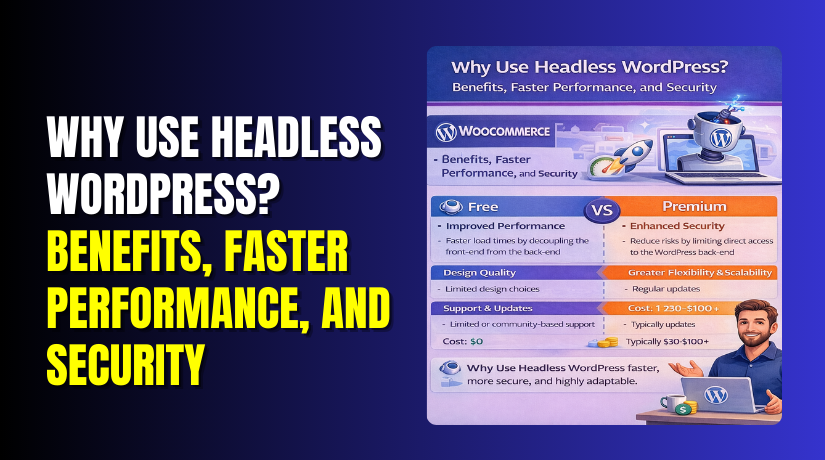
Why Use Headless WordPress? Benefits, Faster Performance, and Security
Table of Contents
- Introduction
- What Headless WordPress Means in Simple Terms
- Why Businesses Choose Headless WordPress Today
- The Core Benefits That Make Headless Worth It
- Is Headless WordPress Faster? What Actually Improves Speed
- Headless WordPress Security Benefits: Why Decoupling Can Reduce Risk
- Choosing the Best Frontend for Headless WordPress
- When Headless WordPress Is a Great Fit (And When It’s Not)
- Conclusion
Introduction
Web users now expect fast pages and smooth browsing everywhere. They compare websites to mobile apps and modern platforms. If pages feel slow, visitors leave within seconds. That is why more brands move to headless WordPress today.
This setup helps websites deliver speed without losing content control. It also supports modern designs and flexible user experiences. Many teams want better results without rebuilding everything. A headless approach makes that possible with smart separation.
In this guide, you will learn the key reasons clearly. You will understand how this approach improves site experience. You will also learn how it keeps content workflows simple. The goal is clear and practical guidance for your project.
This approach works well for many USA-focused websites, too. It fits businesses that need steady growth and strong performance. It helps bloggers who want faster pages and better stability. It also supports WooCommerce stores during busy traffic spikes.
Here is what you will gain from this guide:
- Clear meaning of headless WordPress in simple language
- A basic view of how content moves to the frontend
- Practical reasons teams choose headless for modern websites
If you want modern output with familiar editing, it helps. That is why headless WordPress is now a serious option.
What Headless WordPress Means in Simple Terms
Headless WordPress keeps WordPress as the content engine. Your team still uses the same dashboard for content. Editors add pages, posts, and products like they always do. Nothing changes for day-to-day publishing work.
The change happens on the frontend side of the website. Instead of a WordPress theme showing the content, a separate frontend displays it. That frontend can be built with modern frameworks and tools. It pulls content from WordPress using APIs for faster delivery.
Most setups use the WordPress REST API for content sharing. Some teams also use GraphQL for more controlled requests. In both cases, the frontend requests content as clean data. Then it renders that data into a fast user experience.
Quick comparison to make it easy:
- Traditional WordPress: One system handles content and display together.
- Headless WordPress: WordPress manages content, and the frontend shows it.
The flow is simple and predictable:
- You publish content inside the WordPress dashboard
- WordPress exposes that content using an API endpoint.
- The frontend requests only the data it needs.
- Visitors see a faster, custom-designed website experience.
This separation gives teams more freedom and better control. Developers build modern layouts without theme limits and conflicts. Content teams keep WordPress, which they already understand well.
Why Businesses Choose Headless WordPress Today
Businesses now pick headless WordPress for clear reasons. They want faster sites that load in seconds. They need flexibility to create unique designs. Scaling becomes easy during busy times. User experience improves with smooth interactions.
Many sites face high traffic. Headless setups handle this well. High-traffic blogs stay quick even with thousands of visitors. Marketing sites get modern, eye-catching layouts. Product catalogs in WooCommerce load products instantly.
Content teams love this choice too. They keep using the simple WordPress dashboard. Editors add posts and images as always. No new tools to learn. This is why headless WordPress fits growing teams perfectly.
Companies see real growth benefits. They reach more customers without slowdowns. Updates happen faster. The setup supports long-term goals.
The Core Benefits That Make Headless Worth It
The benefits of headless WordPress stand out for modern sites. They deliver speed, freedom, and future-proof options. Here are the main ones that drive results.
Better Developer Freedom and Modern UI Choices: Developers gain full control over the frontend. They use tools like React, Vue, or Svelte. No limits from old WordPress themes. Custom designs come to life quickly. Teams build interactive features easily. Animations and smooth transitions become standard. Sites feel like native apps. This freedom creates standout user interfaces. Businesses get unique looks that match their brand perfectly.
Easier Scaling for Traffic Spikes: Traffic can surge without warning. Headless setups manage this smoothly. The frontend runs on fast hosting or CDNs. Content pulls only when needed. Server load stays low during peaks. Add more resources in minutes with cloud services. No crashes during sales or viral posts. Sites stay online and quick. This saves money and stress for owners.
Omnichannel Publishing to Multiple Platforms: One content source serves many places. Publish to websites, mobile apps, and smart devices. APIs send data everywhere at once. Update once in WordPress, and all platforms refresh. Reach customers on apps, watches, or kiosks. Future channels become simple to add. Content stays consistent across all touchpoints. This builds stronger brand presence.
Cleaner Performance Tuning Without Heavy Theme Load: Traditional themes slow sites with extra code. Headless removes this weight. Optimize only the frontend code. Use lightweight frameworks and smart caching. Pages load faster with less bloat. Tune images, scripts, and styles separately. Results show in better speed scores. Visitors stay longer and convert more.
Is Headless WordPress Faster? What Actually Improves Speed
Is headless WordPress faster? Yes, it often is—and the gains can be big. The speed boost comes from smart separation. You optimize the frontend on its own. No more waiting for heavy backend code.
Developers get full flexibility. They split code into small parts. Only needed pieces load first. Caching works better with tools like Redis or edge caches. CDNs deliver content from servers close to visitors. Pages appear in under a second.
You can choose static or hybrid rendering. Static sites build pages ahead of time. They serve pure HTML files. No live database calls slow things down. Hybrid mixes static with dynamic parts for logged-in users or carts.
Heavy themes and page builders drag traditional sites down. Headless removes them completely. No extra PHP calls on every visit. The frontend stays light and clean.
Here are the main places speed gains come from:
- Custom code optimization: Remove unused scripts and styles.
- Better image handling: Serve modern formats like WebP automatically.
- Faster hosting choices: Use Vercel, Netlify, or Cloudflare for edge speed.
- Reduced server requests: APIs send only JSON data, not full HTML.
- Smart caching layers: Cache API responses and static assets longer.
These changes add up fast. Real sites see load times drop by 50% or more. Visitors stay longer. Search rankings improve. Sales grow.


Headless gives you the tools to build truly quick experiences.
Headless WordPress Security Benefits: Why Decoupling Can Reduce Risk
Headless WordPress security benefits start with smart separation. The public site no longer touches the WordPress core directly. This cuts many common risks.
You can hide the WordPress admin completely. Place it on a private server or behind a login wall. Visitors never see the /wp-admin path. Bots and hackers find nothing to scan.
The public frontend has a smaller attack surface. It serves only static files or simple API calls. No PHP code runs on the visitor side. Common exploits like plugin vulnerabilities stay isolated.
You gain strong control over APIs. Add authentication tokens for every request. Set rate limits to stop brute-force attempts. Allow only the data your site needs. Block everything else.
Follow these best practices for even stronger protection:
- Use a Web Application Firewall (WAF) like Cloudflare.
- Apply least-privilege rules—give API keys only needed access.
- Keep WordPress core, plugins, and themes updated always.
- Enable two-factor authentication on all admin accounts.
- Monitor logs for unusual API traffic.
Decoupling means one part can stay safe even if another faces issues. Fix problems without taking the whole site down. Backups and restores become simpler too.
Businesses sleep better with this setup. They protect customer data and brand trust. Headless makes security active, not reactive.
Choosing the Best Frontend for Headless WordPress
The best frontend for headless WordPress depends on your needs. Think about your site type first. Consider your team’s skills and experience. SEO matters for most projects. Budget and timeline play a big role too.
Here are four strong options. Each one works well with WordPress APIs.
Next.js: This React framework leads the pack. It supports static and server-side rendering. SEO stays strong with built-in features. Incremental static regeneration keeps content fresh. Deployment is simple on Vercel. Teams love its speed and developer tools. Great for dynamic sites like e-commerce or blogs.
Gatsby: Gatsby builds super-fast static sites. It pulls data at build time. Image optimization comes built-in. Hundreds of plugins make setup easy. Sites score high on performance tests. Perfect for content-heavy sites that update less often.
Nuxt: Nuxt brings Vue power to the frontend. It offers server-side rendering out of the box. File-based routing keeps things organized. Modules add features quickly. SEO and performance match top needs. Choose this if your team prefers Vue.
Astro Astro focuses on lightweight pages. It ships minimal JavaScript by default. Bring your own frameworks like React or Vue. Partial hydration loads code only when needed. Sites load blazing fast. Ideal for marketing pages or simple blogs.
Here is a simple decision guide:
- Pick Next.js for complex apps, e-commerce, or frequent updates.
- Choose Gatsby for content sites that need top speed and SEO.
- Go with Nuxt if your team knows Vue and wants flexibility.
- Select Astro for lightweight sites with minimal JavaScript.
Match the tool to your goals. Start small and test.
When Headless WordPress Is a Great Fit (And When It’s Not)
Headless WordPress shines in certain cases. It also has limits. Know both sides before you decide.
Great Fit When:
- Your site handles high traffic or sudden spikes.
- You want modern, app-like interactions and designs.
- You plan to publish content to apps, web, or other platforms.
- Your team has developers who build custom frontends.
- Speed and performance are top priorities.
- You run a large WooCommerce store with many products.
Not Ideal When:
- Your site is small and updates rarely.
- You have no developers on your team.
- You rely heavily on drag-and-drop page builders.
- Budget is tight and you need quick setup.
- You prefer simple themes and plugins only.
- Content changes happen many times per day without caching.
Choose wisely based on your current setup and future plans.
Conclusion
Headless WordPress delivers clear wins. You get faster load times. Security control improves with separation. Frontend freedom opens modern designs.
Go headless if you need growth and performance. It fits high-traffic sites, WooCommerce stores, and multi-channel publishing. Businesses and bloggers see real upgrades.
Simple sites may stay traditional for now. But most growing projects benefit from this shift.
Ready to make your site faster and safer? Reach out to WooHelpDesk today. We help you plan and build the perfect headless setup.