What’s the Difference Between a Subscription and a Membership?
Table of Contents
- Introduction
- What Is a Subscription?
- What Are The Key Features, Pros and Cons of Subscription?
- What Is a Membership?
- What Are The Key Features, Pros and Cons of Membership?
- What’s The Difference Between A Subscription And A Membership?
- Final Verdict
Introduction
Recurring revenue is one of the best ways to grow online businesses. It gives predictable income and improves cash flow every month. It also helps you plan marketing and product improvements better. That is why people search subscription vs membership so often.
Many business owners mix these two terms in daily conversations. But the user experience and value delivery are not the same. A subscription usually focuses on repeated delivery of something. A membership usually focuses on access to something exclusive. When you understand the difference between subscription and membership, your pricing becomes clearer. Your sales page also becomes easier for buyers to trust quickly.
This guide will explain both models in a very simple way. You will learn the membership vs subscription model using real examples. You will also learn the best use cases for each option. Then you will understand what to pick for your business.
We will compare the subscription model vs membership model using features and customer expectations. We will also cover retention and churn differences clearly. You will learn how to position plans without confusing visitors. You will also learn how to avoid the most common mistakes.
What Is a Subscription?
A subscription is a recurring payment plan for ongoing delivery. The delivery can be a product, service, or digital access. Customers pay weekly, monthly, or yearly based on plan terms. In return, they receive consistent value over time.
Subscriptions are common in ecommerce and digital product businesses. They are also common in SaaS and streaming services. The key point is repeated delivery or continued usage. Customers expect the value to keep coming automatically. This expectation shapes the whole customer experience.
A subscription can be physical, digital, or service based. Physical subscriptions ship items like coffee or skincare refills. Digital subscriptions offer software access or premium tools. Service subscriptions offer maintenance, care plans, or support retainers. All of these fit the subscription model vs membership model comparison.
What Are The Key Features, Pros and Cons of Subscription?
Key Features:
- Recurring Billing Cycles And Automatic Renewals
Subscriptions have a defined billing schedule and renewal logic. Billing cycles can be weekly, monthly, quarterly, or yearly plans. Renewals can happen automatically or require manual payment confirmation. Most businesses use automatic renewals for predictable cash flow.
- Ongoing Value Delivery Each Cycle
A subscription must deliver value repeatedly for customers to stay. The value can be shipments, service work, or feature access. Customers renew when they see the value keeps arriving reliably. If the value is unclear, churn increases within the first months.
- Subscription Plans, Tiers, And Upgrade Paths
Subscriptions often use tiers to match different customer needs. Tiering helps customers start small and upgrade later easily. Upgrade paths increase lifetime value and reduce churn risk. Customers like options that grow with their needs.
- Payment Failure Handling And Retry Automation
Payment failures happen often due to expired cards and limits. Subscription systems must handle failures without losing customers. Retry rules and reminders reduce churn caused by simple issues. This feature matters a lot for stable recurring revenue.
- Subscription Management For Customers
Customers want easy control over their subscription plan. They want to pause, cancel, or change payment methods easily. Self service tools reduce support tickets and improve satisfaction. Better control also improves trust and reduces chargeback risk.
- Automated Invoices, Emails, And Renewal Notifications
Subscriptions need communication to reduce confusion and disputes. Confirmation emails, receipts, and renewal notices build trust. They also reduce customer anxiety about recurring payments. Automation keeps communication consistent at scale.
- Fulfillment Automation For Physical Subscriptions
Physical subscriptions need shipping workflows and scheduling tools. Customers expect consistent delivery dates and stable packaging quality. Fulfillment must be consistent to keep churn low over time. This feature matters for ecommerce subscriptions strongly.
- Metrics That Matter In Subscription Businesses
Subscriptions are measured using recurring revenue metrics and churn. Tracking helps you improve retention and pricing decisions. Metrics also help you understand which plans are profitable. This is important in subscription vs membership analysis too.
Pros
- Predictable Recurring Revenue
- You get steady income every billing cycle.
- Forecasting becomes easier for growth and budgeting.
- Higher Customer Lifetime Value
- Customers can stay for months or even years.
- Long retention increases total revenue per customer.
- Convenience Increases Repeat Sales
- Customers do not need to reorder every time.
- Auto renewals reduce friction and improve loyalty.
- Better Inventory And Planning Control
- You can predict demand from active subscribers.
- Planning stock and fulfillment becomes more accurate.
- Upsell And Tier Growth Opportunities
- Customers can upgrade plans as their needs increase.
- Tiers increase revenue without finding new customers.
- Automation Saves Time At Scale
- Billing, emails, and renewals can run automatically.
- Your team spends less time on manual follow ups.
Cons
- Churn Can Hurt Growth Quickly
- Customers may cancel if value feels low.
- High churn makes revenue unstable and unpredictable.
- Payment Failures Cause Lost Renewals
- Expired cards and limits can stop renewals.
- Weak retry flows increase cancellations unnecessarily.
- Fulfillment Issues Damage Trust Fast
- Late shipping and stockouts cause frustration quickly.
- Physical subscriptions always need consistent delivery quality.
- Requires Strong Support And Communication
- Customers ask billing and delivery questions often.
- Poor communication increases disputes and chargebacks.
- Ongoing Value Pressure Is Always High
- You must keep improving offer value each month.
- Repetitive value can lead to faster cancellations.
- Discount Abuse Can Reduce Profit
- Long discounts can lower margins over time.
- You need strong coupon rules and pricing control.
What Is a Membership?
A membership is a plan that gives access to exclusive benefits. Benefits can be gated content, resources, or private community access. Members pay monthly or yearly to keep that access active. The value is tied to belonging, access, and perks.
Memberships often focus on access more than delivery. A membership can include training libraries and private courses. It can include community groups and coaching sessions too. It can also include discounts and early access offers. This is why membership vs subscription model is not the same.
Memberships are common in education, fitness, and communities. They are also common in clubs, loyalty programs, and service portals. Customers join because they want ongoing access and identity. They also join for perks that non-members cannot get. That access creates retention when value is strong.


What Are The Key Features, Pros and Cons of Membership?
Key Features:
- Access Control And Content Protection Rules
Memberships usually protect content behind a login wall. Access is given only when payment is active and valid. When payment fails, access is removed or paused automatically. This makes access control the core membership feature.
- Membership Levels, Tiers, And Perk Structure
Memberships often use levels to deliver different benefits. Different tiers help match budgets and different user needs. Tiers also increase revenue by offering premium access options. Members like a clear path to upgrade later.
- Member Only Community And Networking Experience
Community is a powerful retention driver in membership programs. Members stay because relationships build over time in groups. Community also creates accountability and progress support for members. This is different from standard subscription deliveries.
- Member Portal And Self Service Account Tools
Members expect a clean portal experience after joining your program. They want easy access to resources and plan information. They also want to manage billing without support tickets. Self service reduces churn and improves satisfaction strongly.
- Content Library, Resources, And Ongoing Updates
Most memberships rely on content libraries and helpful resources. Members pay for access to lessons, templates, and tools. They also pay for updates and new additions over time. Updates keep the membership fresh and worth renewing.
- Member Benefits, Discounts, And Exclusive Perks
Perks are important in many membership programs and clubs. Perks can include discounts, early access, and bonuses. Perks help members feel special and rewarded for staying. They also create daily value even without content usage.
- Onboarding And Engagement Automation
Memberships need onboarding so members start using benefits quickly. Many cancellations happen when members do not use access early. Good onboarding reduces this early churn significantly. It helps members reach their first success milestone faster.
- Membership Metrics That Matter For Growth
Memberships are measured using engagement and retention metrics. Revenue matters, but engagement drives renewals in memberships. You must track usage patterns and content performance regularly. Tracking helps you improve content value and member satisfaction.
Pros
- Strong Recurring Revenue With Access Based Value
- Members pay to keep access to exclusive benefits.
- Revenue becomes more predictable with steady renewals.
- High Retention From Community And Belonging
- Members stay longer when relationships grow over time.
- Community creates loyalty beyond simple product usage needs.
- Scales Better Than Physical Delivery Models
- Content and access do not require shipping operations.
- You can grow members without major fulfillment cost increases.
- Flexible Tier Pricing And Upsell Paths
- You can offer Basic, Pro, and VIP membership levels.
- Higher tiers can include coaching, perks, or extra access.
- Builds Trust And Authority In Your Niche
- Helpful resources position you as an expert consistently.
- Authority increases referrals and improves conversion rates too.
- Member Data Helps Improve Offers Over Time
- You can track engagement and learn what members want.
- Better insights help you improve content and retention faster.
Cons
- Members Cancel If They Stop Using The Portal
- Low engagement leads to cancellations and churn quickly.
- You must keep members active with clear value reminders.
- Requires Consistent Content Updates And Fresh Value
- Outdated content makes membership feel less worth renewing.
- You must plan a steady update schedule for long term success.
- Community Management Needs Time And Moderation
- Communities can become noisy without strong moderation rules.
- Poor community quality increases churn and negative feedback.
- Access Rule Errors Can Create Refunds And Complaints
- Wrong rules can block paying members from protected content.
- These issues can cause chargebacks and trust loss quickly.
- Onboarding Must Be Strong To Prevent Early Churn
- New members cancel when they do not see early results.
- You need clear first steps and quick wins in onboarding.
- Retention Depends On Experience, Not Just Billing
- Billing can work perfectly, but members may still cancel.
- You must focus on value, engagement, and member success.
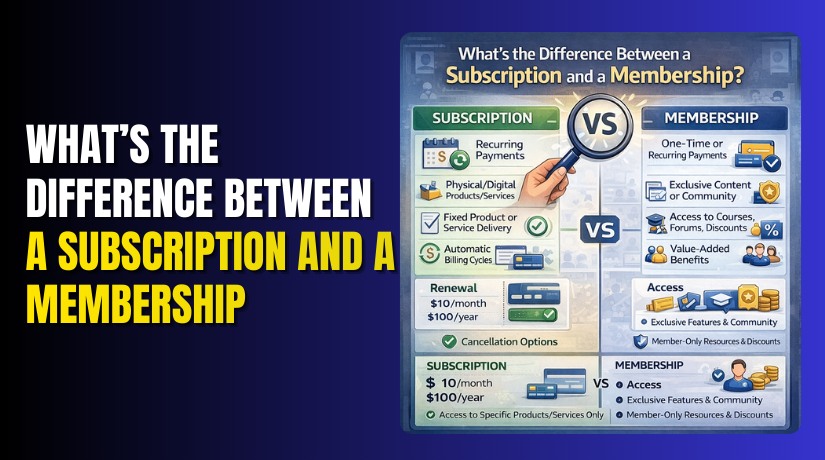
What’s The Difference Between A Subscription And A Membership?
The biggest difference is how value is delivered each billing cycle. A subscription delivers something repeatedly or supports ongoing usage. A membership gives access to something exclusive and ongoing. Both use recurring billing, but the customer expectations are different. This is the core of subscription vs membership.
If you explain this clearly on your sales page, conversions improve. Customers understand what they pay for and why it renews. Confusion causes refunds, chargebacks, and cancellations quickly. Clear positioning reduces churn and improves long term retention.
Below are the most important membership and subscription differences explained clearly. Each point shows how the experience changes for customers. Each point also helps decide the best model for your offer.
| Comparison Factor | Subscription | Membership |
| Core Idea | Pay repeatedly for ongoing delivery or usage. | Pay repeatedly for exclusive access and benefits. |
| Value Delivery | Value is delivered every cycle, like refills. | Value is available anytime through member access. |
| What Customers Expect | Regular deliveries, usage, or service each period. | Ongoing access, perks, and member-only privileges. |
| Best For | Refills, SaaS tools, streaming, recurring services. | Courses, communities, portals, premium content libraries. |
| Primary Retention Driver | Convenience and continued need for the offer. | Belonging, progress, perks, and exclusive access. |
| Main Churn Trigger | Product is no longer needed or feels repetitive. | Low engagement, stale content, or unused benefits. |
| Operational Focus | Billing, renewals, fulfillment, and delivery consistency. | Access rules, engagement, content updates, community care. |
| Typical Setup Needs | Renewal automation, retries, invoices, shipping workflows. | Member portal, content protection, drip rules, onboarding flows. |
| Customer Management Tools | Pause, skip, change frequency, update payment methods. | Upgrade tiers, manage access, update billing, view benefits. |
| Pricing Logic | Often tied to delivery cost or usage levels. | Often tied to access value and perk depth. |
| Engagement Requirement | Medium value arrives through delivery or usage. | High, members must use access to feel value. |
| Examples | Coffee box, skincare refill, software plan, care plan. | Learning hub, private group, discount club, VIP portal. |
Final Verdict
If your offer delivers something repeatedly, a subscription fits better. It works best for refills, recurring services, and SaaS usage plans. Customers renew because they keep using what you deliver each cycle. Your success depends on smooth billing, renewals, and consistent delivery quality. This is the clearest subscription vs membership decision rule.
If your offer is about access, a membership fits better. It works best for content libraries, communities, and gated resources. Members renew because they want ongoing access and exclusive benefits. Your success depends on engagement, updates, and strong onboarding habits. This explains the real difference between subscription and membership in daily operations.
So the best model depends on how customers get value each month. Choose a subscription when value is repeated delivery or usage. Choose a membership when value is exclusive access and belonging. If your business can support both, combine them carefully with clear plan names. Clear messaging reduces churn and improves lifetime value using membership vs subscription model properly.
Have questions before starting with WooCommerce & WordPress? Get support here at WooHelpDesk.