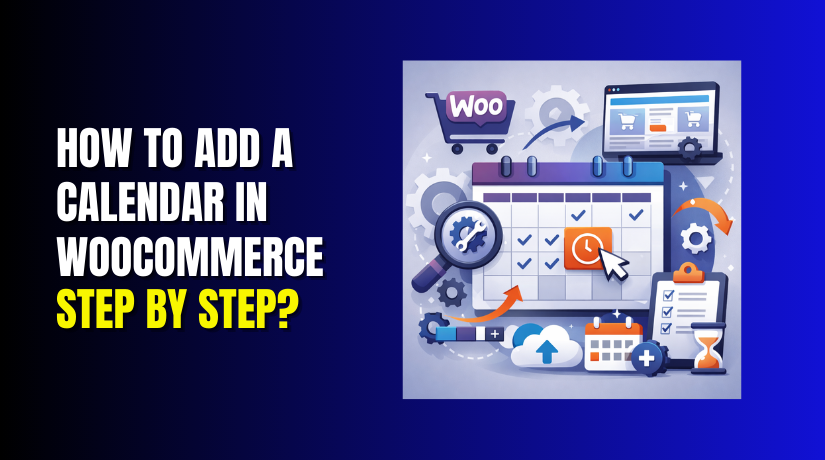
How to Add a Calendar in WooCommerce Step by Step?
Table of Contents
- Introduction
- Why Add a Calendar in WooCommerce?
- What are the Different Types of Calendar in a WooCommerce Store?
- How to Add a Calendar in WooCommerce Step by Step?
- What are the Top 3 Best Plugins to Add a Calendar in WooCommerce?
- Final Verdict
Introduction
Many WooCommerce stores need a date selection during checkout. Some stores sell rentals, appointments, and timed local services. Some stores sell deliveries that require a chosen delivery date. Some stores sell event tickets with fixed calendar dates. A calendar improves clarity and reduces customer checkout confusion. It also reduces manual messages and supports follow ups.
This guide shows how to add a calendar in WooCommerce. It focuses on clean steps and safe plugin setup. You will learn a WooCommerce booking calendar workflow. You will also learn WooCommerce date picker setup basics. This guide supports WooCommerce appointment booking use cases too. We will keep the process simple and repeatable. We will also cover common mistakes and quick fixes.
WooCommerce does not include a calendar by default. You add it using a calendar plugin or custom code. Most stores should use a WooCommerce calendar plugin. Plugins save time and avoid fragile custom logic. Plugins also support rules like blocked dates and time slots. Plugins can also connect to Google Calendar and staff schedules. The right calendar improves conversion for booking based products. The right calendar also reduces wrong orders and refund requests.
Why Add a Calendar in WooCommerce?
A calendar helps customers choose dates with confidence. It also helps you manage bookings and capacity properly. It reduces order mistakes and reduces post purchase confusion. It supports automation using rules and availability controls. It also improves trust for services and rental products.
1. Customer Experience Benefits:
A calendar makes the buying process more guided and clear. Customers see available dates and avoid unavailable dates. Customers also feel more confident while paying online.
- Customers select dates faster with fewer checkout questions: They see a clear calendar and choose within seconds. This reduces hesitation and improves purchase completion rates.
- Customers avoid picking wrong dates and wrong time slots: Blocked dates prevent orders you cannot fulfill later. This reduces refunds and reduces customer disappointment issues.
- Customers get clarity about delivery windows and pickup days: Date pickers remove guesswork about delivery scheduling. Customers can plan and feel more in control.
- Customers trust booking stores with visible availability: A calendar shows you manage bookings in an organized way. Trust improves conversion for high value service bookings.
- Customers spend less time messaging support for confirmations: The calendar confirms the selected date within the order. This reduces support tickets and manual confirmations.
2. Store Operations Benefits
Calendars help you run a booking workflow efficiently. They also help you avoid conflicts and overbooking. They can also improve planning and staff workload management.
- You prevent double bookings using capacity and rules: The system blocks times already booked by other customers. This keeps your schedule clean and predictable.
- You control lead time and same day booking rules: You can require twenty four hours notice before booking. This prevents last minute orders you cannot handle.
- You can block holidays and maintenance days quickly: You can disable Sundays or specific dates in minutes. This prevents accidental orders during closed business days.
- You can manage staff schedules for appointment services: Staff availability rules can be configured per staff member. This improves fairness and prevents overloading one person.
- You can export bookings and improve scheduling visibility: Many plugins support CSV export and calendar sync. This helps operations and planning for future demand.
3. SEO and Business Growth Benefits
Calendars can improve conversion and reduce bounce for services. They also create a better product page experience. That improves signals like engagement and time on page.
- Better booking experience can improve conversion rate over time: More completed orders send better business signals overall. This supports stronger revenue and better repeat customers.
- Clear date selection reduces abandoned carts for booking stores: Customers finish booking without confusion or missing fields. Lower abandonment improves store performance metrics.
- Booking pages feel more professional and reliable for buyers: Professional booking experience reduces doubts and hesitation. This is important for appointment booking services.
- Better structure supports faster support for customer questions: Orders contain selected dates, times, and booking details. This reduces time spent checking messages and confirmations.
- Better process supports scaling to more bookings per day: Automation reduces manual work and reduces human errors. Scaling becomes easier without hiring extra staff immediately.
What are the Different Types of Calendar in a WooCommerce Store?
You should pick the correct calendar type before installing anything. This choice decides which plugin style fits your workflow best. A wrong choice creates rework and confusing customer experience later.
- Booking calendar for services and rentals. It shows availability on product pages. It blocks booked dates and prevents double bookings. It saves booking details inside the WooCommerce order. It supports time slots and capacity rules for appointments.
- Date picker for delivery and pickup scheduling. It appears on checkout or cart pages. It collects the delivery date before payment is completed. It supports blocked weekdays and holiday blackout dates. It reduces dispatch mistakes and customer delivery complaints.
- Date range calendar for multi day rentals. It collects start date and end date selection. It calculates prices using nights or rental days. It supports minimum days and maximum days booking rules. It prevents wrong end dates and pricing disputes later.
- Appointment booking calendar for staff scheduling. It supports staff availability and working hours rules. It blocks already booked time slots automatically. It can send reminders and booking confirmations by email. It helps reduce no shows and rescheduling requests.
- Event calendar for fixed event dates. It shows event dates and disables non event days. It can limit tickets per date using inventory controls. It makes customer selection faster and reduces support questions. It supports event style products and recurring date listings.
How to Add a Calendar in WooCommerce Step by Step?
Step 1: Decide Your Calendar Type and Store Rules
WooCommerce Admin → Notes → Booking Rules Plan
- Decide calendar purpose for bookings, rentals, or delivery scheduling.
- Decide date only selection or date plus time selection.
- Decide single day booking or date range booking for rentals.
- Decide working days and closed days for weekly availability.
- Decide capacity per day or capacity per time slot.
Step 2: Choose the Right Calendar Plugin
WordPress Dashboard → Plugins → Add New
- Choose a booking plugin for appointments and rentals with availability rules.
- Choose checkout date picker plugin for delivery date selection.
- Check plugin supports your WooCommerce version and PHP version.
- Check plugin stores date in orders and email templates.
Check plugin supports blocked dates and lead time rules.
Step 3: Install and Activate the Plugin
WordPress Dashboard → Plugins → Add New → Activate
- Search the plugin name and install from the official repository page.
- Activate the plugin and confirm no admin errors appear.
- Clear site cache and browser cache after plugin activation.
- Open the site in a private window and test product pages.
- Avoid installing multiple calendar plugins to prevent script conflicts.
Step 4: Create or Prepare Booking Products
WordPress Dashboard → Products → Add New
- Create booking products if you sell appointments or rentals.
- Add product title that clearly explains booking service or rental.
- Add a short description explaining date selection and booking rules.
- Set price rules as fixed price or per day price.
- Disable backorders to reduce booking and inventory conflicts.
Step 5: Enable Calendar on Product Page
WooCommerce → Settings → Plugin Settings → Product Calendar
- Enable calendar display on selected booking products only.
- Set booking mode as single date or date range selection.
- Enable add to cart blocking until date selection happens.
- Show selected date near add to cart area clearly.
- Test that calendar opens correctly on mobile product pages.
Step 6: Configure Availability and Blocked Dates
Plugin Settings → Availability → Blocked Dates
- Disable closed weekdays like Sunday if your business is closed.
- Add blocked dates for holidays and maintenance days.
- Set maximum bookings per day for capacity control.
- Set minimum notice to block last minute bookings.
- Set a maximum booking window like sixty days ahead.
Step 7: Configure Time Slots for Appointments
Plugin Settings → Time Slots → Working Hours


- Enable time slots only for appointment booking products.
- Set working hours for each weekday using your service schedule.
- Set slot duration like thirty minutes for consistent scheduling.
- Add buffer time between slots for cleanup and preparation.
- Test time slots show correctly for each available weekday.
Step 8: Show Booking Details in Cart and Checkout
WooCommerce → Settings → Advanced → Checkout Display
- Ensure selected date shows in cart line item meta.
- Ensure selected date shows again in checkout order review.
- Add validation message for missing date selection errors.
- Prevent checkout completion if date selection is missing.
- Test removing product clears booking data from cart properly.
Step 9: Save Booking Data in Orders and Emails
WooCommerce → Orders → Open Order → Order Items
- Confirm booking date saves in order item meta correctly.
- Confirm time slot saves in order item meta when used.
- Confirm customer emails include booking date and time details.
- Confirm admin emails include booking details for fast processing.
- Confirm refunds and cancellations and update booking availability correctly.
Step 10: Test End to End and Go Live
Store Frontend → Product Page → Cart → Checkout → Orders
- Place a test booking order using a real payment method.
- Place another test order to confirm double booking prevention.
- Test blocked dates cannot be selected by any customer.
- Test mobile checkout flow for date selection usability.
- Go live only after every test passes without any errors.
What are the Top 3 Best Plugins to Add a Calendar in WooCommerce?
Below is a detailed comparison of the best calendar plugins for WooCommerce, explained with key features, pros, and cons using clear headings and bullet points. Each plugin is chosen for different use case needs, from basic delivery date pickers to full booking calendars with time slots and staff scheduling.
-
WooCommerce Bookings
Key Features
- Product-level booking calendar integration
Adds a booking calendar on each selected product page automatically. Customers select a date before adding the product. You can allow single day bookings or multi day date ranges. The calendar can show availability based on your rules. It saves the chosen date with the cart item. - Time slot based appointment booking support
Lets customers choose a time slot along with the date. You can define slot duration like thirty minutes or sixty minutes. You can set different time slots for different weekdays. You can block lunch breaks and closed hours easily. It helps service stores control appointment timing. - Advanced availability and capacity management
Lets you limit bookings per day or per time slot. You can set capacity to one for one to one appointments. You can set higher capacity for group bookings and sessions. It blocks fully booked dates automatically on the calendar. It reduces double booking and manual confirmations. - Dynamic pricing based on dates and duration
Lets you charge different rates for weekends and peak dates. You can charge higher rates during holidays or seasons. You can set pricing by number of days for rentals. You can also set pricing by persons for group sessions. This helps you match pricing with demand and workload. - Buffer time and lead time configuration
Lets you add buffer time between time slots for cleanup. You can block last minute bookings using minimum notice rules. You can require bookings only after twenty four hours notice. You can also limit the booking window to sixty days ahead. These rules protect your schedule and operations. - WooCommerce order meta storage
Saves selected date and time inside WooCommerce order item meta. Admin can see booking details inside the order screen. Customers can see booking details inside order emails too. This reduces support questions and scheduling confusion. It keeps booking data tied to payments and refunds.
Pros
- Official WooCommerce extension with strong compatibility
Built for WooCommerce and follows WooCommerce data structures well. It usually works smoothly with checkout and order screens. Updates are often aligned with WooCommerce version changes. This reduces risk of breakage after major WooCommerce updates. It is a safer long term choice for serious stores. - Handles complex booking workflows effectively
Works well for rentals, reservations, and appointment based services. It supports date ranges, people counts, and time slots together. It supports blocked dates, lead time, and buffer time rules. It supports capacity limits for conflict prevention. It fits stores needing strict booking control. - Reduces booking conflicts and manual confirmations
Availability rules automatically block closed days and full slots. Capacity rules stop customers from booking the same slot twice. Admin does not need to confirm every booking manually. Customers get clear selectable dates and times immediately. This reduces cancellations caused by confusion and delay. - Clear booking details in admin and customer emails
Booking date and time can appear inside order confirmation emails. Admin emails can show booking details for quick action. It helps staff prepare for deliveries and appointments early. Customers can recheck details without contacting support. It improves trust and reduces disputes. - Scales well for businesses with growing booking needs
Supports many booking products across categories and services. It supports long term growth without changing platforms again. It fits stores adding more services and time slots over time. It also supports more complex pricing and availability later. This reduces the need for rebuilding workflows again.
Cons
- High pricing compared to basic calendar plugins
Cost is higher than simple date picker plugins. Small stores may find it expensive at the start. It makes sense when bookings drive major revenue for you. It may not fit stores testing bookings for the first time. Budget planning is important before purchase. - Complex setup for beginners
Many settings exist for availability, pricing, and time slots. Beginners may choose wrong rules and create empty calendars. Wrong capacity settings can allow overbooking accidentally. Wrong lead time rules can block all near dates. Testing is required before live usage. - Heavy plugin for simple delivery date use cases
Delivery date pickers need only one checkout field usually. This plugin focuses on booking products and availability systems. It can add more screens and settings than needed. It can increase load and admin complexity unnecessarily. Simple stores may prefer lighter date picker tools. - Performance impact on large stores
Many booking products can add extra queries and scripts. Availability checks can increase server load on busy stores. Strong hosting and proper caching exclusions become important. Poor hosting can slow product pages with calendars. You must test performance during peak traffic times. - Advanced features sometimes need additional extensions
Some workflows need extra integrations or companion plugins. Staff scheduling and advanced resource management can require add-ons. Certain sync tools may require extra setup and licensing. This can increase total cost and setup time. Plan features early to avoid surprise expenses later.
Download Link: WooCommerce Bookings
-
YITH Booking and Appointment for WooCommerce
Key Features
- Flexible booking calendar on product pages
Adds a calendar on the product page for booking selection. Customers can choose a date or a date range easily. You can use it for rentals and service bookings too. It supports different booking modes depending on your product type. It helps turn a normal product into a bookable product quickly. - Availability rules by weekday and custom dates
Lets you disable specific weekdays like Sunday or Monday. Lets you block specific dates like holidays and closures. Lets you set opening days and working days for services. This prevents bookings on days you cannot fulfill orders. It improves customer clarity and reduces wrong orders. - People and resource based booking options
Lets customers book for a number of people or participants. You can set minimum and maximum people per booking. You can connect capacity to resources like rooms or equipment. It helps manage limited resources without manual checking. It supports group sessions and small events workflows. - Basic time slot scheduling support
Supports time slots for appointment style bookings and services. You can define time slot windows and slot lengths. You can control which days show time slots and which days do not. It works well for basic appointment scheduling needs. It is easier than enterprise scheduling systems for beginners. - Optional booking add-ons for services
Lets you offer add-ons during booking like extra services. Examples are delivery, setup, cleaning, or premium support. Add-ons increase order value without creating new products. Customers choose add-ons while selecting dates and times. It makes upselling more natural and relevant during booking.
Pros
- Easier setup compared to advanced booking systems
Admin screens are simpler and easier to understand quickly. Most store owners can configure basic rules without help. It reduces the time needed to publish the first booking product. It helps new stores launch bookings faster and test demand. It is good for small businesses starting booking features. - Good balance between features and simplicity
Provides enough features for most standard booking stores. Covers rentals, services, and simple appointments with fewer steps. Rules are flexible but not overwhelming for many owners. It avoids extreme complexity while still being useful. It works well when you want practical booking controls. - Works well with many WooCommerce themes
Often integrates smoothly with common WooCommerce theme layouts. It usually does not break product page design badly. Calendar styling issues are often smaller and manageable. It fits many builders used for WooCommerce pages today. This reduces theme conflict risk in many cases. - Supports pricing variations for bookings
Lets you change prices by date, season, or duration. Weekend pricing can be applied for high demand days. Seasonal pricing can be set for busy months and holidays. Duration pricing can support longer rentals and packages. Pricing flexibility improves profit and prevents undercharging. - Lower cost than enterprise booking solutions
Pricing is often less than heavy enterprise booking systems. This helps small stores adopt booking features sooner. It provides value for medium complexity booking needs. It helps store owners avoid high upfront investment risk. It is a good stepping stone for growing booking stores.
Cons
- Limited advanced availability logic
Some complex rules may not be supported as deeply. Multi resource scheduling may require workarounds sometimes. Complex capacity logic can be harder to model perfectly. Busy stores with strict scheduling needs may hit limits. You must test your exact workflow before committing. - Time slot configuration can feel restrictive
Time slot rules may not fit every custom scheduling model. Some stores need more flexible slot generation logic. Some stores need different slot lengths by day and season. These setups can become complicated within basic slot tools. Testing is essential to avoid missing time slots issues. - Some features require premium versions
Full booking control may require paid versions and add-ons. Basic free versions may not meet business requirements. Cost can increase when multiple features are needed. You should check the license and feature list carefully first. Otherwise you may need to upgrade later unexpectedly. - Calendar design may need customization
Default calendar UI may not match your store branding. Some themes require CSS tweaks for alignment and spacing. Mobile layout may need adjustment for smaller screens. Button styles may not match your theme style automatically. A developer may be needed for perfect UI consistency. - Performance tuning needed for large catalogs
Large booking catalogs may load slower with many calendars. Admin schedule views may become slower with heavy data. Hosting and database optimization become more important. Cache exclusions must be configured for availability accuracy. High traffic stores should test performance before full rollout.
Download Link: YITH Booking and Appointment for WooCommerce
-
Amelia Appointment and Event Booking
Key Features
- Real-time booking calendar with instant availability
Shows real time available slots based on staff schedules. Customers can see open times immediately without guessing. It updates availability as bookings come in from customers. It prevents double booking by locking already booked times. It creates a smooth booking flow for service businesses. - Staff and service based scheduling system
Lets you create services and assign staff members to them. Each staff member can have their own working hours. Each staff member can have breaks and days off configured. This creates accurate availability based on real team schedules. It works well for salons, clinics, and agencies. - Multi-location booking support
Lets you create multiple business locations for bookings. Each location can have different hours and staff availability. Customers can select locations during booking when needed. This is useful for businesses operating in multiple areas. It keeps scheduling organized and prevents location conflicts. - Email and SMS notification system
Sends automated booking confirmations to customers after booking. Sends reminders before appointments to reduce no shows. Sends notifications to staff for new bookings and changes. This reduces manual calling and messaging by your team. It improves customer confidence and reduces missed appointments. - Google Calendar synchronization
Syncs bookings into Google Calendar for staff planning. Staff can see appointments in their daily calendar apps. It reduces missed appointments due to checking WordPress only. It helps teams manage schedules on mobile devices easily. It supports operations for busy appointment based businesses. - Event and group booking functionality
Supports events like classes, workshops, and group sessions. You can set seats per event and limit booking capacity. Customers can book spots like tickets within seat limits. It supports recurring events with schedules and time windows. It is useful for training and coaching businesses too.
Pros
- Professional appointment booking experience
The customer booking interface feels modern and easy to use. Booking steps are guided and reduce user errors. It improves conversion for service businesses and bookings. It creates a premium feel compared to basic date pickers. It works well when customer experience is a priority. - Strong staff and resource management tools
Staff schedules drive availability in a realistic way. Time off rules prevent bookings during leave periods. Break times prevent accidental bookings during closed hours. Resource limits prevent overbooking of rooms or equipment. It reduces admin stress for schedule management. - Excellent user interface for customers
Customers can see clear availability and choose quickly. The UI supports time slots and service selection smoothly. It reduces confusion on mobile devices during booking. It makes booking feel similar to big professional booking sites. This increases trust and reduces bounce rates. - Reduces no-shows through reminders
Reminder emails and SMS can be scheduled automatically. Customers get alerts before the appointment starts. This reduces forgotten bookings and missed revenue. It also reduces staff idle time caused by no shows. It improves overall booking reliability for service stores. - Supports business scalability and team workflows
Works well when you add more staff and services later. Supports multiple services and locations in one system. Supports admin dashboards for bookings and staff schedules. It becomes useful as your booking operations grow. It reduces the need for manual scheduling tools.
Cons
- Requires WooCommerce integration add-on
WooCommerce integration can require an extra module setup. Setup includes mapping services to WooCommerce payments often. Testing is required to ensure orders match bookings. If configuration is wrong, payments may not link properly. This adds extra setup time and complexity for some stores. - Higher pricing for full feature access
Full version cost can be higher than basic booking plugins. SMS reminders can add extra recurring costs too. Advanced features may be part of higher tiers and plans. Budget planning is needed for long term use. Small stores may prefer simpler options initially. - Overkill for simple date picker needs
Stores needing only delivery dates at checkout do not need this. It adds staff management and service management screens. It adds extra workflows and settings that are unused. It can slow admin learning and onboarding for simple stores. Choose it only for real appointment scheduling needs. - Initial setup requires careful planning
Staff hours and services must be configured correctly first. Wrong hours can show no availability to customers. Wrong slot settings can block bookings unexpectedly. Notifications need testing to ensure messages deliver correctly. Planning time is required before launching live bookings. - Performance depends on hosting quality
Busy appointment stores generate many booking records and data. Poor hosting can slow schedule screens and availability checks. Caching must be configured carefully to avoid wrong availability. Database optimization can become necessary at scale. High traffic stores should test during peak times.
Download Link: Booking for Appointments and Events Calendar – Amelia
Final Verdict
Adding a calendar in WooCommerce improves booking workflows and customer clarity. It supports WooCommerce booking calendar products and service scheduling. It also supports WooCommerce date picker needs for delivery dates. The best setup depends on your business use case.
Appointment businesses need time slots and staff schedules. Rental businesses need date range selection and dynamic pricing. Delivery based stores need checkout date pickers and blocked dates.
Always define rules before installing any plugin. Always test calendar selection and checkout on staging first. Always ensure booking details are saved into orders and emails. A stable calendar reduces support work and increases completed orders.
Have questions before starting with WooCommerce & WordPress? Get support here at WooHelpDesk.