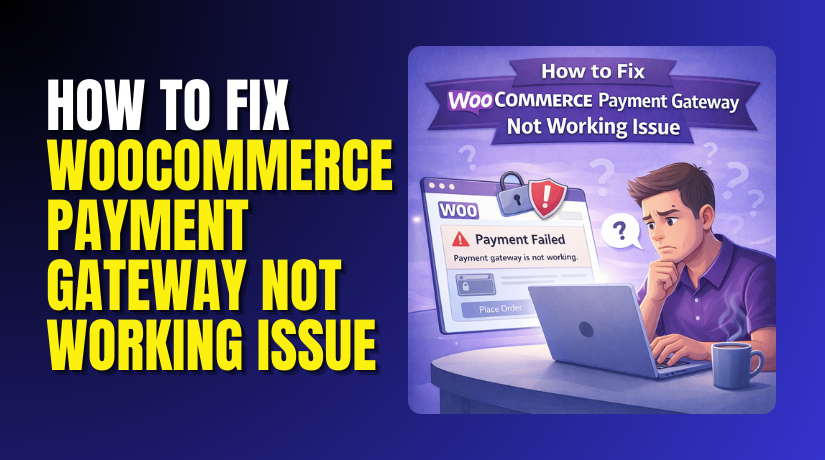
How to Fix WooCommerce Payment Gateway Not Working Issue? Common Causes & Easy Fixes
Table of Contents
- Introduction
- What Is a WooCommerce Payment Gateway and How It Works
- How to Identify the Source of a WooCommerce Payment Gateway Issue
- Most Common Reasons WooCommerce Payment Gateway Stops Working
- How to Fix WooCommerce Payment Gateway Not Working (Step by Step)
- How to Prevent WooCommerce Payment Gateway Issues in the Future
- Conclusion
Introduction
If your store is live, payments must work every time. When the WooCommerce payment gateway is not working, customers leave fast. You may see checkout loads, but payments fail quickly. Sometimes, the gateway does not show on checkout. Other times, the button works, but nothing happens. Many store owners call this WooCommerce checkout not working, but the cause can differ. It can be a settings problem, a plugin conflict, or a server block. It can also be an SSL issue on checkout pages. You may also see a direct WooCommerce payment failed message.
In some cases, you get a WooCommerce payment error without details. These are common WooCommerce payment gateway issues across many stores. The good news is most causes are simple to fix. This guide explains what a payment gateway is first. Then you will learn how it works during checkout. After that, you can troubleshoot with clear steps. You will also learn what to check before changing settings. This helps you avoid breaking checkout during live sales. Let’s start with the basics and keep it simple.
What Is a WooCommerce Payment Gateway and How It Works
A WooCommerce payment gateway is the payment tool on checkout. It lets customers pay using cards, wallets, or bank options. The gateway connects your store to a payment provider. The provider approves or declines the customer’s payment attempt. If approval happens, the order gets marked as paid. If it fails, you may see a WooCommerce payment error message.
Many gateways also send confirmation back to WooCommerce. This confirmation updates the order status automatically. When this flow breaks, you get WooCommerce payment gateway issues. It can look like a WooCommerce payment failed problem at checkout. Some gateways work on-site and keep users on checkout. Other gateways redirect users to a secure payment page. After payment, the user returns to the thank you page.
How to Identify the Source of a WooCommerce Payment Gateway Issue
Before you change anything, find where the checkout is failing. This saves time and prevents new checkout problems. Many WooCommerce payment gateway issues look the same at first. But the root cause can be very different. Your goal is to confirm the exact failure point first. Once you know the point, fixes become simple and clear. This section helps you trace the issue step by step. It also helps you avoid guesswork during urgent store hours.
Check the Exact Symptom First So You Know What Is Breaking
Start by repeating the problem with one test product. Use a low price and simple shipping settings. Watch what happens right after clicking Place order. This tells you what is failing in the payment flow. Many users report WooCommerce checkout not working, but symptoms vary widely. Each symptom points to a different root cause.
- Gateway not showing at checkout means rules or settings failed.
- Place order does nothing means scripts or validation failed.
- Redirect not working means return URL or SSL may fail.
- Payment fails after details means gateway rejected or blocked it.
- Paid but order pending means webhook or callback failed.
If you see WooCommerce payment failed, note the exact message shown. If you see a WooCommerce payment error, copy the full text. Even small words help you identify the real cause.
Confirm It Is Not a Basic Setup Problem First
Many cases happen due to simple setup mistakes in WooCommerce. These issues can make the WooCommerce payment gateway not working instantly. Check these basics before deeper testing to save time. Most store owners skip this part and waste hours later.
- Confirm your Checkout page is set correctly in WooCommerce.
- Confirm your store currency matches the gateway supported currency.
- Confirm your store country matches the gateway supported region.
- Confirm the gateway is enabled and not disabled by conditions.
- Confirm test mode and live mode are not mixed.
If your gateway needs keys, confirm they are not empty. If keys are wrong, you may get WooCommerce payment error messages. If test mode is active, live payments will fail. That can look like WooCommerce payment failed during real orders.
Check WooCommerce System Status and Error Logs for Clues
Logs help you see what WooCommerce cannot show on screen. They often explain why WooCommerce payment gateway issues happen. Start with WooCommerce System Status inside your dashboard. Check for warnings about server limits or missing modules. Then check the WooCommerce logs for payment failures. Many gateway plugins also add their own log section. These logs often include the reason for rejection or error. You may see API errors, timeout errors, or auth failures. Each log entry has a time stamp and error text. Match the time with your test order attempt. This helps confirm the true reason behind WooCommerce payment failed. It also helps you avoid random setting changes.
Rule Out Plugin, Theme, and Cache Conflicts Without Guessing
Conflicts are a top reason for WooCommerce checkout not working issues. Checkout relies on scripts, sessions, and secure requests. A small conflict can break this flow in seconds. Start with cache and optimization plugins first. These tools often combine or delay checkout scripts. That can trigger a WooCommerce payment error after clicking Place order. Next, check security plugins and firewall features. They can block gateway calls or webhook endpoints. Then check out addons and custom field plugins. A broken field rule can stop checkout validation completely. Theme issues can also break checkout templates and scripts. If your theme has WooCommerce template overrides, they may be outdated. This can cause WooCommerce payment gateway not working issues after updates. For safe testing, disable one plugin at a time. Test checkout after each change and note results carefully.
Check Hosting and Server-Level Blocks That Stop Payments
Sometimes the store setup is correct, but the server blocks requests. This can create serious WooCommerce payment gateway issues unexpectedly. Gateways need outbound requests to connect with payment providers. If outbound calls fail, payments cannot be processed properly. Some hosts block outbound calls for security reasons. Some firewalls block REST API requests from WooCommerce. Some servers have low PHP limits causing request timeouts. That can trigger WooCommerce payment failed during payment processing. A server security rule can also block checkout scripts. This often looks like WooCommerce checkout not working for customers. If you suspect hosting issues, check error logs in the hosting panel. Also check if recent security changes were applied by the host. This step is important when errors start after migrations. It is also important after a new SSL or CDN change.
Most Common Reasons WooCommerce Payment Gateway Stops Working
When payments stop, it is usually due to one core reason. The issue may look random, but it follows patterns. Many store owners see WooCommerce payment gateway not working after updates. Some see WooCommerce checkout not working after adding a new plugin. Others see a sudden WooCommerce payment failed message during live sales. The best approach is to check the most common causes first. These causes cover most WooCommerce payment gateway issues across stores. Fixing the right cause reduces downtime and prevents repeat errors. Use this section to match your symptoms with a likely reason. Then you can move to the step-by-step fixes next.
Wrong Gateway Settings or Credentials Can Break Payments Instantly
Most gateways need API keys or account connections to work. If keys are wrong, payment requests get rejected quickly. This can create a WooCommerce payment error during checkout. Many gateways also have live and test mode settings. If you mix live keys with test mode, checkout fails. If you use test keys in live mode, payments also fail. This often shows as WooCommerce payment failed without clear details. Some gateways require webhooks and signing secrets too. If the webhook secret is wrong, order updates fail later. That can cause paid orders to stay pending in WooCommerce. Always recheck gateway settings after site migrations or cloning. Keys may not move correctly between sites and domains.
SSL, HTTPS, and Mixed Content Problems Often Block Payment Scripts
Payment pages must load securely over HTTPS for most gateways. If checkout loads on HTTP, gateways may block scripts. Browsers also block insecure scripts on secure pages. This is called mixed content and it breaks payment buttons. It can cause WooCommerce checkout not working for many customers. You may click Place order and nothing happens at all. Some gateways show a WooCommerce payment error due to blocked scripts. SSL issues can also break redirect gateways like PayPal style flows. If return URLs are not secure, redirection may fail. This can lead to a loop or blank page after payment. Fixing SSL and mixed content often restores checkout quickly.
Plugin Conflicts and Checkout Add-ons Commonly Cause Checkout Failures
WooCommerce checkout runs many scripts and validation rules. A conflict can stop scripts from running correctly. This can cause WooCommerce payment gateway issues across all gateways. Checkout field plugins can add required fields wrongly. Then Place order will not complete due to validation errors. Coupon tools, cart tools, and dynamic pricing plugins can conflict too. Some security plugins block API calls to gateway servers. That can trigger WooCommerce payment failed during processing. Cache and optimization plugins can delay payment scripts by mistake. That can show as WooCommerce payment gateway not working only on checkout. If the issue began after installing a plugin, suspect conflict first.
Theme or Custom Checkout Code Issues Can Break the Payment Flow
Many themes override WooCommerce template files for styling. If those overrides are outdated, checkout may break. This happens often after WooCommerce updates and changes. The result can be WooCommerce checkout not working unexpectedly. Custom code can also break checkout validation or sessions. Even a small snippet can block payment scripts on checkout. Page builders can add extra checkout blocks that conflict too. If your checkout is heavily customized, test it carefully. A theme update or builder update can trigger a WooCommerce payment error. If the issue happens only with one theme, suspect template overrides. If you recently edited checkout files, review those changes first.
Cache, CDN, and Cloudflare Settings Can Create Token and Script Errors
Checkout pages should not be cached like normal pages. Gateways use tokens and sessions that change per user. If you cache checkout, tokens become invalid quickly. This can cause WooCommerce payment failed during payment attempts. CDN script minify can also break gateway JavaScript files. Combined scripts may load in the wrong order and fail. That often looks like WooCommerce payment gateway not working after clicking. Cloudflare security rules can also block gateway requests. Some rules block POST requests and API endpoints. Some block external scripts needed by gateways. If the issue started after enabling CDN or Cloudflare, check this. Excluding checkout pages from cache is often the key fix.
Webhook or Callback Failures Can Stop Orders from Updating Correctly
Many gateways rely on webhooks to confirm payment status. Webhooks send status updates back to your WooCommerce site. If webhooks fail, paid orders may stay pending. Customers may pay, but WooCommerce never receives confirmation. That is a common WooCommerce payment gateway issues pattern. Webhooks can fail due to firewalls or blocked endpoints. They can also fail if your site URL changed recently. If you changed domain, webhook URLs must be updated. Some gateways also require event selection for webhook setup. Missing events can cause partial updates and confusion. This can show as a WooCommerce payment error in order notes. Always check webhook delivery logs inside the gateway dashboard.
Hosting and Server Configuration Issues Can Block Gateway Connections
Your server must support gateway requests and secure connections. If cURL or SSL libraries are missing, payment calls fail. This can trigger WooCommerce payment failed with API errors in logs. Low PHP memory can also stop checkout processing midway. Low execution time can cause timeouts during payment capture. Some hosts block outbound requests to unknown IPs for security. That can break gateway API calls and create WooCommerce checkouts not working. WAF and ModSecurity rules can also block checkout actions. These rules may flag payment requests as suspicious traffic. If the issue happens after a hosting change, suspect this. Also suspect this after moving to a new server or plan.


Gateway Account Limits and Risk Rules Can Decline Payments
Sometimes WooCommerce is fine, but the gateway declines payments. This is common with fraud filters and risk settings. The gateway may reject due to CVV mismatch or risk score. It may also decline due to card limits or bank blocks. This shows as WooCommerce payment failed even with correct setup. Some gateways require full account verification before processing live payments. If verification is pending, payments may fail. Some gateways also restrict currencies or regions for certain accounts. If customers are from unsupported regions, the gateway may fail. These issues often show inside the gateway dashboard logs. WooCommerce may only show a simple WooCommerce payment error message. Checking the gateway dashboard is important for these cases.
How to Fix WooCommerce Payment Gateway Not Working (Step by Step)
If your WooCommerce payment gateway is not working, follow these simple steps. Do not change many things at once. Make one change, then test checkout again. This keeps the fix clear and safe. Use one low price product for every test order. If you see a WooCommerce payment error, note the exact message.
Step 1: Check If the Gateway Is Turned On
- Go to WooCommerce → Settings → Payments and check the gateway.
- Make sure the toggle is enabled for that payment option. Also confirm it is not disabled by any rule.
- Save settings and reload the checkout page once.
Step 2: Do a Quick Checkout Test in Private Mode
- Open your site in an incognito or private window now.
- Add one product and go to checkout again.
- Try placing the order using the same payment option. If it works here, cache or cookies caused the issue.
Step 3: Clear Cache and Stop Checkout Page Caching
- Clear your site cache and browser cache once.
- If you use a cache plugin, exclude Checkout and Cart pages.
- Also exclude My Account page to avoid session issues. If you use Cloudflare, bypass cache for checkout URLs.
Step 4: Check Basic Store Settings That Block Payments
- Go to WooCommerce → Settings → General and check basics.
- Confirm store country and currency are correct for your gateway.
- Some gateways do not work for every currency or region.
- Also check if shipping methods are set properly for orders.
Step 5: Confirm Gateway Keys and Mode Settings
- Open your gateway settings and check API keys carefully.
- Confirm test mode is OFF for real customer payments.
- Confirm live mode uses live keys, not test keys. Save settings and run one test order again.
Step 6: Turn On Logs and Read the Latest Error
- Go to WooCommerce → Status → Logs and open recent logs.
- Also enable logs inside the gateway plugin settings if available.
- Do one failed test checkout again to create a log entry. Now read the latest error and note its meaning.
Step 7: Disable Other Plugins to Find a Conflict
- Plugin conflicts are a big cause of payment problems.
- Disable all plugins except WooCommerce and your payment gateway.
- Test checkout again with the same product and payment method. If it works, enable plugins one by one to find the conflict.
Step 8: Switch Theme for a Quick Test
- Sometimes the theme breaks checkout scripts and templates. Switch to Storefront theme for testing only.
- Test checkout again and see if the payment works now. If it works, your theme needs a WooCommerce update fix.
Step 9: Fix SSL and Mixed Content Issues on Checkout
- Make sure checkout loads with HTTPS in the browser.
- If you see “Not Secure”, fix SSL before doing more.
- Mixed content can block payment scripts and cause failures. Fix insecure URLs and then test checkout again.
Step 10: Check Webhooks If Orders Stay Pending
- If payment succeeds but order stays pending, webhooks failed.
- Open your gateway dashboard and check webhook delivery logs.
- Ensure webhook URL matches your site domain and is active. Fix it and test payment again with a small order.
Step 11: Check Hosting Blocks If Nothing Else Works
- Some servers block gateway requests due to firewall rules.
- Ask your host if outbound requests are blocked from your site.
- Also ask about ModSecurity rules blocking WooCommerce checkout. Increase PHP memory and timeout limits if needed.
How to Prevent WooCommerce Payment Gateway Issues in the Future
Prevention means reducing chances of checkout failures before they happen. It keeps revenue stable and builds buyer trust. These steps also reduce WooCommerce payment gateway issues after updates. Follow these points as a simple long term routine.
Use a Staging Site Before Any Big Change
Make changes on a staging copy, not on live checkout. Update WooCommerce, themes, and gateway plugins there first. Run one test order in test mode and confirm success. If you see a WooCommerce payment error, fix it before going live. This avoids sudden WooCommerce checkout not working during sales hours.
Keep WooCommerce and Gateway Plugins Updated on a Schedule
Do not update everything at once without testing first. Use a monthly update routine for stable stores. For busy stores, update every two weeks with testing. Outdated plugins can cause WooCommerce payment failed after provider changes. Updates also fix security and API compatibility issues.
Never Cache Checkout, Cart, and My Account Pages
Checkout pages use sessions and payment tokens for every user. Caching can break tokens and create random failures. It often causes WooCommerce payment gateway not working after page reloads. Exclude these pages from cache and CDN rules always. Also avoid caching checkout fragments and dynamic blocks.
Avoid Heavy Script Optimization on Checkout Pages
Minify and delay scripts can break gateway JavaScript files. Gateways need scripts to load in the correct order. If scripts load late, the button may not work. This looks like WooCommerce checkout not working for customers. Disable combine, defer, and delay for checkout URLs.
Monitor Payment Logs Weekly and Fix Small Errors Early
WooCommerce and gateway logs show warnings before big failures. Check logs once a week and note any repeats. Fix small API warnings before they become checkout failures. This reduces surprise WooCommerce payment failed issues. It also makes support work faster when needed.
Keep SSL Active and Watch for Mixed Content Warnings
Payments require a secure checkout page with valid SSL. Renew SSL early and monitor certificate expiry warnings. Fix mixed content errors that block secure scripts. These errors can trigger WooCommerce payment error messages. A secure checkout keeps gateways working without browser blocks.
Track Changes Like CDN, Firewall, and Hosting Updates
Many payment issues start after server or security changes. Cloudflare rules, firewall updates, and hosting moves can block requests. Keep a simple change log for these updates. If WooCommerce payment gateway is not working suddenly, you can trace it. This helps you roll back fast and restore checkout.
Conclusion
A broken gateway can stop sales and harm customer trust quickly. Most cases come from settings, conflicts, SSL, or cache issues. If you follow the steps above, you can fix issues faster. If you still face WooCommerce checkout not working, you may need expert help. WooHelpDesk can diagnose logs, plugin conflicts, and server issues fast. We can fix webhook failures, SSL problems, and checkout script errors. If you want quick support, reach out through Woohelpdesk. We will help you get payments working smoothly again.